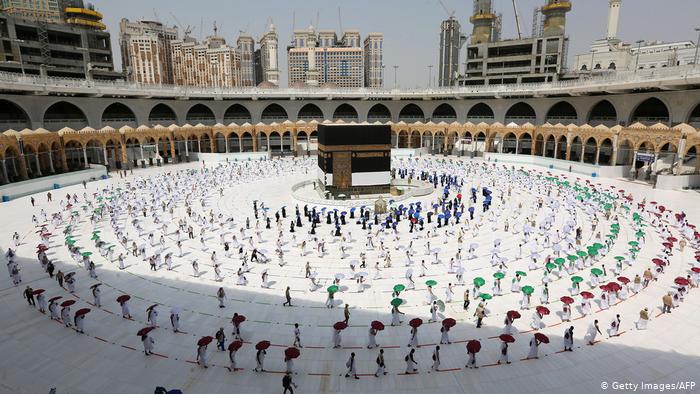
The Nasrul-Lahi-l-Fatih Society of Nigeria (NASFAT) has taken a deep sigh over the conduct of some Nigerian pilgrims turning the holy land of Mecca into what appears to be a mix of a reality show and a wrestling match.
In viral videos making rounds on social media, some Nigerian Muslims were seen jostling to touch the Kaaba, throwing insults in Yoruba at fellow pilgrims like market women haggling over fish prices. One particularly fiery individual was heard snapping at a foreigner, “Are you the one who killed the Prophet, or was it your ancestors?”
Another Nigerian, clearly fed up with a white pilgrim’s emotional prayers, muttered, “If you want to pray, pray and don’t disturb me here. You’ve started crying again…” as if he were supervising a silent retreat, not a sacred pilgrimage.
Adding to the drama, many Nigerian pilgrims have been caught recording and broadcasting their spiritual journey like influencers launching a new brand. Clerics, however, are not thrilled with this “Hajj Content Creation” trend and have warned that turning sacred acts into Instagram Reels could be spiritually counterproductive.
NASFAT’s National Da’wah Officer, Abdul-Ganiy Raji, was visibly unimpressed, stating that pilgrimage should not resemble a Nollywood blockbuster.
“If one plays during solat, Allah won’t answer such a prayer. The irreligious acts by some Nigerians in Mecca are disturbing. People from across the world come for Hajj and conduct themselves properly,” he lamented, likely shaking his head in dismay.
He further hinted that some of these “excited tourists” might be individuals with suspicious money sources who saw Hajj as another luxury trip, rather than a sacred obligation.
Raji also took a swipe at private hajj operators, accusing them of granting travel slots without proper screening. “Hajj should not be seen as a profit-making venture,” he warned.
“It is unfortunate that private organisations given slots by the National Hajj Commission do not screen those traveling for Hajj. As a result, anyone with money—regardless of character—can go, even someone who is mentally unwell. NAHCON needs to address this issue,” he added.
He suggested that hajj operators whose pilgrims act out should face serious consequences, including possible licence revocation.
Similarly, Dr. Sidiq Uthman, an Islamic scholar at Lagos State University, suggested that the root of the problem might be Nigeria’s unhealthy obsession with materialism.
According to him, some of these pilgrims might not even realize their actions are inappropriate. “Attention should be directed at the hajj agencies and coordinators responsible for supervising the pilgrims in Saudi Arabia. These individuals ought to have been warned of the implications of such sacrilegious acts,” he noted.
Uthman also blamed social media, arguing that this “pray-and-post” culture was not limited to Hajj pilgrims alone.
“This issue reflects the negative impact of social media in today’s world. Even here in Nigeria, places of worship have become selfie spots—ranging from Pentecostal churches to Muslim asalatu groups,” he said.
To top it off, he also called out some religious leaders for setting a bad example. “Even some scholars record themselves while praying to impress sponsors. What do we expect from their followers?” he added.
As it stands, it seems like Nigerian pilgrims need a gentle reminder that Mecca is not an amusement park, social media playground, or investigative journalism site—but a sacred space meant for spiritual reflection. Whether they’ll listen remains a different matter entirely.