Kwara State held its long-awaited local government elections on Saturday, marking the first such poll since 2017.
However, the election was overshadowed by low voter turnout and logistical delays in several areas, dampening what was expected to be a significant democratic event.
Our correspondents across the state reported that voting materials arrived late at numerous polling units, contributing to the slow start of the exercise. Despite this, the elections were conducted peacefully, with no reports of violence.
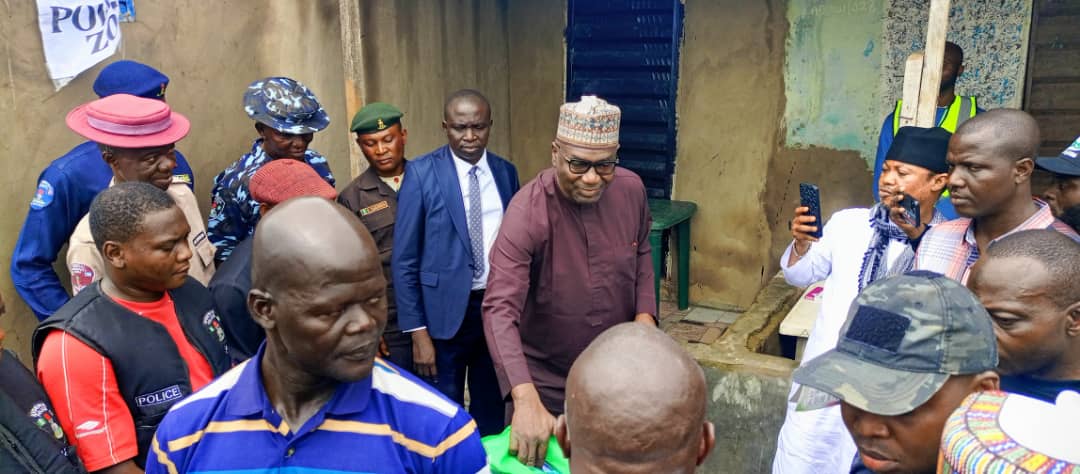
Security was tight, with armed forces, police, and other security agencies heavily deployed to maintain order.
In Ilorin, the state capital, armored personnel carriers and military patrols were visible, ensuring a sense of safety.
One security official, speaking anonymously, noted that their presence was purely precautionary and not intended to intimidate voters.
Governor Abdulrahman Abdulrazaq, after casting his vote at Idigba polling unit in Ilorin West, praised the peaceful nature of the election and expressed optimism about the process. “Democracy has come to stay,” the governor remarked, lauding the efforts of security personnel and the electoral body.
But while some officials painted a rosy picture, the election was far from smooth in several areas.
Mohammed Baba-Okanla, Chairman of the Kwara State Independent Electoral Commission (KWSIEC), acknowledged that delays in the arrival of election materials were due to logistical issues, including vehicle breakdowns.
He assured voters that steps were taken to resolve the situation, but delays had already caused frustration among voters in various wards.
A KWSIEC official in Ilorin South, Basambo Oladimeji, cited the shortage of vehicles to transport election materials as a significant issue. He expressed confidence, however, that once materials arrived, voting would proceed efficiently.
For many voters, though, the damage had been done. Former education counselor for Ilorin South, Barrister Adeleye Smith, voiced concern over the delays, urging better planning in future elections to avoid disenfranchising voters.
His sentiments were echoed by the PDP candidate for Ilorin West, Comrade Musbauhdeen Esinrogunjo, who described the shortage of election materials as a threat to the integrity of the process. Esinrogunjo called on the federal government to intervene, stating that while his party would not resort to violence, they would challenge the outcome in court if necessary.
In Offa Local Government Area, the situation took a turn for the worse. Reports surfaced of alleged electoral malpractice, with voters claiming that the number of election materials did not match the registered voters. This led to unrest, with community leaders in Offa calling for the election to be suspended to prevent further disorder.
Despite the challenges, the All Progressives Congress (APC) candidate for Ilorin South, Hon. Majeed Bolakale Podo, praised the election as peaceful and orderly.
Similarly, Senator Saliu Mustapha, representing Kwara Central, commended both voters and the KWSIEC for ensuring a largely peaceful process. He expressed confidence in his party’s chances of victory.
While the election concluded without major incidents of violence, the logistical failures and low voter participation cast a shadow over what should have been a triumphant return to local democracy in Kwara. As results trickle in, the true test will be whether the state can learn from these shortcomings and deliver a more efficient and inclusive process in future elections.