The Speaker of the House of Representatives, Hon. Tajudeen Abbas has said the 10th House places a high premium on its relationship with the press and welcomes fair and even difficult criticism as a necessary condition for a healthy democracy.
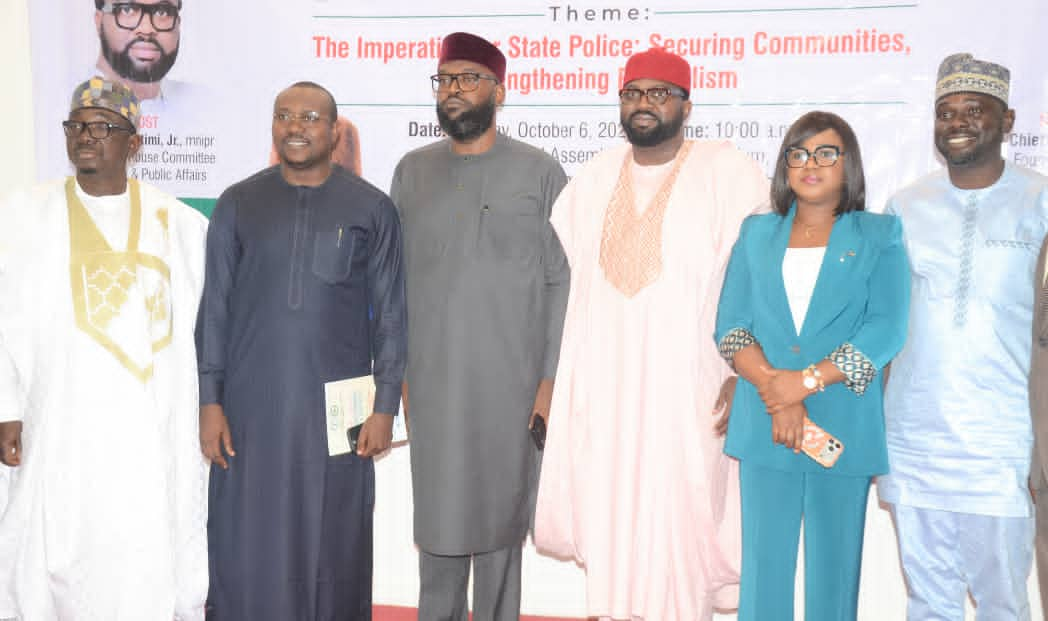
Speaker Abbas stated this on Tuesday in Abuja in his address at the 2nd Annual Distinguished Parliamentarian Award and Lecture Series organised by the House of Representatives Press Corps at the National Assembly Library Auditorium.
The speaker, who was represented by the Chairman, House Committee on Media and Public Affairs, Hon. Akin Rotimi Jr, said the annual lecture is particularly appropriate for the National Assembly where ideas are contested and public policy is examined.
“The House of Representatives derives its authority from the people. Therefore, every debate in the chamber, every bill considered, every appropriation examined and every matter raised on the floor is ultimately about the exercise of the mandate entrusted to us by the people,” Abbas said.
He noted that members of the press occupy an important place within the democratic architecture, adding that the relationship may not always be comfortable, and does not have to be.
“A healthy democracy requires a Parliament that can explain and defend its decisions, and a press that can question us without fear or favour,” he said.
“The House, particularly the House leadership, welcomes fair criticism and difficult criticism. Where we disagree with an interpretation, our response will always be engagement, explanation and, where necessary, correction.”
The Speaker charged the media to steer critical conversations about national progress away from partisan considerations, urging that legislation should not be judged merely by who proposes it or which section of the country appears to support it.
“Bills deserve examination of their principles, their provisions and their likely consequences. An oversight intervention, for example, should be judged by whether it advances transparency, accountability and the public interest. These are fundamentally intellectual questions, not political ones,” he stated.
Abbas said genuine patriotism requires the courage to ask whether a policy works, whether a law is fit for purpose and whether public resources are being deployed in the national interest.
“As journalists, the public deserves reports and accounts of not only what was said, but also what is at stake. That is why the intellectual contribution of members of this Press Corps becomes particularly valuable,” he added.
While affirming respect for press independence, the Speaker stressed that parliamentary reporting must be grounded in accuracy, fairness and context.
“We do not expect the Press Corps to become an echo chamber for Parliament. Its independence is precisely what gives its work credibility,” Abbas said.
He commended the Press Corps for creating the lecture platform and invited the media and general public to take advantage of the unprecedented access provided by the 10th House to better understand how Parliament works.
The Inspector general of police, Olatunji Disu on behalf of the Nigeria Police Force also welcomed the ongoing conversation on state policing.
He said security remained the foundation for socio-economic stability and that transparent, multi-stakeholder discussions were necessary as Nigeria considers reforms to its security architecture.
Represented by DCP Suleyman Gulma, Disu said the Nigeria Police Force remained committed to supporting constitutional and legislative efforts aimed at strengthening law enforcement, improving community safety and promoting accountable, citizen-centred policing.
Former Minority Leader of the House of Representatives, Hon, Ndudi Elumelu, described the state police debate as not merely a security issue but also a question of governance, constitutional responsibility and the relationship among the different tiers of government.
He said any new policing framework must provide effective oversight and accountability while ensuring adequate training, welfare, funding and professional standards for personnel.
He stressed that federalism required a balance between national unity and the capacity of federating units to respond effectively to the realities of their people.
The Chairman of the NUJ FCT Council, Comrade Grace Ike also backed a carefully designed state policing system, arguing that local forces could respond faster to threats because of their familiarity with local communities.
She, however, called for constitutional clarity, professional standards, independent oversight, sustainable funding, intelligence sharing and respect for human rights.
“State police, if conceived and implemented with constitutional rigour, strong oversight, adequate resourcing, and respect for human rights, can be a meaningful instrument for securing communities and deepening our federal democracy,” he said.
Also speaking, Chairman of the House of Representatives press Corps, Comrade Gboyega Onadiran, noted that the 36 state Houses of Assembly were currently considering the state police proposal, with some having already voted on the bill.
Onadiran said the issue was no longer theoretical, given the security challenges confronting communities across the country.
He said parliamentary journalists had witnessed the pressure on lawmakers from constituents over terrorism, banditry, kidnapping, farmer-herder conflicts and ungoverned spaces.
“The question of state police is no longer a theoretical debate. It is a lived reality for millions of Nigerians who continue to ask why the security of their communities should be managed from a centre so far removed from them,” he said.
He, however, raised concerns over the possibility of state police being abused by state governors, stressing the need for safeguards, adequate funding and effective oversight to ensure professionalism and independence.