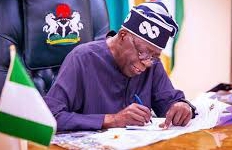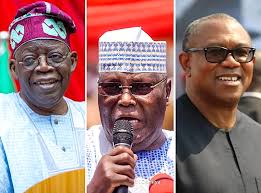
The Independent Media and Policy Initiative (IMPI) has challenged presidential candidates in the 2027 elections to commit to growing Nigeria’s economy to $1 trillion by 2031, demanding that they publish concrete sector-by-sector plans for achieving the target.
The think-tank said any candidate seeking to govern Nigeria must move beyond campaign rhetoric and demonstrate how his or her policies would generate the investment, jobs and economic expansion required to attain the target.
In a policy statement signed by its Chairman, Dr Niyi Akinsiju on Sunday, IMPI said the $1 trillion benchmark should become the central economic test for presidential candidates, arguing that the expansion was necessary to tackle multidimensional poverty and create productive jobs for the country’s growing population.
The group said the economy could not reach the target by relying on crude oil and informal retail trade, insisting that the next phase of growth must be driven by industrialisation, ports, agro-processing and technology.
IMPI said candidates should specifically explain how they would activate Nigeria’s five-port maritime corridors, establish agro-processing clusters across the North and develop digital technology hubs in southern urban centres.
It said such investments could help move more than 50 per cent of the informal workforce into formal, tax-compliant and higher-productivity employment.
IMPI stated that “a $1 trillion economy cannot be built on retail trade or raw oil extraction alone; it requires deep-water industrialisation.
“Scaling to this size means fully activating the country’s five-port maritime corridors, establishing agro-processing clusters across the North, and scaling digital tech hubs in urban centres.”
The think-tank said recent reforms had already created the foundation for faster economic expansion, citing the removal of fuel subsidy, foreign exchange reforms, increased external reserves and rising GDP growth.
It noted that real GDP grew by 4.43 per cent in the second quarter of 2026, compared with 4.23 per cent in Q2 2025 and 3.89 per cent in Q1 2026.
IMPI also put the current monetary value of the economy at $377.37 billion, saying this represented a $134.37 billion increase from the $243 billion recorded after the mid-2025 rebasing.
It argued that the figures showed that the $1 trillion target was achievable, and challenged opposition parties to present alternatives rather than merely criticise the hardship caused by ongoing reforms.
“By our analysis, no alternative candidates can claim that a $1 trillion economy is an unrealistic arithmetic problem.”
“President Bola Ahmed Tinubu’s federal administration has already done the structural heavy lifting and painful foundational adjustments.”
IMPI urged voters and the media to demand measurable economic commitments from all presidential candidates, particularly detailed sectoral capital allocation plans showing how they intend to move the economy from its current level to $1 trillion within four years.
“The national economic debate cannot be won by opposition to hardship alone; a superior vision for prosperity must win it.
“We are here today because Nigeria’s political conversation is fundamentally broken. Every day, we watch politicians across all parties trade personal insults, argue over tribal mathematics, and complain about current economic hardships. But complaining is not a policy. Grievance is not a governance strategy.”
The group further challenged candidates promising a faster route to the target to disclose how they would attract the private capital required to finance such expansion.
“If a presidential candidate claims a faster route to a $1 trillion valuation, he should outline the specific fiscal policies, trade mechanisms, and deregulation models he will deploy to attract the massive quantum of private global capital required to double current targets.”