The African Democratic Congress (ADC) has said that the exit of Uber from Nigeria is a vote of no confidence on President Bola Tinubu’s economic policies.
ADC in a statement by the National Publicity Secretary Mallam Bolaji Abdullahi, said the growing list of major foreign companies that left the country since the All Progressives Congress (APC) came to power is indication that Nigeria is becoming a “graveyard of businesses.”
The party cited the Manufacturers Association of Nigeria (MAN) earlier report that 767 manufacturing companies, including 20 iconic global brands, have either shut down or ceased operations in Nigeria, while hundreds more are distressed since President Tinubu assumed office in 2024.
ADC listed the companies that have shut down or scaled down operations in the country to include Microsoft, Jumia and Bolt Food, Pick n Pay, Shoprite, GlaxoSmithKline (GSK), Sanofi-Aventis, Bayer AG, Procter & Gamble, Unilever and PZ Cussons.
The party stated that the list exposed the widening gap between the government’s claims of economic progress and the reality confronting businesses and ordinary Nigerians.
It therefore, wondered what President Tinubu was talking about when he claimed that the Nigerian economy is improving.
“If indeed the economy is improving, or the slightest hope exists in the minds of those who run these businesses that this APC government can improve the economy, why are they closing shop and moving elsewhere?” ADC asked.
The party stated that every business that shuts down or pulls out is a vote of no confidence in the Tinubu administration and its capacity to manage the economy.
“Each exit delivers a blow to the economy. But perhaps, more importantly, each one represents a massive loss of jobs and increased poverty,” ADC said.
The party said it is concerning that President Tinubu and his government were celebrating a marginal 0.2 percentage-point improvement in gross domestic product (GDP) at a time when businesses were closing down, jobs disappearing and millions of Nigerians are sinking deeper into poverty.
“Certainly, a 0.2% growth does not justify the extreme hardship that Nigerians are suffering,” the party said, arguing that while the Tinubu government celebrates a marginal improvement of 0.2 percentage points, Nigeria’s poverty rate has snowballed to 63 percent, affecting an estimated 140 million Nigerians.
The ADC also challenged President Tinubu to explain 0.2 percent GDP growth to the 140 million Nigerians who have sunk into poverty since he came to power.
“When the president and his party say things are getting better, we expect them to tell us what has improved in the lives of Nigerians.
“They should tell us how much food their GDP growth has put on the tables. They should tell us which bill it has paid.
“If 0.2 percent is a mark of success in their books, President Tinubu and APC should tell us what they consider as failure,” the party said.
ADC stated that when the APC and its government celebrate even the most negligible shift in GDP numbers and flaunt that as evidence to show that things are getting better, they are immediately contradicted by the painful reality that Nigerians are getting poorer and hungrier.
“Those who had jobs yesterday are not sure how long it will take before their employers close shop, and those earning salaries are struggling even to transport themselves to work,” the party added.
ADC said that Uber’s exit after 12 years in Nigeria reflects the increasingly hostile operating environment confronting businesses, particularly the soaring cost of energy and transportation, with the price of fuel rising by as much as 1,700 percent following the removal of fuel subsidy and devaluation of the naira.
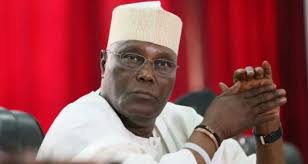
The party stated that it is for this reason that its presidenial candidate, Alhaji Atiku Abubakar, has proposed the restoration of a targeted fuel subsidy to bring down the cost of fuel, transportation and production.
It expressed that belief that Atiku’s plan to subsidise the production costs of fuel to make it more affordable will bring down the cost of living, make businesses more profitable, and create jobs across sectors.