Despite the sharp drop in global crude oil prices to about $70 per barrel, many Nigerians are still paying over N1,000 per litre for Premium Motor Spirit (petrol), raising fresh concerns over why local pump prices have remained stubbornly high.
While many consumers expected a significant reduction after tensions in the Middle East eased and crude prices retreated, industry insiders say the realities of crude procurement, inventory management and Nigeria’s deregulated market explain why the anticipated price crash has yet to happen.
An investigation shows that although the Dangote Petroleum Refinery has announced gradual reductions in its ex-depot prices, the refinery is constrained by factors beyond the prevailing international crude price.
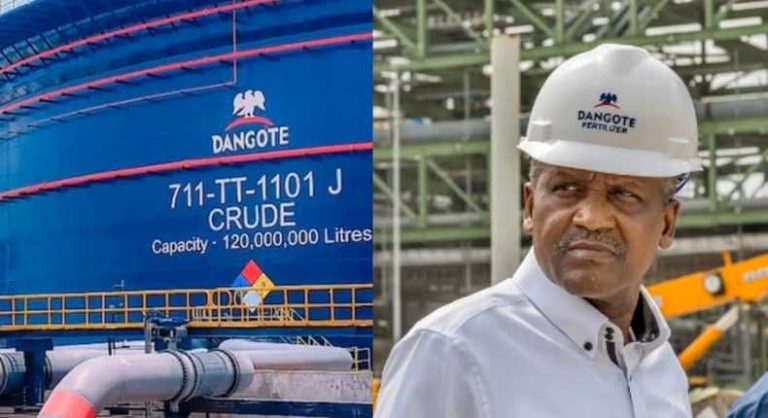
A senior official of the Dangote Group disclosed that the refinery is still processing crude oil purchased when global prices were significantly higher during the period of heightened tensions around the Strait of Hormuz.
According to the official, who spoke on condition of anonymity because he was not authorised to comment publicly, crude purchases are not based on daily spot prices alone.
He explained that the refinery has substantial volumes of crude stored in its tank farms, additional cargoes already at sea and several forward purchase contracts signed weeks or months earlier.
“We have huge crude oil storage capacity in our crude tank farm. There would also be crude oil in ships sailing from the country of origin to Nigeria. In addition, there would be crude oil under forward purchases which have yet to be shipped,” the official said.
The implication, according to industry experts, is that petrol currently being refined was produced from crude acquired when prices were considerably higher than today’s levels.
Consequently, slashing petrol prices immediately could mean selling below production cost and recording heavy losses.
Unlike what many Nigerians assume, the Dangote refinery does not receive enough domestic crude to satisfy its refining capacity.
The company disclosed that allocations from the Federal Government remain insufficient, forcing it to source a significant portion of its feedstock from the international market.
“The government is giving us small quantities of crude oil. So, we import our crude oil and export our products,” the official stated.
Importing crude exposes the refinery to international freight charges, insurance costs, exchange rate fluctuations and other logistics expenses that ultimately influence petrol pricing.
Industry stakeholders argue that the current downstream market is fundamentally different from the era when the Federal Government fixed petrol prices.
Since the removal of fuel subsidy and the emergence of market deregulation, refiners and importers now determine prices based on commercial realities.
The Minister of State for Petroleum Resources (Oil), Heineken Lokpobiri recently acknowledged public frustration over slow price reductions but maintained that deregulation does not eliminate the government’s responsibility to protect consumers from exploitation.
However, marketers insist that government cannot compel businesses to sell below cost in a deregulated environment.
Interestingly, available industry data indicate that imported petrol currently lands in Nigeria cheaper than Dangote’s ex-depot price.
Figures released by the Major Energies Marketers Association of Nigeria showed that the landing cost of imported petrol stood at N1,023 per litre, while Dangote’s gantry price before Thursday’s reduction was N1,075.
Yet many importers have also refrained from making significant price cuts.
The Dangote official questioned why importers bringing in relatively cheaper petroleum products had failed to reflect the lower landing cost in retail prices.
“The Federal Government has been giving huge quantities of import licences. Why are the importers not selling cheaper?” he queried.
The National Publicity Secretary of the Independent Petroleum Marketers Association of Nigeria, Chinedu Ukadike, said the refinery’s pricing strategy reflects the realities of old crude inventory.
According to him, Dangote is implementing reductions systematically rather than dramatically because it still has expensive crude stocks to refine.
“Now, Dangote, in its own stance, is talking about the old crude stock that it bought when the Strait of Hormuz was locked. It needs to exhaust refining those crude stocks before it can reduce prices significantly,” Ukadike explained.
He noted that while consumers may desire immediate reductions, refiners cannot ignore production economics.
Thursday’s N50 reduction in Dangote’s gantry price suggests that more adjustments may follow if crude prices remain low over a sustained period.
Analysts believe that as expensive crude inventories are exhausted and newly purchased cheaper crude begins to dominate refining operations, Nigerians may gradually begin to enjoy lower pump prices.