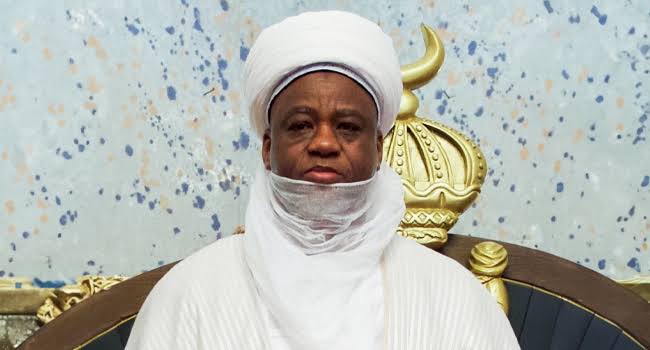
The Nigerian Supreme Council for Islamic Affairs (NSCIA) under the leadership of its President General and Sultan of Sokoto, Alh. Muhammad Sa’ad Abubakar has warned against the growing trend of linking Islam and Muslims to criminal activities, saying such narratives were unfair, divisive and capable of undermining national unity.
The Council issued the warning on Thursday in its Democracy Day message to Nigerians, urging citizens, the media and public commentators to stop branding Muslims as criminals because of the actions of bandits, kidnappers and other criminal elements.
In a statement signed by its Public Affairs Officer, Abbas Jimoh, the NSCIA said Nigerian Muslims were increasingly being subjected to false accusations and religious profiling despite being victims of the same insecurity plaguing the country.
The Council said: “Such religious profiling is false, misleading, and grossly unfair to the overwhelming majority of peace-loving Nigerian Muslims who continue to live, work, and contribute positively to national development across all sectors of society.”
The apex Islamic body expressed concern over attempts by some individuals and groups to associate Islam with banditry, kidnapping and terrorism.
According to the Council, Islam does not condone violence or criminality in any form saying, “The Council reiterates that Islam, like other divinely revealed religions, neither condones nor permits the shedding of innocent blood, kidnapping, banditry, terrorism, or any form of criminal conduct.”
The NSCIA cited the recent kidnapping of students and teachers in Orire Local Government Area of Oyo State as an example of what it described as deliberate efforts to criminalise Muslims and Islam without evidence.
It noted that while some individuals rushed to link the incident to Muslims and the Shariah legal system, subsequent developments and arrests had disproved those claims.
“While some mischief-makers were hell-bent on criminalising the Muslims and the Shariah for the kidnapping of students and teachers in Orire Local Government Area of Oyo State, recent developments have vindicated the Muslims of the attempted false-criminalisation.”
The statement added that identities of suspects arrested in connection with the incident did not support earlier reports that the perpetrators were Fulani.
“The identity of the suspects arrested so far in connection with the Orire LGA, Oyo State, unfortunate saga did not show them as Fulanis, contrary to the initial and erroneous report. This should stop, and anyone who commits crimes should be labelled with the crimes committed and duly prosecuted according to the enabling laws of the land.”
The Council lamented that many Muslims were not only victims of terrorism and insecurity but were also being unfairly portrayed as perpetrators.
“While it is enough that Nigerian Muslims themselves are victims of not only terrorism but also discrimination and persecution, it is also sad that they are being falsely criminalised for being the perpetrators. Indeed, they are being made to suffer double jeopardy,” it stated.
The NSCIA consequently urged journalists and opinion leaders to exercise professionalism, fairness and accuracy in reporting security-related issues.
It warned that assigning ethnic or religious identities to criminals could inflame tensions and weaken collective efforts to tackle insecurity.
“Criminality should neither be given ethnic nor religious coloration, as such narratives deepen divisions and undermine collective efforts to address insecurity and achieve lasting peace,” the Council stressed.
While congratulating Nigerians on the occasion of the 2026 Democracy Day celebration, the Council paid tribute to the sacrifices of those who fought for democracy, constitutional governance and the rule of law.
It noted that despite 27 years of uninterrupted democratic rule, Nigeria continues to grapple with serious security challenges, including terrorism, banditry and kidnapping, which have claimed lives, displaced communities and hindered development.
The Council condemned all forms of violence and criminality and called on perpetrators to abandon their activities, while also commending the efforts of the Federal Government, security agencies and community leaders in combating insecurity.
It further called for stronger collaboration among stakeholders to restore peace, strengthen national cohesion and advance the country’s democratic gains.
“The significance of June 12 lies not only in its historical importance but also in its enduring reminder that democracy flourishes where justice, accountability, inclusion and respect for human dignity prevail,” the statement added.