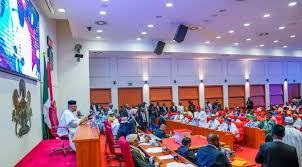
The Senate, on Wednesday, advanced legislative action to expand Nigeria’s federal judiciary, as it passed two bills for second reading to increase the number of judges at the Federal High Court and the Court of Appeal amid mounting case backlogs and delays in justice delivery.
The bills are: A Bill for an Act to Amend the Federal High Court Act to Increase the Number of Judges, and A Bill for an Act to Amend the Court of Appeal Act to raise the number of justices from 70 to 110 and provide for virtual court proceedings.
Leading the debate on the Federal High Court amendment, Senate Leader Opeyemi Bamidele said the proposal had become necessary due to the rapid expansion of the court’s jurisdiction and the exponential growth in cases before it.
He told lawmakers that the Federal High Court now exercises exclusive jurisdiction over critical areas including revenue and taxation, banking, aviation, telecommunications, anti-corruption cases, terrorism financing, oil and gas disputes, and election-related matters.
“Over the years, the volume of cases before the Federal High Court has increased exponentially. The statutory number of judges has remained inadequate relative to the demands placed on the court,” Bamidele said.
The Senate subsequently passed the bill for second reading.
Presenting the Court of Appeal bill, Bamidele explained that it seeks to increase the number of justices from 70 to 110 and integrate virtual court proceedings.
Lawmakers said the proposed increase in judicial personnel, combined with technology-driven proceedings, is expected to reduce delays in hearing appeals and improve access to justice nationwide.
Following deliberations, Senate President Godswill Akpabio referred both bills to the Committee on Judiciary, Human Rights and Legal Matters. The committee is to report back within four weeks.
If passed and signed into law, the bills would mark one of the most significant expansions of Nigeria’s federal judiciary in recent years.
Legal practitioners, business groups and civil society organisations have repeatedly called for reforms to address judicial congestion, which they say contributes to prolonged commercial disputes, criminal trials and election petitions.