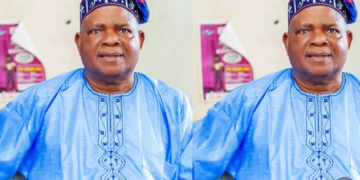
Former Director-General and pioneer head of the Plateau Peace Building Agency, Dr. Joseph Lengmang, has declared that the persistent killings and attacks in Plateau State and across the Middle Belt can no longer be dismissed as mere farmer-herder clashes or communal conflicts, warning that the violence has assumed the dimensions of terrorism, territorial displacement and possible ethnic cleansing.
Lengmang made the assertion while reacting to a recent Town Hall meeting organised in Jos by News Central TV, where stakeholders examined the recurring cycle of violence ravaging Plateau communities and other parts of the Middle Belt.
He said, “Beyond Dialogue: Why Plateau Needs Security First,” the former peacebuilding expert argued that one of the greatest obstacles to ending the bloodshed is the persistent mischaracterisation of the crisis.
According to him, describing the attacks as “farmer-herder clashes,” “reprisal attacks,” or “inter-communal conflicts” has led to weak and ineffective responses that fail to confront the true nature of the threat.
“For too long, the crisis has been simplistically described using outdated labels that no longer reflect the realities on the ground,” he stated.
Lengmang maintained that the pattern of recent attacks in communities across Barkin Ladi, Riyom and Bassa points to organised armed violence driven by coordinated criminal networks rather than ordinary communal disagreements.
He said the sophistication, scale and brutality of the attacks indicate deeper security threats capable of undermining national cohesion and democratic stability.
“When terrorism is treated as ordinary communal conflict, what follows is dialogue without deterrence, reconciliation without justice, and peace meetings without protection,” he warned.
The former peace agency boss stressed that peacebuilding efforts cannot succeed where communities remain under constant attack, insisting that security must come before dialogue and reconciliation.
According to him, displaced persons cannot return to their ancestral homes, farmers cannot safely cultivate their lands, and children cannot return to school in an atmosphere dominated by fear and trauma.
He, however, noted that decades of unresolved intercommunal tensions have also contributed to the present crisis, creating deep mistrust, inherited grievances and narratives of victimhood among communities.
Lengmang warned that such unresolved divisions have become fertile grounds for manipulation and radicalisation by terrorists, bandits and violent criminal groups operating in the region.
He urged the Federal Government and security agencies to adopt a proactive, intelligence-driven and community-based security framework capable of preventing attacks rather than merely reacting after tragedies occur.
“The Nigerian state must reclaim its constitutional responsibility to protect lives and property. Security must no longer remain reactive”.
The peacebuilding expert further cautioned that the Plateau crisis now carries broader implications for national food security, internal displacement and the overall stability of the country.
He concluded that while security remains urgent, lasting peace would also require justice, reconciliation and healing among affected communities.
“Peace without security is fragile, but security without justice and reconciliation is unsustainable,” Lengmang added.