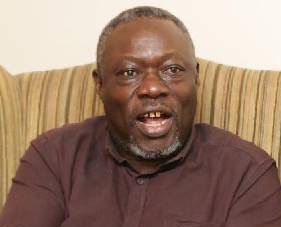
Retired Kenyan Colonel Seth Sheva has delivered a scathing assessment of Russia’s Africa Corps, declaring that the much-feared mercenaries are failing to secure the African countries that pay them despite their reputation for extreme violence.
In a statement, Sheva argued that “for all their swagger, intimidating appearance and reputation for extreme violence, the Africa Corps have not been noticeably effective in securing the regions they have been paid to secure.”
The Africa Corps evolved in 2023 from the infamous Wagner Group, which operated under the personal control of Yevgeny Prigozhin until his death in a mysterious plane crash shortly after a short-lived rebellion against the Kremlin.
Sheva notes that the group now sits directly under the Russian Defence Ministry, giving it “a veneer of officialdom” that has allowed operations to continue unabated.
While the Central African Republic remains the group’s longest-running engagement since 2018, Sheva says internal rivalries are surfacing between original Wagner fighters and newer Africa Corps recruits.
He said: “According to the Robert Lansing Institute, former Wagner members want to preserve their independence and close ties to President Faustin-Archange Touadéra, while the newer force tries to impose unpopular formal structures.”
Elsewhere the record is far worse. In Mali, where Wagner arrived in 2020, Sheva cites a 2025 report by The Sentry and ACLED data showing that both security incidents and jihadist attacks have actually increased.
“Their ineffectiveness in Mali and the growing confidence of the terrorists there have led the Wagner Group to become even more violent and unpredictable,” Sheva wrote.
“The result is a deepening crisis in which terrorists utilise these spates of violence to burnish their narratives, and civilians grow increasingly terrified and disenchanted.”
He said similar pattern has played out in Burkina Faso. After the 2022 military coup and the expulsion of French forces, Wagner’s arrival was hailed as a new security partnership.
Sheva says the group has stalled, jihadist groups still control 60 percent or more of the country according to the Global Terrorism Index, and the security situation has deteriorated.
“Traoré’s faith in Wagner is fading, and the group’s narratives of dominance and strength appear increasingly flimsy,” he added.
Sheva argues that while Russia has successfully exploited post-colonial frustration to position itself as an alternative to Western forces, its mercenaries offer only violence, cruelty and failure.
He urges African governments to strengthen the African Union, regional bodies such as ECOWAS, and partnerships with capable African militaries.
If they still choose to work with Russia, Sheva demands accountability: “Shouldn’t Russia commit to an official military force, bound by the laws of the host country, instead of a Wagner 2.0 with limited accountability?”