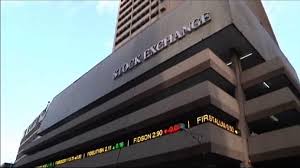
Nigeria’s capital market has expanded by 125 per cent since April 2024, with market capitalisation rising from about N55 trillion to N123.93 trillion, according to the Director-General of the Securities and Exchange Commission (SEC), Dr. Emomotimi Agama.
He disclosed that the sector’s contribution to the nation’s Gross Domestic Product (GDP) has also climbed significantly from 13 per cent to 33 per cent over the same period, highlighting the growing importance of the market to economic development.
Agama made this known in Lagos during his inaugural address to members of the Capital Market Working Group on Market Liquidity at the Commission’s office.
Describing the performance as a reflection of renewed investor confidence and market resilience, he nevertheless cautioned that growth in size must be matched by improvements in depth and liquidity.
“Since April 2024, market capitalisation has increased from about N55 trillion to over N123.93 trillion, while contribution to GDP has moved from 13 per cent to 33 per cent. These figures are encouraging, but they only tell part of the story,” he said.
According to him, liquidity remains central to sustaining the upward momentum, stressing that a market must be efficient and deep to effectively fulfil its core function of capital formation.
“A capital market is often described as the barometer of an economy’s health. But it must be more than just large it must also be liquid,” Agama stated.
He pointed to structural challenges such as high transaction impact costs for institutional investors and the concentration of trades in a small number of large-cap stocks, which leave much of the broader market relatively shallow.
Without sufficient liquidity, he warned, investors may be hesitant to participate if they are uncertain about exiting positions without triggering significant price distortions.
To address these issues, the SEC inaugurated a multi-stakeholder Working Group made up of exchanges, custodians, fund managers, dealing members, and other market operators. The body is tasked with developing practical measures to enhance trading efficiency, deepen participation, and strengthen price discovery.
Its mandate includes reviewing trading and settlement infrastructure, identifying technical and structural constraints affecting transaction speed, and proposing reforms to make Nigeria’s settlement cycle more competitive among emerging markets.
The group will also recommend strategies to expand retail participation, as the SEC aims to onboard up to 20 million new investors through digital platforms, dematerialisation of share certificates, and partnerships with fintech firms.
Agama added that product innovation would play a key role in boosting liquidity, particularly through the accelerated introduction of derivatives and other asset classes that offer hedging opportunities and stimulate market activity.
He noted that the newly enacted Investments and Securities Act (ISA) 2025 has broadened the Commission’s regulatory scope to include digital assets, enabling speculative interest in that segment to be channelled into regulated and productive investment avenues.
Reiterating the strategic importance of the capital market, Agama emphasised its role in financing infrastructure, supporting enterprises, and creating jobs.
“The capital market is not gambling; it is the engine of national development. It finances roads, powers factories and creates jobs,” he said.
He urged members of the Working Group to propose bold, actionable reforms that would enhance liquidity and support the Federal Government’s ambition of building a trillion-dollar economy.
While acknowledging the impressive rise in market capitalisation and GDP contribution, the SEC DG stressed that the next phase of reform would focus on ensuring that the market is not only bigger, but deeper, more inclusive, and globally competitive.
In his remarks, Chairman of the Committee and Group CEO of NGX, Mr. Temi Popoola, thanked the SEC for the opportunity and assured the Commission that the team would thoroughly assess structural constraints and deliver practical, measurable solutions aimed at strengthening liquidity, restoring confidence, and reinforcing the resilience of Nigeria’s capital market.