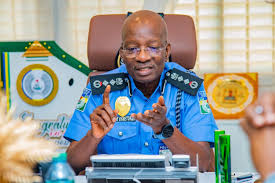
The Inspector-General of Police, Kayode Egbetokun, has said that over twelve thousand Nigerian police officers have participated in peacekeeping operations worldwide.
The IGP made this known at a two days workshop with a theme: ” The Nigeria Police and the peace process in Africa, at the National Institute of International Affairs, Lagos on Monday.
Egbetokun said Nigeria’s Police who have participated in the global peace operations mirrors the professionalism, discipline and accountability of the police force at home.He warned that international deployments cannot compensate for weak domestic institutions.
“Effective peacekeeping policing reflects legitimacy, discipline and public trust, both at home and abroad,” the IGP said, stressing that Nigeria’s credibility in global security cooperation depends on sustained police reform and respect for human rights within the country.
He traced Nigeria’s peacekeeping history to 1960, shortly after independence, noting that Nigerian police officers have since served continuously under the United Nations, African Union and ECOWAS across Africa, Europe, Asia, the Middle East and the Caribbean.
According to him, over 12,000 Nigerian police officers have participated in peace operations worldwide.
He noted that” modern peacekeeping now places police officers at the centre of civilian protection, electoral security, community policing, public order management and post-conflict stabilisation, roles that demand professionalism and adaptability amid rising threats such as violent extremism and transnational crime in Africa presently.”
In his opening remarks, The Director General of NIIA, Professor Eghosa Osaghae said Nigeria’s peacekeeping performance abroad is primarily a reflection of its internal policing capacity.
“These challenges are even more primarily domestic. They are internal to us,” what the police is doing outside is a reflection of its abilities and capacities within.”
Osaghae noted that while challenges persist, the Nigeria Police Force has undergone significant transformation over the past two decades, particularly in skills acquisition and operational capacity.
“If you compare the Nigeria Police Force today to what it was twenty years ago, you will say we have come a long way,” he said, adding that even non-police observers can see improvements in training and professionalism.
He disclosed that the NIIA plans is to deepen collaboration with the police leadership to establish an International Centre for Peacekeeping and Policing, aimed at strengthening research, training and institutional memory in line with global best practices.
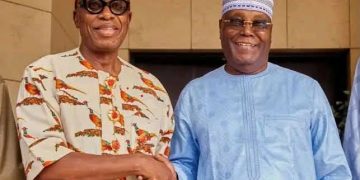
Also in his remarks, leader of the Social Democratic Party (SDP), Prince Adewole Adebayo said Nigeria’s long-running debate over federal, state or local policing misses the real issue, which is good governance, rule of law and police welfare.
According to the former presidential candidate, Nigerians are less concerned about the structure of the police force but more interested in safety and security.
“The Nigerian people don’t care whether the police is federal, state or local. What they want is safety and security.
“If one police force run by all levels of government works, Nigerians will accept it. If decentralization improves security, Nigeria will also accept it.”
He stressed that police officers operate within the limits of laws and policies made by political leaders, arguing that responsibility for policing failures ultimately lies with those in power.
“The police do not write the law. They do not write policies,” he said. “It is national and political leaders who must create a good society. When you give the police a good society to police, they will police it.”
Adebayo further linked effective policing to broader economic conditions, saying police welfare cannot be isolated from the rising cost of living.
“When prices come down, housing is affordable and healthcare is accessible, the salary paid to police officers will go much further,” he said, adding that free education and affordable healthcare would significantly improve police performance.
He rejected the notion that Nigerians are inherently hostile to the police, noting that most officers come from the same communities they serve and share the same economic struggles.
“As Nigeria confronts rising insecurity at home and increasing complexity in global peace operations, he agreed that the path forward lies not in rhetoric, but in accountable leadership, improved welfare and sustained reform of the police institution.”