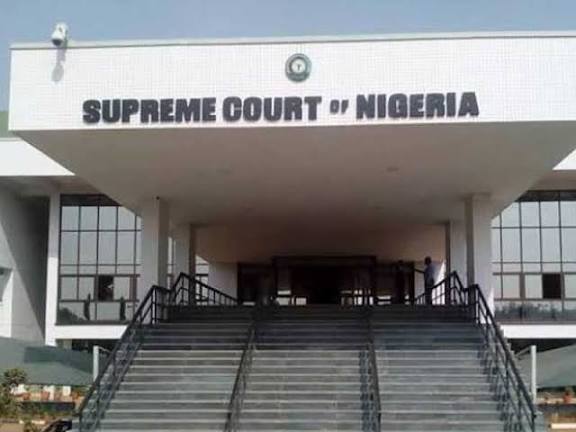
The Supreme Court of Nigeria has delivered a far-reaching judgment affirming the constitutional authority of the president to declare a state of emergency and, where necessary, suspend elected officials to prevent a breakdown of law and order. In a majority decision, the apex court dismissed a legal challenge brought by opposition-controlled states, ruling that the president acted within the powers granted under the constitution.
The suit arose from the federal government’s intervention in Rivers State earlier this year, following prolonged political instability, legislative deadlock and rising security concerns. Acting on these developments, President Bola Tinubu declared a state of emergency in the state, leading to the suspension of the governor, deputy governor and members of the state House of Assembly for an initial six-month period. A sole administrator was subsequently appointed to manage the state’s affairs during the emergency.
Governors from several states governed by the Peoples Democratic Party had approached the Supreme Court, arguing that while the constitution permits the declaration of a state of emergency, it does not empower the president to suspend democratically elected officials. They maintained that such actions undermine the principles of federalism and democratic representation, warning that it could set a dangerous precedent.
In its ruling, the Supreme Court held that the constitution gives the president wide discretion to take extraordinary measures during serious national or subnational crises. The justices stated that emergency powers are intended to restore stability and protect public interest, and may include temporary suspension of elected officials if circumstances demand it. The court also noted that such actions must remain time-bound and subject to constitutional oversight.
While one justice dissented, cautioning against potential abuse of emergency powers and erosion of democratic norms, the majority emphasized that the framers of the constitution envisaged situations where decisive executive action would be required to safeguard peace, security and governance.
The judgment effectively validates the federal government’s actions in Rivers State and provides clarity on a long-debated constitutional issue. Legal analysts say the decision strengthens the executive’s hand in times of crisis while underscoring the need for restraint and adherence to constitutional limits. The ruling is expected to shape future responses to political and security emergencies across the country.