

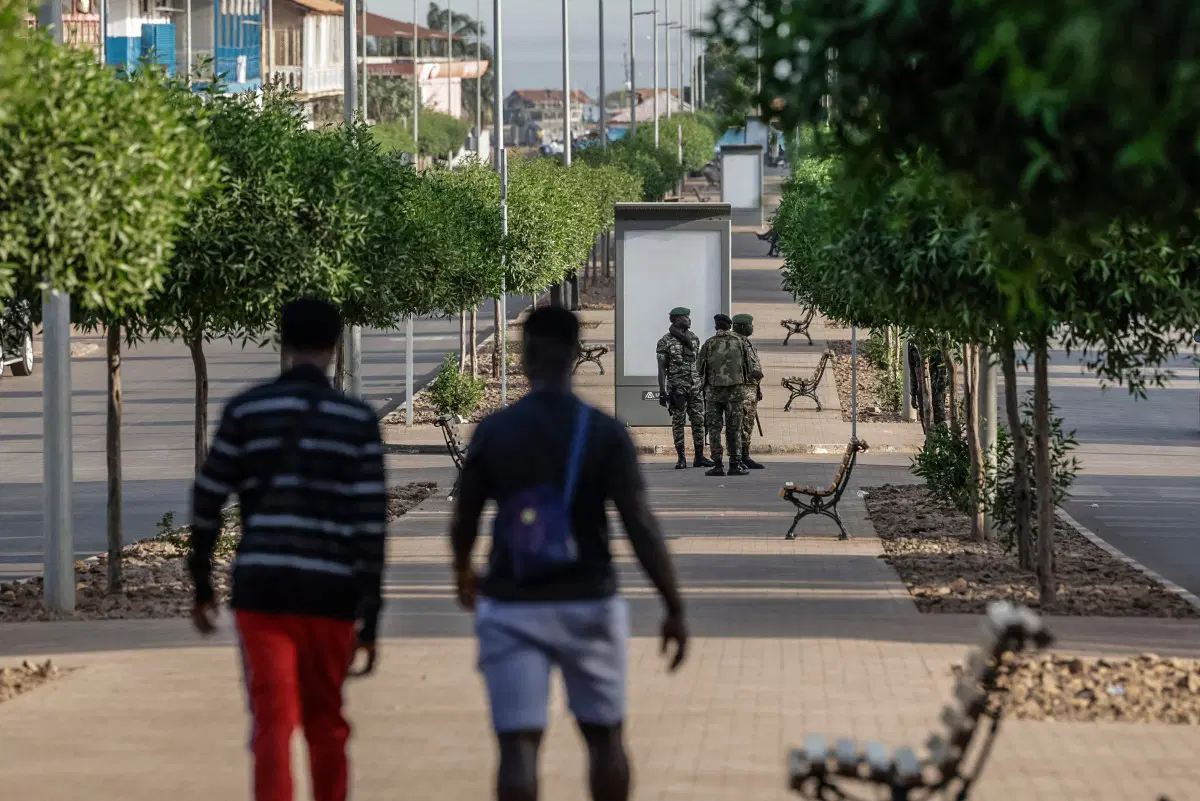
Tension gripped the streets of Bissau as military forces maintained a heavy presence around the presidential palace, while only a handful of residents cautiously navigated the main roads. The sudden arrest of President Umaro Sissoco Embalo has cast a shadow over the country’s political stability, already fragile due to decades of coups and unrest.
Observers noted that General Horta N’Tam, previously chief of staff of the army and considered an ally of Embalo, assumed leadership after taking an oath at military headquarters. In a statement to journalists, N’Tam emphasized the need for urgent action to counter threats he said endangered the nation’s democratic framework.
While normal life was disrupted, the military’s announcement also halted the electoral process, leaving the results of last Sunday’s vote in limbo. The vote had favored President Embalo for a second term, raising questions about the motives behind the swift takeover. According to military sources, intelligence uncovered a plot involving criminal elements and the smuggling of weapons intended to undermine constitutional order.
The military ordered a temporary suspension of all media broadcasts and imposed curfews across urban centers. Despite this, some strategic corridors, including land, air, and sea borders, were reportedly reopened within 24 hours to allow limited movement and commerce.
The upheaval prompted swift reactions from international organizations. ECOWAS condemned the coup, reiterating its “zero-tolerance” policy toward unconstitutional changes of government, while the UN Secretary-General expressed deep concern over the country’s fragile political environment. Former colonial power Portugal also cautioned against acts of violence that could further destabilize the nation.
Local media and civil society groups criticized the suspension of press activity, highlighting the population’s right to information during such crises. Reporters Without Borders emphasized that transparency is crucial when the country faces political uncertainty, and curbing media freedom could exacerbate tensions.
Guinea-Bissau, a nation long affected by coups since independence in 1974, has also gained notoriety as a hub for drug trafficking between Latin America and Europe. Analysts suggest that the intertwining of political instability with criminal networks contributes to the country’s vulnerability, making external oversight and international pressure essential in the current crisis.
High-ranking officials, including the chief of staff and the minister of the interior, were also detained alongside President Embalo. Opposition leader Domingos Simoes Pereira, previously barred from participating in the election by the Supreme Court, was reportedly arrested on Wednesday as well, further highlighting the political complexity surrounding the military’s actions.
As Guinea-Bissau grapples with yet another leadership upheaval, the region watches closely. West Africa has witnessed a series of coups in recent years, with governments in Mali, Niger, Burkina Faso, and Guinea also toppled, reinforcing concerns about the resilience of democratic institutions in the area.


