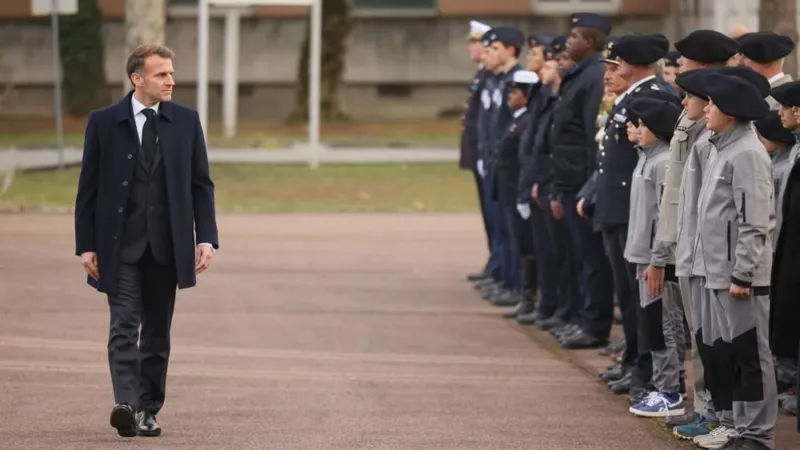
French President Emmanuel Macron has announced the reintroduction of a voluntary military service, citing the need for preparedness in an unpredictable global environment. The new scheme, targeting young adults primarily aged 18 and 19, is designed to combine civic engagement with practical military training, providing a monthly stipend of at least €800.
Macron framed the initiative as a measure of trust in France’s youth, emphasizing that national readiness requires active participation from every generation. “We must anticipate risks before they become threats,” he stated, highlighting that the country’s defence strategy should extend beyond professional soldiers to include motivated volunteers.
The program, initially limited to 3,000 participants next year, is expected to expand gradually to 50,000 by 2035, creating a layered defence structure of professionals, reservists, and volunteers. Military leaders have voiced support for the plan, suggesting it will provide a pool of trained personnel capable of supporting the armed forces and potentially inspiring long-term military careers.
While the proposal has received broad public approval, polls indicate some generational differences. Younger citizens, particularly those between 25 and 34, show slightly less enthusiasm, whereas a strong majority across the population supports the initiative. Students on the streets of Paris described it as an opportunity to foster national pride, personal discipline, and social cohesion.
The backdrop to this policy includes concerns over potential geopolitical confrontations with Russia, coupled with recent statements by Gen. Fabien Mandon, the French Chief of Defence Staff, stressing the importance of preparing public opinion for possible sacrifices in future conflicts. Though controversial, Macron has reassured citizens that recruits will not be deployed in foreign conflicts like Ukraine, emphasizing domestic preparedness and resilience.
France’s return to military service echoes trends in other European nations. Belgium and the Netherlands have launched voluntary schemes with financial incentives, while Germany is exploring a similar model. Eastern European countries such as Lithuania and Latvia maintain mandatory service, whereas Sweden recently reintroduced selective training for its youth. Finland and Greece have never abandoned conscription, and Switzerland is set to vote on a civic duty model.
Historically, compulsory military service has been deeply ingrained in French society. From the French Revolution’s citizen-soldier concept to the Algerian war, conscription shaped civic identity for generations. After being phased out in 1996, previous attempts to maintain a spirit of military preparedness, including Macron’s Universal National Service, met with limited success, often criticized as ineffective or symbolic.
With France facing fiscal constraints and ongoing budgetary challenges, the sustainability of the new initiative remains a topic of discussion. Yet, proponents argue that it offers practical training, strengthens national cohesion, and instills a sense of responsibility among young citizens while bridging gaps between military professionals and civilian volunteers.
#FranceMilitary #Macron #NationalService #YouthPreparedness #EuropeanDefence #VoluntaryService #SecurityPolicy #GlobalTensions