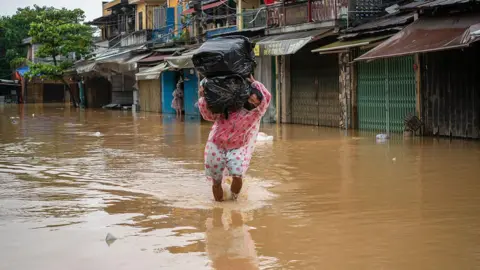
Central Vietnam has been battered by relentless flooding, leaving at least 41 people dead and nine still missing. Tens of thousands of residents have been forced from their homes, with over 52,000 houses submerged and half a million households and businesses left without power. Emergency teams, including military and police, have been deployed to relocate people to safety, as authorities scramble to manage the destruction.
The provinces worst affected include the coastal cities of Hoi An and Nha Trang, as well as the coffee-producing highlands of Dak Lak, where crops have been destroyed and homes inundated. In some areas, rainfall surpassed 1.5 meters over just three days, even exceeding the 1993 flood peak in certain locations. Landslides have damaged major highways, including the Mimosa Pass near Da Lat, forcing traffic to a complete halt.
Residents describe being stranded on rooftops and watching floodwaters tear through their neighborhoods. A restaurant owner in Nha Trang expressed despair over his submerged shops, stating that the water showed no signs of receding. Local media have documented images of destroyed bridges and submerged vehicles, highlighting the widespread damage.
This deluge follows a pattern of extreme weather that has repeatedly struck the country in recent months. Typhoon Kalmaegi earlier killed at least five people in Vietnam while uprooting trees and destroying homes, and Typhoon Bualoi claimed 11 lives in central and northern regions. Both storms caused extensive damage, with the former also leaving 188 dead in the Philippines. Experts attribute the intensifying typhoons and flooding to climate change, which has made storms stronger and more frequent.
The government estimates that natural disasters have caused around $2 billion in losses between January and October this year. Authorities have declared a state of emergency in affected provinces and are urging residents to stay safe and follow evacuation directives as heavy rains continue.
#VietnamFloods #ClimateDisaster #HoiAn #NhaTrang #DakLak #ExtremeWeather #FloodEmergency #TyphoonImpact #ClimateCrisis #NaturalDisasters