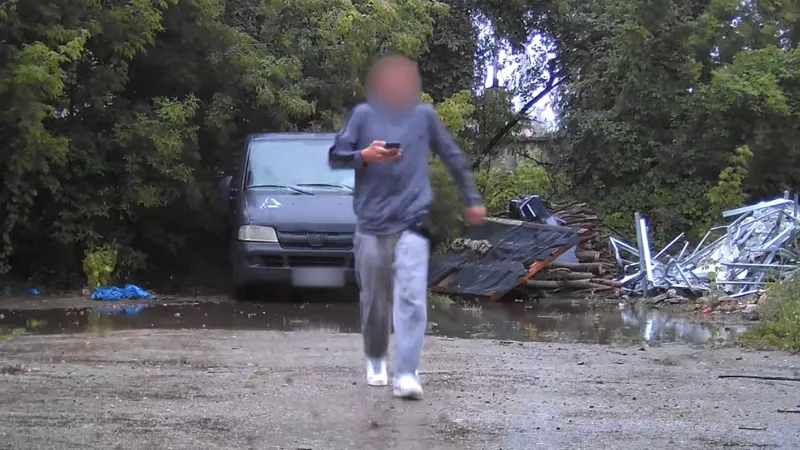
Ukrainian authorities are raising alarms over a troubling pattern of minors being recruited online to carry out acts of sabotage and attacks within their own country, with social media platforms such as Telegram and TikTok reportedly used as recruitment channels. In a high-profile case this year, a 17-year-old, referred to only as Vlad for privacy reasons, traveled roughly 500 miles from eastern Ukraine to the western city of Rivne to collect a hidden bomb and a communication device. He was promised $2,000 for planting the device in a van associated with Ukraine’s military conscription service.
Vlad described his apprehension during the attempt, saying, “When I was connecting the wires, I thought it could explode then. I thought I might die.” Despite the offer of payment, he emphasized that he had no support for Russia and no prior criminal involvement. The Ukrainian Security Service (SBU) intercepted the plot, preventing the detonation. Vlad, now 18, faces trial on terrorism charges, which carry potential sentences of up to 12 years.
Authorities estimate that over the past two years, more than 800 Ukrainians have been targeted for recruitment by Russian handlers, with at least 240 of them minors, some reportedly as young as 11. Cybersecurity experts have indicated even younger children, aged nine or ten, were approached for recruitment. The SBU is actively warning students in schools about the dangers of being manipulated into becoming saboteurs, highlighting the psychological and social vulnerabilities exploited by recruiters.
Deputy Head of Ukraine’s National Police Andriy Nebytov stated that these operations deliberately target susceptible youth who may not fully comprehend the consequences of their actions. “The enemy is not ashamed of using minors for making explosives out of household chemicals, planting them in various locations such as army recruitment offices or police stations,” he said.
The recruitment process typically involves remote instructions and monetary incentives rather than ideological alignment. Vlad recounted how he was guided through several increasingly dangerous tasks by a recruiter named Roman, first being paid $30 to collect a grenade that was not there, then $100 for setting fire to a van. The promised larger sums, amounting to thousands of dollars in cryptocurrency, were contingent upon him executing a high-risk bombing assignment that was ultimately thwarted.
Reports indicate that online channels recruiting for sabotage amplify anti-conscription sentiment among Ukrainians, often disguising the recruitment as high-paying remote work opportunities. Investigations by authorities have revealed that offers of thousands of dollars are made to carry out arson and sabotage against government buildings, banks, and other public facilities. Some channels remain active despite partial removal by Telegram following reports of incitement to violence.
The SBU has attributed a number of explosions and deaths among teenage recruits to remote detonation by their handlers, demonstrating the lethal risks involved. In March, a 17-year-old was killed and a 15-year-old seriously injured while transporting a bomb to a railway station in Ivano-Frankivsk. Ukrainian officials allege that Russian intelligence agencies are orchestrating these recruitment efforts, though independent verification remains challenging.
Vlad’s warning to other youths is stark: “It’s not worth it. They will either cheat you, and then you will end up in prison just like me, or you can take a bomb in your hands and it will simply blow you up.” The case underscores the complex and dangerous intersection of digital recruitment, child exploitation, and modern hybrid warfare tactics being used in Ukraine.
#UkraineConflict #ChildRecruitment #Sabotage #Telegram #RussiaUkraineWar #SecurityUpdate #CyberRecruitment #SBU #VulnerableYouth #WarOnCivilians