A chilling new report by Amnesty International has painted a grim picture of life in Nigeria’s South-East, revealing that at least 1,800 people — including a traditional ruler — have been killed in waves of violence that have engulfed the region over the past two years.
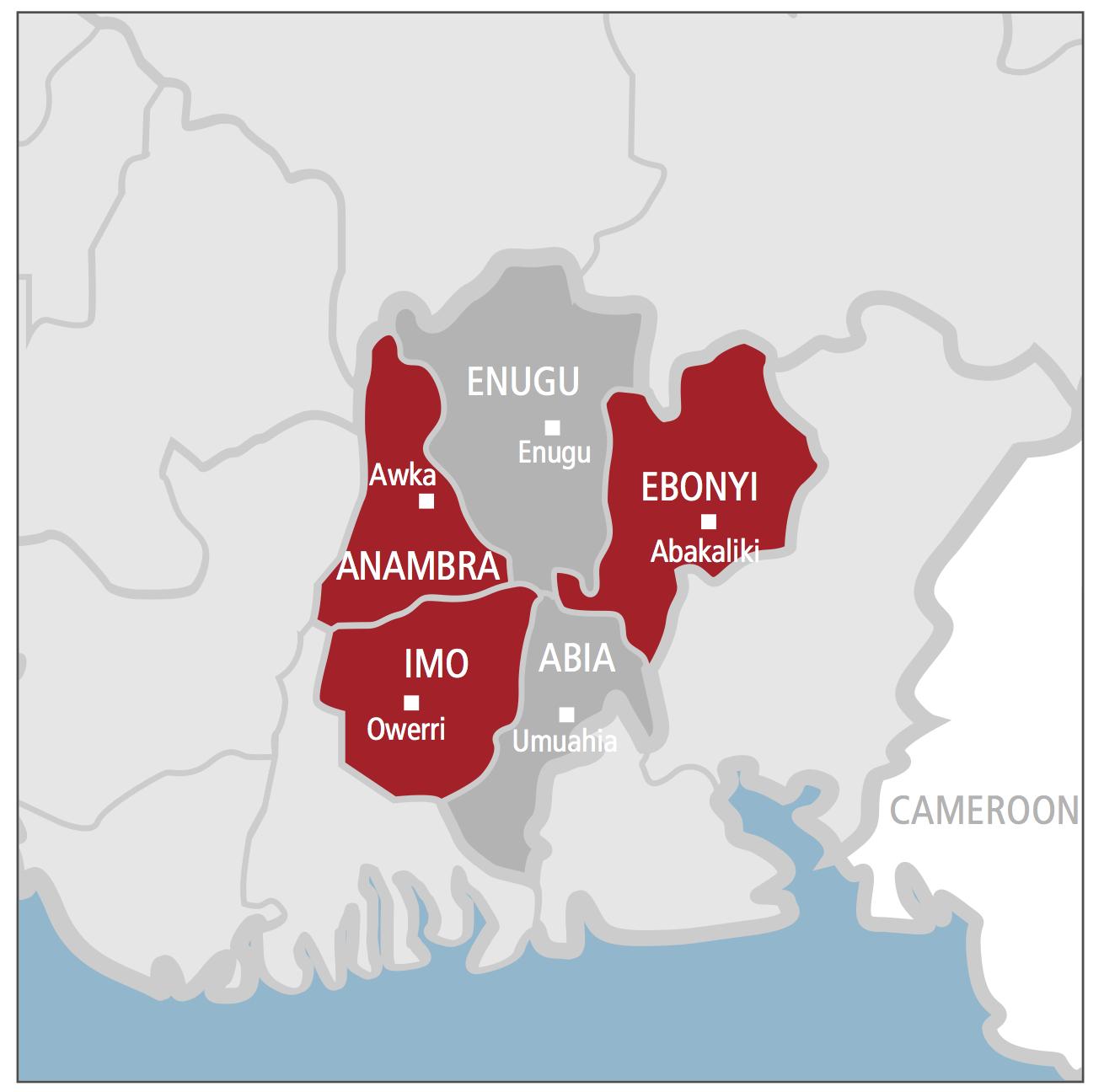
The human rights watchdog says the killings, spanning Abia, Anambra, Ebonyi, Enugu, and Imo states, are the result of a deadly mix of armed separatist groups, local militias, and state-backed security operatives operating with near-total impunity.
Between January 2021 and June 2023, Amnesty documented 1,844 deaths, citing a blend of eyewitness testimonies, police documents, and verified media reports. The organisation describes the situation as “a decade-long crisis of impunity” in which both state and non-state actors have left behind a trail of grief.
In one particularly brutal attack, gunmen stormed the palace of HRH Eze Ignatius Asor in the Obudi Agwa community of Imo State on November 14, 2022. Witnesses say the assailants, travelling in several vehicles, opened fire inside the palace courtyard, killing the monarch and two visiting chiefs. The attackers reportedly fired more than a dozen bullets into the royal father’s body before speeding away. No suspects have been apprehended to date.
Amnesty traced the origins of the unrest to 2019, when armed groups began enforcing “sit-at-home” orders inspired by the Indigenous People of Biafra (IPOB), a separatist movement agitating for the restoration of Biafra. Although IPOB’s leadership has consistently denied involvement in civilian attacks, the organisation’s report notes that splinter factions now operate independently, targeting police stations, markets, and political figures.
Imo State remains the epicentre of the bloodshed, with over 400 deaths recorded between 2019 and 2021, followed closely by Anambra and Ebonyi. Since December 2022, another 100 fatalities have been documented — many resulting from night raids, assassinations, and revenge attacks.
Amnesty’s findings do not spare government forces or the Ebube Agu Security Network, a regional task force established by South-East governors in 2021. The group is accused of arbitrary arrests, torture, and extrajudicial killings, often mirroring the same brutality they were created to curb.
“Communities now live between the terror of the gunmen and the fear of those meant to protect them,” the report said. “The absence of justice emboldens the killers.”
Victims’ families reportedly face harassment when seeking justice, while police investigations either stall indefinitely or vanish into bureaucratic silence.
The violence has crippled daily life across the South-East. Once-bustling markets now close early, farmers avoid highways, and business owners lose millions due to recurring sit-at-home orders. In many rural communities, residents have fled en masse, leaving behind burnt homes and empty farmlands.
Amnesty’s report also highlighted mass displacement in towns such as Oguta, Izombe (Imo) and Lilu (Anambra), where gunmen have imposed levies, looted livestock, and razed entire villages.
Responding to Amnesty’s allegations, the Nigerian Defence Headquarters dismissed the report, insisting that the armed forces operate strictly within the law and conduct “measured, intelligence-driven operations.”
However, local journalists and civic groups continue to document cases of extrajudicial killings and property destruction during security raids, particularly in Imo and Ebonyi states.
In its 2025 report, titled “A Decade of Impunity,” Amnesty urged the Federal Government to establish an independent judicial panel to investigate all killings, abductions, and torture cases in the region. It also called for compensation for victims’ families and an end to the militarisation of civilian communities.
“Security must not come at the cost of human rights,” the report warned. “Without justice, peace in the South-East will remain a mirage.”
The bloodshed shows no signs of abating. In May 2025, at least 30 travellers were massacred on the Okigwe–Owerri highway in Imo State when gunmen opened fire on passing vehicles and torched over 20 of them. Weeks later, 15 villagers were abducted in Anambra, while four policemen were ambushed and killed in Ebonyi.
Amnesty has urged authorities to act decisively before the South-East slides into “a full-blown conflict zone.”
#SouthEastCrisis #AmnestyInternational #HumanRights #IPOB #ImoState #Anambra #Insecurity #NigeriaViolence #JusticeForVictims #DecadeOfImpunity #iWitnessLive #BreakingNews #RuleOfLaw #HumanRightsWatch #NigeriaNews