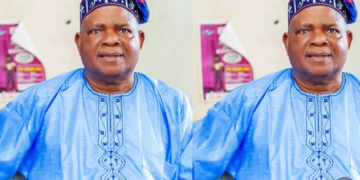
The Minister of Marine and Blue Economy, Adegboyega Oyetola, has said that the Federal Government was making efforts to reposition the fisheries and aquaculture sector as a driver of food security and rural development.
He explained that this includes the revival of fishing terminals, automation of licensing systems and new incentives to encourage private-sector investment.
Oyetola added that Nigeria recorded three consecutive years with zero piracy incidents in its territorial waters.
At a stakeholders forum on the effective implementation of the National Policy on Marine and Blue Economy on Thursday in Lagos, Oyetola attributed the milestone to the success of the Deep Blue Project, a comprehensive maritime security initiative and renewed focus on coordinated enforcement.
He explained that Nigeria had maintained zero piracy incidents in its territorial waters for three consecutive years through the Deep Blue Project (DBP), saying that this was a remarkable achievement that has earned us international commendation and contributed significantly to regional maritime stability.
Oyetola explained that Nigeria’s leadership role in maritime security had been recognised by the African Union, which recently endorsed Nigeria’s offer to host the Adrican Union Combined Maritime Task Force in Lagos.
He added that the policy endorsed by the Federal Executive Council was a key part of President Bola Ahmed Tinubu’s Renewed Hope Agenda, offering a comprehensive roadmap to unlock value across multiple sectors, including maritime security, port infrastructure, aquaculture, marine biotechnology, ocean governance and renewable energy.
According to him, “this gathering is not ceremonial. It is a working session designed to set priorities, define institutional responsibilities, and ensure coordinated, accountable implementation.”
The minister outlined major infrastructure investments, including the Federal Government’s approval of contracts for the reconstruction of the Apapa and Tin-Can Ports, as well as ongoing procurement processes for upgrades in the Eastern Ports. These are to be complemented by digital systems like the Port Community System, E-Call-Up platform, and a unified clearance process to ease port congestion and improve trade efficiency.
To strengthen Nigeria’s shipping capacity, he announced that the government was pursuing the revival of a National Carrier through public-private partnerships, noting that preparatory work for the disbursement of the Cabotage Vessel Financing Fund by NIMASA was also underway, with strong emphasis on transparency and regulatory compliance.
Oyetola noted that over 42,000 life jackets had been distributed nationwide, along with the deployment of ferries and patrol boats. These interventions, backed by the Inland Waterways Transportation Regulation of 2023, are already reducing boat mishaps and restoring public confidence in water travel.
On the regional front, Oyetola highlighted Nigeria’s role in championing the operationalisation of the Regional Maritime Development Bank, which will be headquartered in Abuja.
The minister explained: “The Bank is expected to provide long-term financing for critical infrastructure and support cross-border trade in West and Central Africa.
“At the global level, Nigeria has officially launched a bid for a Category “C” seat on the International Maritime Organisation (IMO) Council, a move that would enhance the country’s influence in shaping global maritime policies.
“The transition to a sustainable blue economy is not automatic. It requires innovation, investment, strong institutions, and capacity building.”