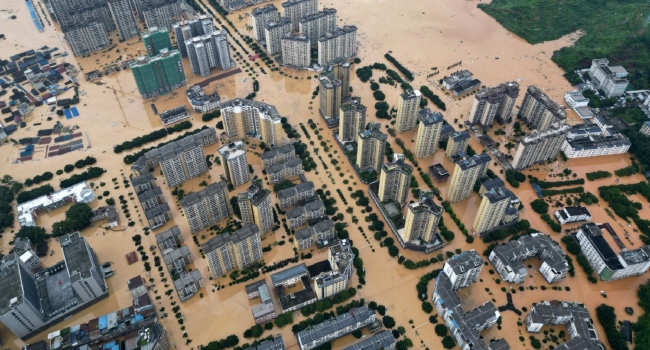
Flooding in China’s southwestern Guizhou province has claimed six lives and displaced over 80,000 people, according to a report from state broadcaster CCTV. The floods, described as “exceptionally large,” have battered Rongjiang County since Tuesday, prompting authorities to initiate the highest-level emergency flood response.
By Thursday, authorities confirmed that six people had died as a result of the disaster. Local officials reported widespread damage in low-lying areas, with roads rendered impassable, communication networks disrupted, and many residents trapped by rising waters. Although the floodwaters have now fallen below warning levels, recovery and rescue operations are still ongoing.
Eyewitness accounts and state media coverage revealed the severity of the situation. One report from Xinhua described a football field submerged under three meters of water, while a resident shared that they had to be rescued from the third floor of their building. The flooding also affected neighboring Guangxi province, where torrential rains triggered mudslides and caused riverbanks to overflow.
In response, flood alarms have been raised along 20 rivers in the Guangxi region. Emergency teams are actively working to restore communication systems and ensure coordinated disaster relief efforts. Authorities emphasized their commitment to restoring affected communities and continuing the search for any trapped individuals.
This latest disaster is part of a broader pattern of extreme weather in China this summer. Just days ago, Beijing experienced one of its hottest days of the year, triggering the second-highest heat alert. Additionally, thousands were evacuated last week in Hunan province due to relentless downpours.
China’s increasing vulnerability to climate-related disasters highlights the urgent need for robust infrastructure and coordinated emergency response systems, especially in its rural and mountainous regions.