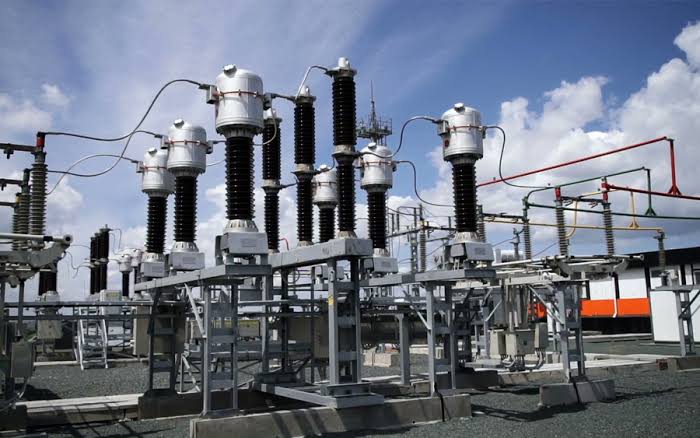
A quiet yet monumental transformation is currently sweeping through Nigeria’s beleaguered electricity sector. In a historic move, following President Bola Tinubu’s Electricity Act of 2023, individual states are now stepping up to assume the responsibility of regulating their own power supply. This groundbreaking shift empowers them to generate, transmit, and distribute electricity within their specific domains, a role that was previously the sole purview of the federal government’s Nigerian Electricity Regulatory Commission (NERC).
As of today, seven states have already taken full control of their electricity markets: Enugu, Ondo, Ekiti, Imo, Oyo, Edo, and Kogi. The transition is ongoing, with more states, including Lagos, Ogun, Niger, and Plateau, expected to complete their own takeovers between June and September. Anambra has also recently enacted its own electricity law and is actively preparing to join this growing list.
This decentralization is widely hailed as a crucial step towards bringing power closer to the people and attracting much-needed private investment to fix Nigeria’s persistent electricity challenges. However, as states embrace this enormous responsibility, a crucial question hangs in the air for ordinary Nigerians: Is this a blessing that will finally bring stable power, or a curse that will lead to more confusion and inequality?
The Promise of Local Control: Opportunities on the Horizon
Proponents of the Electricity Act champion the potential benefits of this new decentralized system. One of the most significant advantages is the ability of states to develop localized power solutions that directly address their unique energy needs. This could mean establishing mini-grids for specific industrial clusters, rural communities, or even urban neighborhoods that remain underserved by the national grid. Such targeted approaches could lead to more reliable and consistent power supply in areas that desperately need it.
Furthermore, it’s believed that this shift will foster a more attractive investment climate. Rather than navigating the complexities of a single, massive federal bureaucracy, private investors might find it simpler and more appealing to deal with individual state regulatory bodies. This could unlock new funding streams essential for building modern power infrastructure. Ultimately, proponents hope that increased local control and investment will spur greater competition among power providers within states, potentially leading to improved service quality and more choices for consumers.
Navigating the Minefield: Challenges and Lingering Concerns
Despite the optimism, the transition is fraught with significant hurdles and concerns. A major worry, even voiced by some NERC officials who spoke anonymously, is whether many states possess the necessary expertise and manpower to effectively manage complex electricity markets. Setting fair and sustainable electricity prices, known as tariffs, for instance, is a highly specialized skill, with very few experts available globally. If states lack this critical know-how, it could lead to unstable pricing and financial difficulties for power companies, ultimately affecting consumers.
The prospect of 36 different sets of rules and regulations also raises fears of confusion and conflicting standards across the country. This could complicate operations for larger power companies that span multiple states, potentially hindering seamless service delivery.
Another pressing issue is subsidy management. Currently, the federal government sometimes intervenes by subsidizing a portion of electricity bills to keep prices affordable. Under the new structure, each state governor will have the power to decide whether their administration will offer subsidies and, if so, how much they are willing to pay. This localized approach could widen inequalities in electricity access and affordability across states, creating a patchwork of varying costs for citizens.
Concerns also extend to the enforcement of penalties, particularly for electricity theft. NERC previously handled such cases, but under the new regime, these responsibilities must be transferred to state commissions. The worry is whether these state bodies possess the trained enforcement teams and experience to effectively tackle this pervasive problem. As one NERC official noted, “NERC must hand over theft cases to state commissions, which don’t have trained enforcement teams on such issues.”
States’ Readiness: A Mixed Bag
NERC has already issued transfer orders to 11 states, with each order setting a six-month timeline for a full operational handover. While Enugu State is widely regarded as the most prepared, having quickly established its own regulatory commission and even penalizing a power company for overbilling, the readiness of others is questionable. Lagos is also making steady progress, leveraging its previous experience in embedded generation and independent power projects. The Lagos State Electricity Regulatory Commission (LASERC) has already issued a directive asserting its exclusive control over electricity market operations in the state.
However, consumer advocacy groups like PowerUp Nigeria, led by Adetayo Adegbemle, express deep concern over the overall preparedness of many states. Adegbemle highlighted that while 11 states have secured autonomy, “many of them are yet to move beyond the paperwork. It’s one thing to declare interest, it’s another to actually roll up your sleeves and get the work done.” He pointed out that visible regulatory activity is still absent in most of these states, raising fears that some are simply “playing to the gallery.” He warned that states are only now realizing the full financial implications, as electricity from the national grid will be invoiced at full cost, forcing them to decide on subsidies.
A Journey, Not a Sprint
Despite the challenges, proponents argue that this decentralization is a necessary evolution. Kunle Olubiyo, President of the Nigeria Consumer Protection Network, views it as a true reflection of federalism, akin to the system in the United States. He believes it will allow states to license off-grid, embedded, or mini-grid power projects to serve their unique economic needs, without necessarily connecting to the national grid. This could foster competition and improve service delivery.
However, Olubiyo also cautioned that the system must be managed carefully to “avoid outright anarchy” and ensure the supremacy of the Constitution where state and federal laws might conflict.
Conversely, Adeola Samuel-Ilori, National Coordinator of the All Electricity Consumers Protection Forum, expressed optimism that if states enforce firm regulations, the sector could see significant improvements in distribution and supply. Yet, he also voiced concerns about political interests overriding public and economic benefits, questioning if consumers might eventually prefer the old federal order.
Ultimately, Professor Dayo Ayoade of the University of Lagos urged both federal and state governments to collaborate and create mechanisms that foster growth during this complex transition. He stressed the importance of state regulators being investor-friendly, rather than implementing rules that could deter investment.
As states embark on this massive power shift, the eyes of the nation will be fixed on the outcomes. Will this bold decentralization truly usher in an era of better, more reliable electricity, or will it fragment the sector and deepen existing challenges? Only time will tell if this ambitious reform proves to be a true blessing for Nigeria’s energy future.