The Presidency has disclosed that some of the three countries that opted out of the Economic Community of West African States (ECOWAS) have begun moves to return to the regional bloc.
Recall that Niger, Mali and Burkina Faso finally exited the regional bloc on January 29th having been suspended by ECOWAS leadership after military take over of government in those countries.
According to a Presidential spokesman, Sunday Dare, the countries plotting to return were exploiting the six-month window allowed by the body in December last year.
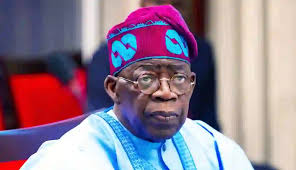
Dare made this disclosure while speaking to newsmen on Wednesday as President Bola Tinubu departed Nigeria for France enroute Addis Ababa to attend the 46th Ordinary session of the African Union (AU) scheduled to hold in Addis Ababa, the Ethiopian capital, from February 12 to 16, 2025.
The outing would see the president participating in the 38th Ordinary Session of the Assembly of the AU Heads of State and, in his capacity as ECOWAS Chairman, provide a detailed report on the bloc’s handling of the situation.
The three countries had in January 2024 announced their withdrawal from ECOWAS.
They accused the regional bloc of abandoning its founding ideals and yielding to external influences, criticising sanctions imposed to reverse their respective military coups.
Their withdrawal followed a series of military takeovers in Mali (2020 and 2021), Burkina Faso (2022), and Niger (2023), which led to their suspension from ECOWAS and strained relations with the bloc.
In response, the states formed the Alliance of Sahel States, a new regional bloc prioritizing defence and mutual support. They have also distanced themselves from traditional Western allies, particularly France, and have sought closer ties with Russia.
At the 66th Ordinary Session of the ECOWAS Authority of Heads of State and Government on December 15, 2024, the bloc approved the withdrawal of the three estranged states by January 29, 2025.
However, it declared a six-month transition period lasting until July 29, 2025, within which it would engage in withdrawal protocol.
President of the ECOWAS Commission, Dr Omar Touray, said the community would keep its doors open to any state that chooses to return to the fold within those six months.
Dare indicated that at least one or two of the countries, while moving toward disengagement, may be reconsidering and seeking to realign with ECOWAS under the terms offered.
“You’ve seen the military coups that occurred. You’ve seen what has come out of it and how he has managed it even to the point of giving the three countries six months to rethink and reconnect with ECOWAS.
“Of course, we know that January 29 has expired. We know that the process of their leaving is almost concluded, but we also know of a truth that one or two of these countries are trying to reach back and take advantage of the six-month window.
“I think that at the AU Summit in Addis Ababa, the chairman of ECOWAS will have an opportunity to brief the continental body, and of course, some of these countries will be there, too,” he stated.
During talks with German President Frank-Walter Steinmeier at the State House on December 11, Tinubu affirmed that Nigeria would pursue diplomatic solutions to the political impasse in the three countries, ensuring innocent citizens are not unduly punished for the actions of military regimes.
As of February 2024, the remaining ECOWAS member states were Benin Republic, Cape Verde, Côte d’Ivoire, The Gambia, Ghana, Guinea, Guinea-Bissau, Liberia, Nigeria, Senegal, Sierra Leone, and Togo.
Dare equally highlighted a key development in which a Nigerian national will assume a Commissioner role on the AU’s Peace and Security Commission—a move he called critical for Nigeria.
He attributed this achievement in part to the President’s foreign initiatives and policies. He also alluded to the influential posit