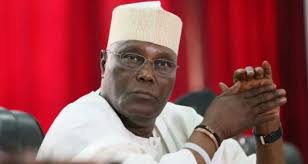
The Attorney General of the Federation and Minister of Justice, Prince Lateef Fagbemi (SAN), said that some governor s’ actions had led to the starvation of local government councils, preventing them from fulfilling their constitutional duties.
Speaking at the 2024 annual conference of the National Association of Judiciary Correspondents, Fagbemi issued warning to governors bypassing the Supreme Court judgment on local government autonomy.
He threatened to seek a contempt of court suit if the defiance continues.
The Supreme Court had on July 11, 2024, delivered a landmark judgment affirming the financial autonomy of the 774 local government areas in the country and stopping governors from further control of funds meant for the councils.
Fagbemi acknowledged some states’ actions against the local government autonomy, adding that some of the steps taken by the states contradicted the Supreme Court’s judgment.
“I am aware that some states have embarked on legislations, promulgation of legislations which appear to be antithetical to the tenets or tenor of the judgment of the Supreme Court.
“My simple comment is that the states concerned are advised not to tread within the precincts of contempt of court,” he said.
The AGF said that it did not bring legal action against any sub-national government lightly, but added that constitutional provisions must be respected.
“It does not give anybody any joy to drag any of the sub-nationals to court, whether the High Court, Court of Appeal, or Supreme Court.
“But you must also take cognisance of the fact that the constitution is there to attend to any concern expressed by anybody or claim of right.
“Some states have, by their various illegal actions, starved local government councils to the extent that most of them cannot exercise their constitutional powers or perform their statutory functions.
“This is one type of government inhumanity to another type of government,” he said.
The AGF invoked Section 1(2) of the Nigerian Constitution, which asserts that the Federal Republic of Nigeria shall not be governed except by the constitution.
“That was what motivated me in asking the Supreme Court to say that it is treason on the part of the governors to try and take over other than the way the constitution has prescribed,” he stated.
The AGF further cautioned state attorneys-general to avoid actions that could attract scrutiny from the Legal Practitioners’ Disciplinary Committee for professional misconduct.
He underscored that ignoring or bypassing constitutional rulings, especially on issues such as local government autonomy, could result in legal professionals being held accountable for unethical practices.
“My colleagues at the sub-nationals should not also invite what I would call the attention of the Legal Practitioners Disciplinary Committee for misconduct,” he said.
Fagbemi emphasised that with local government areas granted the autonomy promised by the constitution, there would be a more independent and accountable system, encouraging greater public participation in political processes.
This, he argued, would lead to more effective governance at the grassroots level, empowering citizens to actively shape the development of their communities and ensuring that local government councils fulfil their constitutional duties without undue influence from state governors.
“It is expected that having become divorced from the financial dependency on the state’s government, more Nigerians will begin to get involved in grassroots politics to ensure effective governance from the ground up,” the AGF said.
While acknowledging the discomfort it caused and the dislike of the governors, Fagbemi stressed that the actions were for the benefit of the general populace.
Fagbemi also cautioned local government chairmen across the country against mismanaging or looting public funds.
The AGF stressed that the autonomy granted to local government areas by the Supreme Court was for the purpose of empowering the grassroots and not for carting public funds into private pockets, as such an attitude would not go unpunished.
He stressed the importance of accountability and good governance, reiterating that tampering with local government funds would attract severe legal consequences, including imprisonment.
“If they (LG chairmen) choose to tamper with public funds and fail to deliver on their constitutional mandates, they risk going to jail. The trust placed in them must not be betrayed,” the AGF said.
Fagbemi, while highlighting the role local government areas play in promoting grassroots development, urged the chairmen and other officials to prioritise their constitutional duties.
He said, “Primary education must be accessible to every child, pregnant women and infants must receive quality healthcare, and the vulnerable in our society must benefit from sustainable welfare programmes.
“Any debt incurred by local governments must align with their constitutional functions. Projects like building airports, which are outside their scope, will not be tolerated.”
The AGF commended President Bola Tinubu’s administration for its commitment to strengthening governance structures at all levels.
He urged local government officials to embrace transparency, warning that the era of impunity was over.
The AGF stressed that the ongoing efforts aim to ensure that state independent electoral commissions operate with the independence granted to them by the constitution.
“We have tried and will continue to try to allow the various states’ independent electoral commissions the independence granted to each one of the states. But we are not resting on our oars.
“If we don’t have any meaningful response, we may also invite the Supreme Court to help us take a look at the constitution and see whether they should be allowed to continue to conduct local government elections in the form that we want or not,” he said.
Fagbemi also called on the media to ensure accurate and responsible reportage of issues related to governance and judicial proceedings.
“Good governance is a collaborative effort, and every tier of government must be held accountable,” he said.
He added that of the three arms of government in the country, the judiciary remained the best and least corrupt.