Electricity consumers have expressed frustration over the recurrent collapse of Nigeria’s national grid, which occurred again on Saturday, marking the third incident within a week. Many described it as an embarrassment to the nation, raising concerns about the country’s ability to meet its power generation goals.
The grid reportedly collapsed at around 8:16 a.m., causing widespread blackouts. Power generation was recorded at 3,042 megawatts as of 8 a.m., peaking at 3,968MW an hour earlier. However, it plummeted to a mere 47MW shortly after the collapse, though efforts by the system operator led to a slight recovery.
The Minister of Power, Adebayo Adelabu, had earlier assured Nigerians that the country was on track to achieve 6,000MW of power generation by the end of the year, with further improvements promised for 2025. However, these repeated grid collapses have cast doubt on the feasibility of reaching this target.
Despite efforts to restore normalcy, consumers are growing increasingly impatient. Ndidi Mbah, the spokesperson for the Transmission Company of Nigeria (TCN), did not respond to inquiries regarding the recent grid failure.
In an interview with our correspondent, Princewill Okorie, Convener of the Electricity Consumer Protection Advocacy Centre, voiced concerns about the financial burden on consumers, particularly those under estimated billing, who continue to pay for electricity despite the frequent blackouts. Okorie suggested that the use of substandard equipment in the power infrastructure could be a contributing factor.
He also criticized the Nigerian Electricity Regulatory Commission (NERC) and the Ministry of Power for prioritizing the interests of distribution companies over consumers, particularly in the area of metering. Okorie further called on the Federal Competition and Consumer Protection Commission (FCCPC) to step up its efforts in safeguarding the rights of electricity consumers, questioning what actions the agency had taken to address these recurring issues.
Okorie said, “Consumers don’t have electricity supply after you’ve raised their bill to over N200 per kilowatt-hour as Band A customers. Then, those who are not metered will be billed as if they have a power supply for 24 hours. The consumers are at the receiving end in all of these; their businesses have collapsed. How will they make money? The same consumer that is funding infrastructure; the same consumer that is funding metering, the same consumer that is paying the bill.
“What is the quality of materials used in building the grid? Who are the professionals building the grid? How can the grid be stable when transformers are connected to the grid at the weekend and at night without supervision? When substandard materials are being used all over, how can you build a stable grid?”
NERC blames explosion
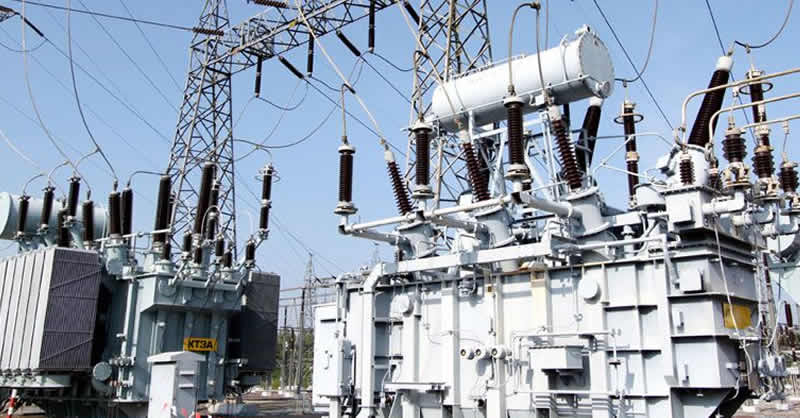
The NERC said the grid collapse was a result of a current transformer explosion.
In a statement on its social media handles, the NERC said it “notes with concern the recent escalating incidence of grid disturbances often leading to marked outage in several states thus reversing many of the gains recently achieved in reducing infrastructure deficit and improving grid stability.”
The statement reads, “Initial reports on the grid disturbance that occurred this morning indicate that today’s outage was triggered by an explosion of a current transformer at the Jebba transmission station at 0815hrs and an associated cascade of power plants shut downing from the loss of load.”
The commission stated, however, that efforts to restore supply had advanced “with power significantly restored, as at 1300hrs, in 33 states and the FCT.”
It added, “In line with the provisions of the Electricity Act 2023, the unbundling of the System Operator function out of Transmission Company of Nigeria Plc is ongoing with the expectation that an independent System Operator would engender more discipline in grid management and optimized investment in infrastructure.”
Adelabu had said during the week that there was the need to have power grids in different regions or states to put an end to incessant grid collapses.
The minister, who spoke when he unveiled Hexing Livoltek in Lagos, said grid collapse was almost inevitable in Nigeria given the deplorable state of the country’s power infrastructure.
According to him, having multiple power grids in each region and state would ensure stability.