The Economic Community of West African States (ECOWAS), has been cautioned to apply diplomacy and dialogu instead of military action in resolving the political crisis in Niger Republic.
The Diaspora Action for Democracy in Africa (DADA), gave the caution while addressing a World Press Conference on Thursday in the nation’s political capital, Abuja.
The Group also advised the Judiciary to be cautious and ensure to uphold justice in the delivery of judgement in the pending Presidential Election Petition, warning that if their verdict fails to satisfy the requirements of justice, it might trigger anger among the youths of the country.
Delivering the statement on behalf of the group, the Spokesperson of DADA, Mr. Great Imo Jonathan, noted that the two major issues that had emerged as matters of utmost national importance not only to Nigerians, but to all Africans and friends of Africa are: he 2023 Nigeria Presidential Election and consequent Judicial process, and the ECOWAS threat to deploy military forces to overturn the military coup in Niger Republic.
Jonathan pointed out that the people of Niger Republic should be allowed through their national institutions, the opportunity to revert quickly to a representative democratic government, without necessarily applying military action.
He argued that diplomacy and dialogu would result in peaceful resolutions of the crisis in the country while military action would definitely result in wasting of blood of citizens of Niger and indeed other Africans, as the war would certainly spill over to neighboring countries.
Part of statement reads: “Recent developments in neighbouring Niger Republic have become the subject of international attention. For Nigeria, this development is a matter of dire and urgent national interest and security. Inevitably, Niger is a hot button issue for ECOWAS, as well as various international interlocutors.
“Regional leaders ended their second emergency summit on Niger in Abuja on Thursday 10th August, by “ordering the deployment of the ECOWAS Standby Force to restore constitutional order in Niger,” where the military deposed elected President Mohamed Bazoum in a coup on 26th of July.
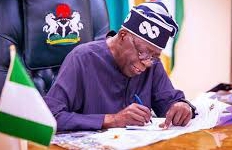
“Nigerian President Bola Tinubu, who is Chair of the Authority had in his opening address, said that no option was off the table, including the use of force to restore constitutional order in Niger. Algeria, another key Niger neighbour, along with three ECOWAS suspended member States ruled by the military – Mali, Guinea, and Burkina Faso – have kicked against any military intervention in Niger.
“Mali and Burkina Faso military regimes have warned that military action by ECOWAS would be considered a declaration of war against their countries and could lead to their withdrawal from ECOWAS and their joint measures to defend the armed forces and people of Niger.
“Given such a delicate scenario, ECOWAS’ threat to deploy its Standby force to Niger also runs against independent dissenting opinions. Defence experts have expressed reservations about the appropriateness of such as a high-risk option as well as the practicality of the military deployment, given that the regional Standby Force has been facing financial and operationalisation challenges.
“In the words of Paul Ejime, an ECOWAS and AU Conflict Resolution Consultant, “Apart from the possibility of a military confrontation escalating into a catastrophic war, and the consequences of military intervention in the complex environment can be better imagined than experienced.”
“Therefore, regardless of the positions taken by various parties that have direct or tangential interests in Niger, primacy must be given to dialogue and diplomacy towards a resolution with minimal disruptive impact on Nigeria and the West African sub region.
“Whereas ECOWAS authorities have indicated that they remain open to various conflict resolution options, diplomacy should remain the overarching imperative in resolving the present crisis. We join the many well-meaning Nigerians who have advocated that any intervention in the crisis, should be pre-eminently through diplomatic dialogue among all strategic interests in the crisis.
“The people of Niger are allowed via their national institutions, the opportunity to revert quickly to a representative democratic government. While ECOWAS must seek to discourage the spread of military dictatorships in West Africa, the recourse to armed deterrence must be restrained by multilateral diplomatic mechanisms.”
Commenting on the Presidential Election Petition and the pending judgement, the Diaspora Group cautioned the Judiciary not to tamper with justice, so as not to spark off agitation that might set the country on fire.
“The Judiciary is the only institution that has all that it takes to save this country from the threat of implosion. All eyes have been on the judiciary because of Nigeria’s respect for the law. It does not mean that the members of the Presidential Election Tribunal are in a better position in this case to tell Nigerians the person who won the presidential election.
“Nigerians do not wait for any court to tell them the winner of any election. It is the electorate that should tell the court so because they know more than the court whom they voted to be their President. But since it is the prerogative of the court to ensure that truth and justice prevail each time they are disputed, to make room for peace and harmony, the court has been given enough evidence to prove the real winner of the 2023 presidential election.
“Arising from our discussions with a wide array of Nigerians is the fear that the judiciary needs to be cautious because if their verdict fails to satisfy the requirements of justice it may detonate the youth’s simmering anger and set the country ablaze,” Jonathan warned.