The Independent National Electoral Commission (INEC) said foreign-driven disinformation is one of the gravest threats to the 2027 general election.
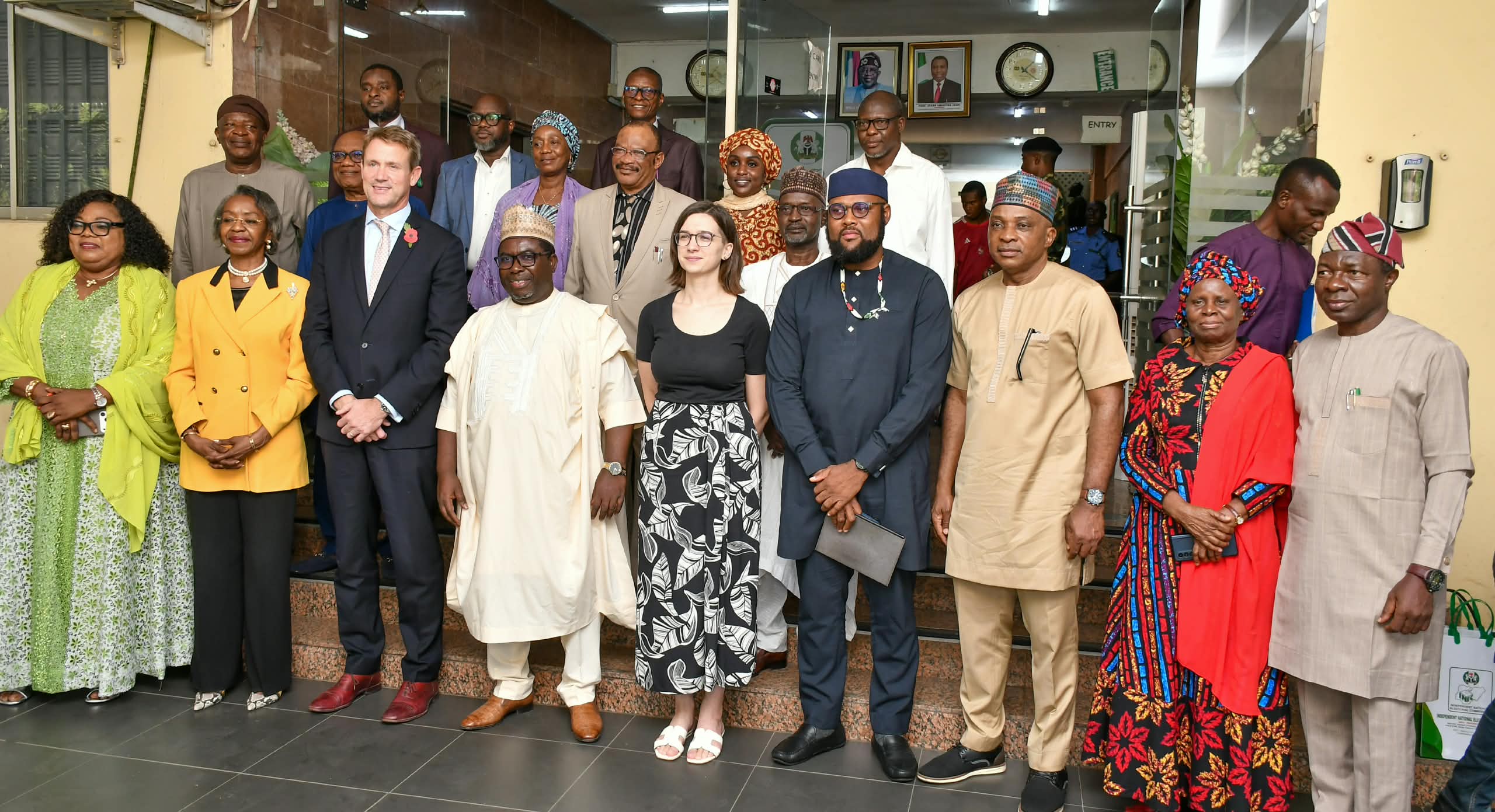
INEC Chairman Prof. Joash Amupitan who spoke on Wednesday when he played host to Special Representative of the United Nations Secretary-General for West Africa and the Sahel, Mr Leonardo Santos Simao, who also doubles as Head of the UN Office for West Africa and the Sahel (UNOWAS), and the British High Commissioner to Nigeria, Mr Pete Vowles, in separate courtesy visits, requested the United Nations and the United Kingdom to help the INEC counter it.
Prof. Amupitan told the UN delegation that INEC wants a partnership on a rapid response mechanism and public awareness initiatives to combat Foreign Information Manipulation and Interference (FIMI).
According to him, foreign actors often work through lookalikes rather than directly, calling it “a very big challenge” and a serious threat to Nigeria and the entire West African region.
Prof. Amupitan stated that the INEC’s recent research showed a growing trend of such manipulation in the sub-region.
He disclosed that the commission is holding local and zonal engagements, to educate staff and the public on the dangers of misinformation and disinformation, and the negative use of artificial intelligence.
The INEC Chairman also requested from the British High Commissioner, joint initiatives aimed at “combating AI-driven manipulation, Foreign Information Manipulation and Interference (FIMI), fake news, and hate speech, thereby protecting public trust in the democratic process.”
He noted that INEC shared the UN’s view that “election should be a source of peace and stability,” disclosing that the commission is working to ensure the 2027 election is credible, with efficient logistics, transparent result management and results declared in due time.
Prof. Amupitan sought the UN’s support for early-warning and monitoring systems, high-level dialogue among political actors to prevent violence and reject hate speech.
He also requested joint programmes to promote the inclusion of women, youth and vulnerable groups, disclosing that INEC is using the Election Risk Management (ERM) tool, working with security agencies, to map vulnerable areas for special attention.
The UN envoy, M. Simao said the UN’s purpose was to back the INEC in a demanding task, warning however that “Election should not be another source of violence for the country, another burden for the country.”
He stated that UNOWAS had consulted political parties, candidates and government institutions on the country’s preparedness, and assured that the UN would monitor the 2027 general election, “not as observers because we don’t have mandates to be observers,” but to “inspire and encourage also positive behaviors.”
Mr Vowles on his part, described the visit as a courtesy call to learn about INEC’s work, adding that it was “the recognition of how much Nigeria’s democracy matters to Nigeria, to 240 million Nigerians, to the region, and to the world.”
He added the 2027 elections are “a really important opportunity for Nigeria to showcase to the world how a strong democracy in a large, diverse country should operate.”