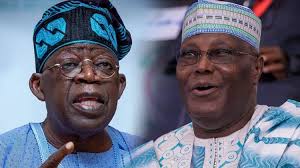
Former Vice President Atiku Abubakar has fired back at President Bola Ahmed Tinubu, accusing him of hypocrisy, distortion of facts, and political desperation over recent comments on Nigeria’s privatisation programme.
In a statement issued on Friday by his Senior Special Assistant on Public Communication, Phrank Shaibu, Atiku described the President’s remarks as a “reckless tirade” driven by “a troubling pattern of hypocrisy and historical amnesia.”
The former vice president said he was surprised that a sitting president facing public scrutiny over his own credentials would attempt to discredit others with what he called a well-documented record of public service.
“Atiku Abubakar’s attention has been drawn to the latest reckless tirade by President Bola Ahmed Tinubu, a performance that exposes not just desperation, but a troubling pattern of hypocrisy and historical amnesia,” the statement read.
Atiku’s camp also challenged Tinubu’s criticism of privatisation policies, insisting that the President’s position lacks consistency. It argued that Atiku had long supported the privatisation of the Nigerian National Petroleum Corporation, now known as the Nigerian National Petroleum Company Limited, as well as the sale of refineries to credible investors—policies it claimed Tinubu previously opposed.
The statement, however, alleged that the current administration is implementing a form of commercialisation of the national oil company without transparency or clear valuation.
“This is not reform; it is privatisation without accountability,” the statement added.
Defending Atiku’s record, the statement listed companies such as Oando Plc, Conoil Plc, Ardova Plc, Indorama Eleme Petrochemicals, Benue Cement Company, and Transcorp Hilton Abuja as outcomes of the privatisation programme he supervised. It described them as enduring examples of policies that revived struggling public enterprises and encouraged private sector growth.
The statement also took a swipe at Tinubu’s intellectual standing, claiming his comments showed a failure to engage with documented history on Nigeria’s economic reforms. It referenced former minister Nasir El-Rufai’s book, The Accidental Public Servant, as a detailed account of the privatisation process.
“You cannot oppose reform when it demands courage and then execute a shadow version of it in power,” the statement said.
Atiku further criticised the tone of the President’s remarks, accusing him of resorting to mockery instead of engaging with facts.
“The President’s attempt to reduce a serious economic legacy to playground ridicule only underscores a deeper problem: a leadership more comfortable with insults than with facts,” the statement added.
The former vice president also painted a grim picture of the nation’s economic situation, alleging that Nigerians are facing worsening hardship due to rising inflation, declining purchasing power, and insecurity.
“What has been marketed as reform has translated into hardship without relief,” the statement said, adding that businesses are shutting down while many citizens struggle to survive.
Atiku maintained that his record in office remains “clear, documented, and defensible,” while noting that “persistent public concerns” about Tinubu’s identity, age, and academic history remain unresolved.
“A leader who has not fully resolved questions about his own background should exercise restraint before casting aspersions on others,” the statement added, concluding with a warning that “Nigerians are watching.”
However, President Tinubu had on Thursday dismissed opposition figures as “noise-makers” lacking respect for the rule of law. He made the remarks during a meeting with leaders of the Renewed Hope Ambassadors from across the 36 states at the State House, Abuja.
The delegation, led by Imo State Governor Hope Uzodimma, met with the President as part of ongoing political engagements.
During the meeting, Tinubu also criticised Atiku’s role as former Chairman of the National Council on Privatisation, questioning the outcomes of some of the reforms carried out under his leadership.
“The head was the Chairman of the Privatisation Council of Nigeria at one time. He privatised the steel industry in Delta, is it working today? No,” Tinubu said.
“They privatised Ajaokuta. Is it working today? Go on the list,” he added.
The exchange marks the latest in a series of sharp political confrontations between both leaders, as debates over economic reforms and governance continue to dominate national discourse.