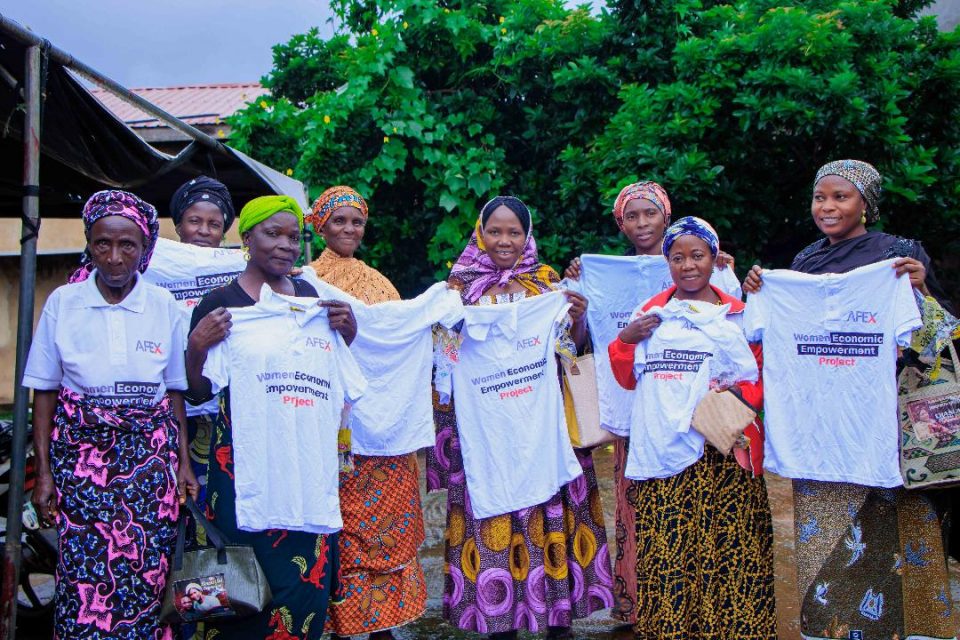
AFEX, in collaboration with the Kaduna Women Economic Empowerment (WEE) Project, has successfully trained farmers in Kaduna on sustainable and safe agricultural practices aimed at boosting agricultural production in Nigeria.
In a statement released on Thursday, AFEX highlighted that the training was part of a broader sensitization campaign designed to empower female farmers in northern Nigeria. The WEE Project focuses on promoting the inclusion of women in rural areas by providing essential resources and knowledge to enhance their capacity and improve food productivity.
“Currently in Nigeria, women farmers produce 30 percent less per hectare than their male counterparts due to fewer inputs and limited participation in extension services. They also tend to farm less valuable crops and employ less productive labour.
“Moreover, women in rural areas are more likely to be excluded from financial services. The World Bank reports that 37 per cent of women, compared to 46 per cent of men, are banked in developing countries,” AFEX said.
The statement further explained that the Women Economic Empowerment (WEE) Project is a three-year pilot initiative funded by Bayer and the Bill & Melinda Gates Foundation. Its primary goal is to empower women by breaking down barriers to employment, promoting decent work, and supporting women’s enterprises, enabling them to thrive in the economy.
The WEE Project seeks to create a sustainable model for women’s economic empowerment by leveraging existing partnerships in health and agriculture. It focuses on improving access to agricultural inputs, expanding market opportunities, and enhancing health services for women and girls in rural areas.
The two-day sensitization campaign, carried out by AFEX in Kafanchan, Kaduna, brought together key stakeholders, including the Kaduna State Women Economic Empowerment Project, Advantage Health Africa, Healthy Entrepreneurs, the Jennifer Etuh Foundation, and female farmer cooperatives. They discussed the various opportunities available through the WEE Project, aiming to equip women with the tools and resources needed for their empowerment and economic growth.
“Several female farmers were onboarded onto AFEX’s technology platform, WorkBench, and trained in global agricultural practices, crop management, and mitigation strategies.
“Attendees also had the opportunity to learn about the various offers from participating partners and ask questions about how to get involved,” the statement emphasized.
The Managing Director of AFEX Fair Trade, Kamaldeen Raji, said, “AFEX is committed to supporting the development of sustainable agricultural value chains in Africa. We believe that empowering women farmers is crucial to achieving this goal.
“The WEE Project provides a unique opportunity to leverage our expertise in agricultural commodity trading and market access to help women farmers in Nigeria overcome their challenges. By equipping them with the tools and resources they need to succeed, we can contribute to a more inclusive and equitable agricultural sector.”
Also speaking, the Project Coordinator for the Kaduna WEE Project, Mobolaji Adesanya, said, “We are excited about the success already achieved in this programme. This sensitization campaign by AFEX was a great opportunity to connect with women farmers in our community.
“As we work towards transforming the lives of 30,000 female farmers, it is crucial to emphasise the importance of public-private partnerships to accelerate progress. By collaborating closely with stakeholders like AFEX, we will ensure that interventions are tailored to the specific needs and challenges faced by women farmers in rural areas.”