The Our Water, Our Right Africa Coalition (OWORAC) has called on African governments to reject water privatisation, increase public investment and guarantee affordable, reliable access to clean water, warning that commercial control could deepen inequalities and deny poor communities an essential human right.
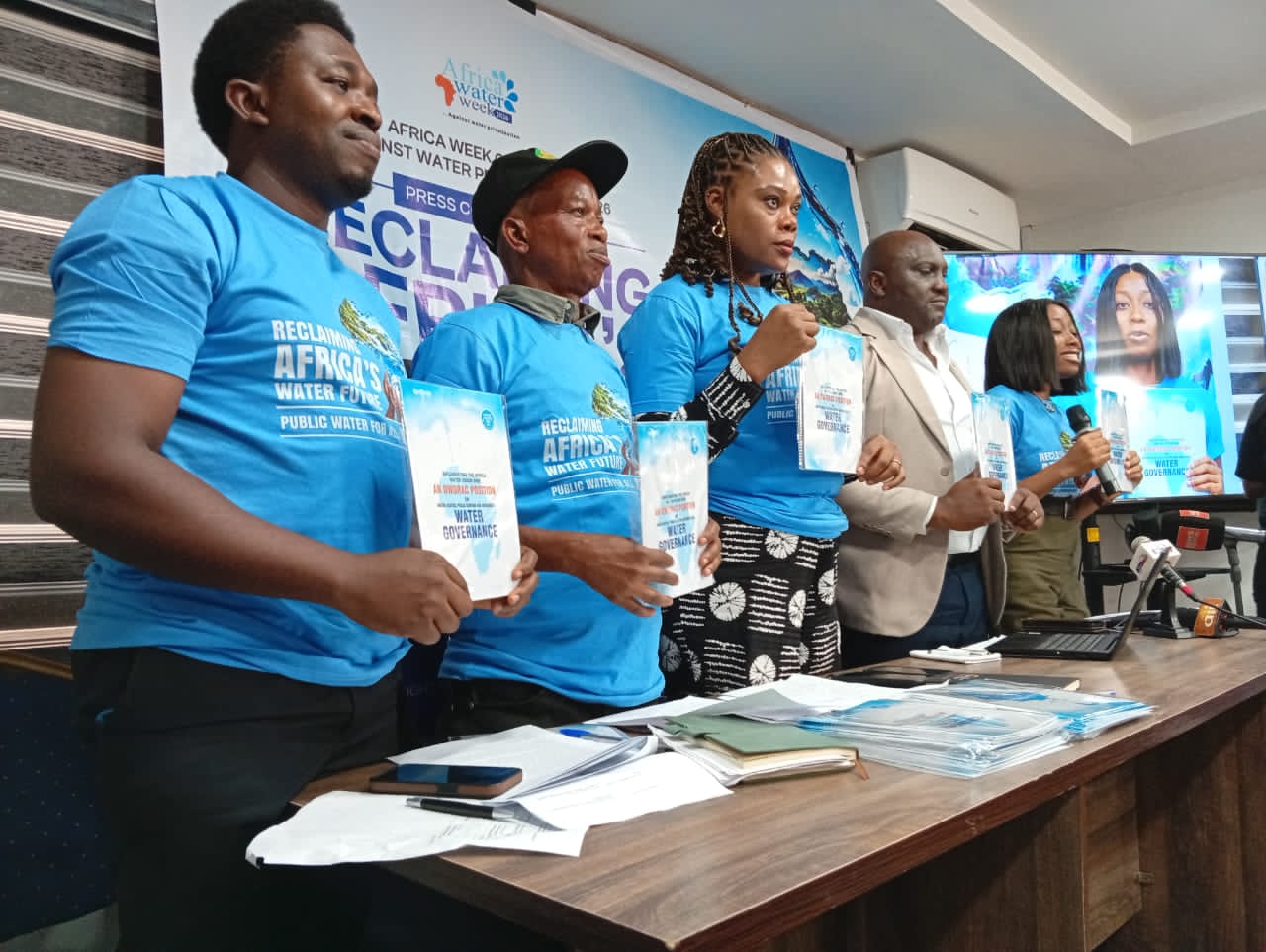
The coalition made the demand at a joint press conference in Lagos on Monday, October 12, to launch the 2026 Africa Week of Action Against Water Privatisation, running from October 12 to 18, under the theme, “Reclaiming Africa’s Water Future: Public Water for All.”
OWORAC brings together civil society organisations, trade unions, researchers, community groups, women, young people and water justice advocates across Africa.
Executive Director of Corporate Accountability and Public Participation Africa (CAPPA), Akinbode Oluwafemi, urged the African Union to formulate policies that protect citizens’ rights rather than corporate interests.
“Water is a human right. None of us can live without water,” he said, rejecting a system in which access depends on people’s ability to pay.
Reading the coalition’s position, Geoffrey Occansey of Ghana’s Water Citizens Network and Revenue Mobilisation Africa said 167 million people in sub-Saharan Africa relied on limited drinking-water services in 2024.
He cited research indicating that poor households relying on vendors could pay 10 to 20 times more per unit than wealthier households connected to public networks.
The coalition demanded universal access to safe water and sanitation, increased public funding, transparent contracts, democratic community participation and stronger public water institutions.
It also opposed public-private partnerships, concessions and prepaid water meters that transfer control of essential services to commercial interests.
National President of the Precision, Electrical and Related Equipment Senior Staff Association, Rufus Olusesan, said Nigeria’s water infrastructure remained inadequate despite substantial public spending.
He urged Lagos State to complete the second phase of the Iju Waterworks project and ensure communities benefit from public investments.
CAPPA Assistant Executive Director, Zikora Ibeh, questioned plans to outsource Lagos mini and micro waterworks to private operators, demanding public disclosure of contracts and greater accountability. She said sustained opposition had helped challenge controversial water policies, including the National Water Resources Bill.
The campaign has also drawn lessons from Ghana, where advocacy contributed to the cancellation of a water-management contract in 2011, although subsequent contractual disputes show the struggle continues, Occansey said.
OWORAC urged African governments to translate water commitments into measurable financing and governance reforms.
Speakers also called on journalists, workers and communities to scrutinise policies, expose opaque agreements and sustain cross-border solidarity.
The coalition said the expected outcome was publicly accountable water systems that prioritise people over profits, protect workers and guarantee equitable access to safe water.