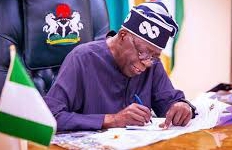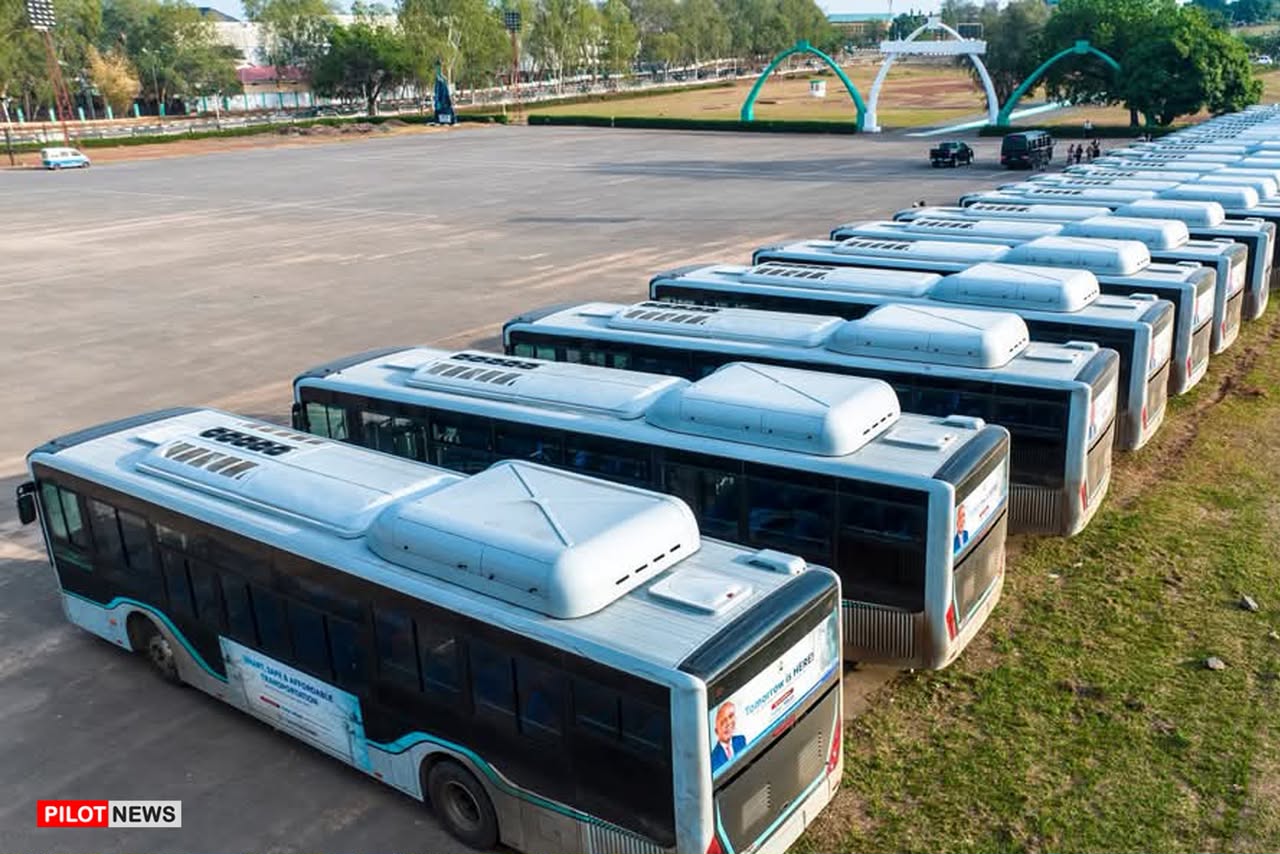
President Bola Tinubu has commended state governments for advancing the National Affordable CNG Transit Programme, citing the Enugu State Government under Governor Peter Mbah as one of the administrations demonstrating the impact of cheaper energy on transportation costs.
Tinubu, in an update on the programme issued on Saturday, said the deployment of 100 CNG buses in Enugu had reduced the Enugu–Nsukka transport fare from ₦2,500 to ₦1,500.
The President’s statement comes as the Federal Government intensifies efforts to ensure that more Nigerians begin to benefit from lower transportation costs from October 1.
While highlighting the progress recorded across the country, Tinubu said Governor Peter Mbah of Enugu State would “always stand out as a champion of good governance,” pointing to the state’s CNG-powered transport initiative as an example of how government intervention could translate into direct savings for citizens.
According to him, the Enugu experience was among several examples showing that cheaper energy could lead to reduced transport fares.
He cited Borno, where CNG-powered and electric public transport services reportedly charge between ₦50 and ₦100 on routes where commercial operators charge between ₦300 and ₦600.
In Kaduna, Tinubu said 100 CNG buses providing free transportation on major routes carried about 3.2 million passengers in their first year and saved commuters more than ₦3.5 billion in transport costs.
He also said CNG buses deployed by Pacesetter Transport in Oyo reduced the Lagos–Ibadan fare from about ₦8,000 to ₦3,200 during the initial deployment, while alternative-energy transit services in Adamawa cut fares by as much as 50 per cent, from ₦8,000 to ₦4,000.
In Plateau, the President said government-supported buses carry about 13,000 commuters daily at ₦200, compared with more than ₦500 charged by commercial operators.
He added that CNG-converted commercial vehicles operating on some Abuja routes had also delivered fare reductions of about 40 per cent, while passengers on the Suleja–Abuja route in Niger State were paying ₦550 compared with about ₦800.
Tinubu said these examples demonstrated that the benefits of alternative energy were already being felt by Nigerians rather than being mere projections.
“These are not projections. Nigerians are already experiencing these savings,” he said.
The President said the Federal Government had, over the past three years, invested in developing a CNG transportation ecosystem across the country, with more than 120,000 vehicles converted, over 400 certified conversion centres and more than 90 CNG refuelling stations.
He urged state governments to sustain the momentum ahead of October 1 by working with transport unions and commercial operators, supporting vehicle conversion and fleet deployment, and facilitating infrastructure development.
Tinubu said the Federal Government would continue to support the expansion of CNG infrastructure, increase conversion capacity and create an enabling environment for states, transport operators, manufacturers and private investors.
He said Nigeria’s abundant gas resources provided an opportunity to reduce the country’s exposure to fluctuations in global energy markets.
“Now we must move faster and scale this so more Nigerians feel those savings in the fares they pay every day,” the President said.