
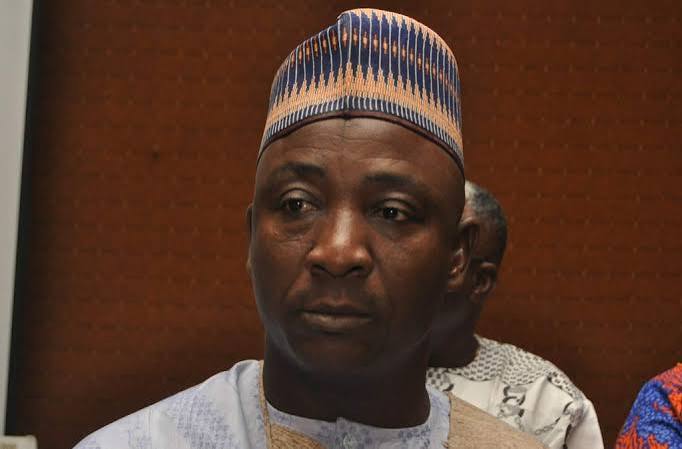
Nigeria Football Federation President Ibrahim Gusau has resigned from office, bringing an end to his four-year tenure amid growing calls for sweeping reforms in the administration of Nigerian football.
Gusau’s resignation comes shortly after a fact-finding committee set up by the NFF raised serious concerns over the federation’s governance, finances, national team management and player selection processes.
The committee, headed by former NFF secretary-general Ambassador Fanny Amun, had also called for far-reaching reforms of the NFF statutes and greater accountability within the federation.
Gusau’s tenure was marked by a difficult period for Nigerian football, with the country failing to qualify for both the men’s and women’s FIFA World Cups. The nation’s age-grade teams also struggled to replicate Nigeria’s traditional success on the international stage.
The development has also reportedly affected the NFF executive committee, with the board dissolved and several members said to have resigned after initially denying reports that they had quit.
An interim administration is now expected to be appointed to reorganise the NFF Congress and the federation’s secretariat.
The move could pave the way for major changes to the structure and administration of Nigerian football, particularly following renewed calls for the NFF Congress to be reconstituted.
The recent fact-finding report had criticised the Congress over its alleged refusal to implement reforms reportedly sought by former Presidents Goodluck Jonathan and Muhammadu Buhari, as well as President Bola Tinubu.
The committee described the alleged refusal as a failure to introduce a “necessary, achievable and workable model” of the NFF statutes that would “accommodate everybody” and “liberate the federation.”
It also recommended that Congress members should be “knowledgeable, credible, and experienced personalities,” with a maximum of two terms in office.
Financial investigations
Gusau’s exit also comes amid investigations into alleged financial irregularities involving the federation.
According to reports, anti-corruption agencies and security organisations are investigating allegations surrounding the diversion of government funds running into billions of naira.
Particular attention has reportedly been drawn to a N17bn bailout released by President Tinubu to the NFF to settle outstanding bonuses and allowances owed to members of the Super Eagles, Super Falcons and Flying Eagles.
The funds were intended to clear long-standing financial obligations to the national teams, but some beneficiaries have reportedly claimed that they are still owed money more than two years after the release of the funds.
The investigations are expected to determine how the funds were disbursed and whether any officials breached financial regulations.
The development could also reopen wider questions about financial management within the NFF, particularly following the fact-finding committee’s allegations concerning payments, compensation and financial dealings around national teams.
Allegations of player-selection interference
The committee had raised allegations that some board members influenced the invitation of players to national teams, while also alleging that some coaches and officials invited players to camps for financial gains.
It further cited allegations that board members, NFF management staff and coaches took incentives to compromise decisions in the build-up to national team camp invitations.
The report stated that these allegations should be subjected to verification through the federation’s internal mechanisms.
The committee also raised concerns over the payment of national team delegations, citing claims that board members and NFF management staff were paid while players and their officials were sometimes left unpaid.
It recommended that all compensation should be “well structured, equitable, and accordingly.”
New era for Nigerian football
The leadership changes are expected to trigger a wider review of the way Nigerian football is administered, from the NFF Congress and secretariat to national teams, leagues and grassroots development.
The committee had called for stronger regulations, improved technical structures, better player data systems, enhanced coaching education and early preparation for national teams.
It also recommended restructuring the NPFL, NNL, NLO and NWFL to improve their financial and technical sustainability.
In its final remarks, the committee urged the federation to ensure that reforms were practical and backed by political will.
“Advice should and must be practical, implementable, and should be the ones that show political will,” the committee stated.
With Gusau now out and an interim structure reportedly in the offing, Nigerian football faces a potentially defining period in which governance, finances, national team performance and stakeholder representation could all come under fresh scrutiny.