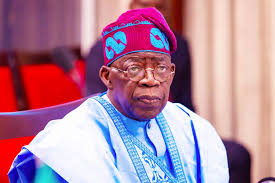
The Presidency has said credited the strong corporate performance in the country to the reforms implemented by Bola Tinubu.
The Presidential spokesman, Bayo Onanuga said this on Wednesday in a release made available to newsmen in Abuja.
He wrote: “The strong financial performance recorded by many of the companies listed on the Nigerian Exchange in the first half of 2026 is attributable to several key economic reforms implemented by President Bola Ahmed Tinubu’s Administration since mid-2023.
“One of these significant reforms was the unification of the foreign exchange market.
“By establishing a single, market-determined exchange rate, the reform improved price discovery and enabled companies with substantial foreign currency exposure to more accurately reflect the value of their dollar-denominated revenues in their financial statements.
“This has been particularly beneficial for export-oriented and foreign exchange-earning businesses such as Aradel Holdings and Seplat Energy, whose revenues are largely linked to international oil prices and settled in foreign currency.
“The Tinubu administration’s commitment to strengthening investor confidence in the energy sector was further demonstrated through the timely approval of several landmark upstream transactions.
“Among the most notable approvals was the Renaissance Africa Energy consortium’s acquisition of Shell Petroleum Development Company (SPDC) assets, of which Aradel Holdings is a consortium member. Another was the approval of Seplat Energy’s acquisition of the assets of Mobil Producing Nigeria Unlimited (MPNU).
“These strategic approvals significantly expanded the reserve base, production capacity, and long-term growth prospects of both companies while removing regulatory uncertainty surrounding two of the largest transactions in Nigeria’s upstream oil and gas industry.
“By facilitating the transfer of mature onshore assets to well-capitalised indigenous operators, the administration strengthened investor confidence, accelerated domestic participation in the petroleum sector, and positioned both Aradel and Seplat to capture higher production volumes, stronger revenues, and improved earnings before tax.
“Tinubu’s approval of Naira payment for crude, a policy that some other African countries have adopted, has also supported local refining capacity, such that Dangote Refinery has become a net exporter of PMS and Aviation fuel.
“Manufacturing and industrial companies similarly benefited from improved access to foreign exchange and a more predictable currency market.
“Firms such as Dangote Cement, BUA Cement, and HBM (formerly known as Lafarge Africa) have been able to plan production, procure imported inputs more efficiently, and allocate capital with greater certainty under a unified exchange rate framework.
“Improved foreign exchange availability has reduced operational bottlenecks, strengthened supply chain planning, and supported higher production volumes, contributing to stronger revenue growth and improved profitability.
“Complementing the foreign exchange reforms was the removal of the petrol subsidy, which significantly strengthened the government’s fiscal position.
“The resulting improvement in public finances has increased fiscal capacity for infrastructure investment, enhanced revenue mobilisation, and reinforced broader macroeconomic stability.
“These developments have created a more supportive operating environment for large-scale businesses by improving investor confidence and strengthening expectations of long-term economic sustainability.
“Tighter monetary management and ongoing financial sector reforms have contributed to a more stable macroeconomic environment.
“Greater exchange rate stability, moderating inflationary pressures, and improving liquidity conditions have enhanced business confidence, allowing companies to make longer-term investment decisions with greater certainty.”