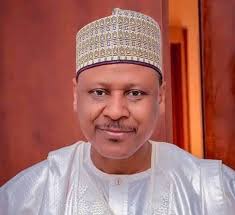
As Nigeria consolidates on gains initiated by the current administration, the Minister of Finance and Coordinating Minister of the Economy, Olawale Edun, has said the country’s reform programme is gaining global credibility with investor confidence rebounding steadily.
Speaking at the Nigerian press conference to round up the IMF/World Bank Spring Meetings in Washington DC, Edun said the various reforms put in place by the administration were now being taken serious globally, with Nigeria increasingly seen as a reference point for reform-driven economic resilience.
According to him, “Nigeria’s global economic standing is improving. Our reform programme is being taken seriously and even used as a reference point. Our resilience is better understood, and our investment case is strengthening, with confidence returning at a faster pace.”
Pointing out that a combination of fiscal and macroeconomic reforms, particularly the shift to market-reflective pricing in the foreign exchange and petroleum sectors, had helped stabilise the economy and eliminate long-standing distortions, he said Nigeria came to the meetings with a clear message bodering on the fact that “our reforms are durable and self-sustaining. We are more resilient to global shocks and are focused on inclusive growth.”
He stressed that public debt remained within sustainable limits, below 40 per cent of GDP, while foreign reserves have strengthened to about $50 billion, underscoring improved macroeconomic buffers.
“But regarding public debt, it does remain sustainable. Debt-to-GDP ratios below 40 per cent.
“These reforms are also beginning to translate into stronger domestic productive capacity, increasing private sector confidence in the economy, as demonstrated by flagship investments such as Dangote refinery, Shell’s $20 billion investment, petrochemical and others,” he said.
He added that small and medium-scale enterprises were also benefiting from improved incentives and a more enabling business environment, as the reform programme begins to shift from stabilisation to growth acceleration.
Nigeria, he said, was now targeting medium-term growth of about seven per cent, driven by reforms in power, agriculture, infrastructure, transport, digital innovation and human capital development.
“Our message in Washington wasn’t just about stability it was about growth. We are moving towards investment, inclusive growth and job creation with confidence,” he added.
On his part, the Governor of the Central Bank of Nigeria, Olayemi Cardoso, said Nigeria’s external reserves remained well above international benchmarks and should not be a source of concern, stressing that recent movements are normal within a market-driven foreign exchange system.
Cardoso said fluctuations in reserves reflected the realities of a more liberalised FX framework, adding the target to attaining $1 billion in remittance monthly was on course.
Responding to questions on the reserves, Cardoso said: “On the decline in reserves and whether there is any cause. The answer is there isn’t. It is normal. And beyond it just being normal, we already have way beyond what the International Monetary Fund (IMF) recommends for minimum reserve levels. We are in a very comfortable position. So, it is normal, it will happen, and honestly there is nothing to worry about,” he stated.
The external reserves, which had hit a 13-year high of $50.45 billion in February, have since moderated, but the CBN governor insisted the trend is not unusual.
“In fact, if there is anything that worries me, it is the reaction of Nigerians to a small swing here and there. I feel the days of that are gone. The foreign exchange system that used to operate in those days is very different from what it is now,” he said.
He noted that the current framework is market-driven, with greater liquidity and investor flexibility, reducing the need for frequent central bank intervention.
“Then you had a central bank that was primarily the one determining that model. That is different now, it is market driven. There is more liquidity, there is confidence, investors come in and go out as they like,” he added.
Cardoso further argued that the depth of liquidity in the system has made reserve movements less central as a measure of stability.
“So why worry about something that moves modestly along the road of travel? That understanding will take time, and we have to keep explaining it,” he said.
On diaspora remittances, he reiterated that inflows are currently averaging about $600 million monthly, with a target of $1 billion per month by year-end.
“On the issue of remittances, the target is a billion dollars per month by the end of the year. Where are we now? Roughly about $600 million per month,” he said.
Cardoso also highlighted ongoing efforts to deepen diaspora engagement and strengthen banking channels, noting recent engagements in the UK and US, as well as reforms to ease access to Bank Verification Numbers (BVN) for Nigerians abroad.
“What we are doing now is encouraging the banks to come up with products by listening, understanding that there were problems, and seeing how to take those problems out, and of course bringing them into the fold,” he added.