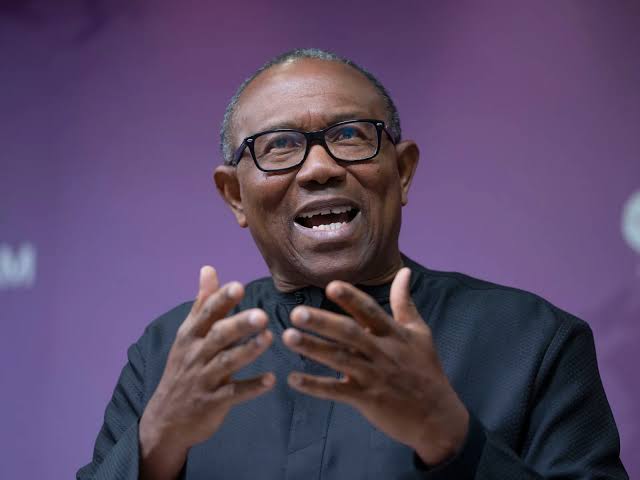
Chieftain of the African Democratic Congress, ADC, Mr. Peter Obi, said Nigeria will continue to remain underdeveloped if she continues to borrow to finance the frivolities of people in government.
Obi in a statement on X on Tuesday, noted that the recent World Bank reports indicate that Nigeria is now its number 3 debtor, with obligations estimated at roughly $18.7 billion.
The former Labour Party presidential candidate who maintained that there is nothing inherently wrong with borrowing, made a comparison between Nigeria and Bangladesh, which is number one World Bank debtor with $23 billion.
According to him, around 2015, Bangladesh’s nominal gross domestic product (GDP) was roughly $195 billion, with per-capita income slightly above $1,235.
“By 2024–2025, its economy had expanded to roughly $460–500 billion, and per-capita income had risen to about $2,700,” he stated.
Obi noted that in a decade, Bangladesh more than doubled the size of its economy, lifted incomes, and strengthened its export base.
This, he said, is evidence that borrowed resources were largely channelled into productive sectors such as manufacturing, textiles, energy, and human capital.
Conversely, according to Obi, Nigeria’s trajectory over the same period tells a different story.
“In 2015, Nigeria’s GDP was about $490 billion, with per-capita income around $2,600–2,700.
“Today, due to weak productivity growth, currency instability, structural inefficiencies, and monumental corruption, Nigeria’s GDP is below about $250 billion, with a per-capita income of $850-1000.
“Instead of expanding as is the case with Bangladesh, the economy has effectively contracted,” he observed.
He added that the contrast between the two countries is instructive, noting that while one country borrowed and expanded its production, exports, and incomes, the other borrowed to finance consumption.
This, he said, led to declining economic strength and living standards.
“This suggests that the real issue is not the size of borrowing, but the use of borrowed funds,” he stated.
Obi said nations borrow to improve productivity and stimulate growth, adding however, that debt becomes a problem only when it finances consumption, inefficiency, or corruption rather than investment as is our own case.
“Debt tied to infrastructure, industry, and human development fuels growth. Debt tied to consumption, leakages, and corruption deepens stagnation.
“A new Nigeria where loans, if taken, will translate into productivity instead of consumption is very much possible,” he assured.