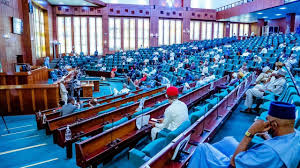
The House of Representatives has commended the Economic and Financial Crimes Commission (EFCC) for recovering over N566bn, $411m, 1,502 properties and securing 3,175 convictions.
It also lauded the Nigeria Financial Intelligence Unit (NFIU) for its crucial role in strengthening financial intelligence, describing the achievements as a clear demonstration of the agency’s capacity and dedication.
Chairman of the House Committee on Financial Crimes, Hon. Ginger Onwusigbe made the commendation at a budget defence with the agencies at the National Assembly.
“As of October 2025, the EFCC had recorded significant achievements, including the recovery of over ₦566 billion, $411 million and 1,502 properties, as well as securing 3,175 convictions”, he stated.
He commended the EFCC and the NFIU for their tireless efforts, particularly Nigeria’s recent delisting from the Financial Action Task Force (FATF) grey list, which he described as a significant milestone reflecting the government’s commitment to strengthening the anti-money laundering and combating the financing of terrorism (AML/CFT) framework.
According to him, the development is expected to enhance Nigeria’s international reputation and credibility, boost foreign investment and trade opportunities, improve access to international financing and credit, and strengthen the country’s financial stability and security.
“These achievements, and your uncommon leadership trajectory, are a testament to the leadership of the EFCC Chairman, Mr. Ola Olukoyede, and the NFIU Director, Hajia Hafsat Abubakar Bakari. I strongly commend your efforts and those of your teams,” he said.
He concluded by reaffirming the Committee’s commitment to supporting the EFCC and the NFIU in their critical mandate, stressing that their work is central to Nigeria’s economic stability and security.
He urged that the agencies be provided with the necessary resources and support to continue their vital work, while upholding the highest standards of professionalism and accountability.
The chairman reaffirmed the house’ determination to strengthen institutions charged with combating financial crimes, with a view to achieving more impactful results that will enhance Nigeria’s standing on the global stage.
He explained that the 2026 budget prioritises infrastructure development and food security, with key objectives including macroeconomic stability, an improved business environment, job creation and human capital development.
He stressed that effective execution of the budget is crucial and would require timely implementation, increased oil production and sustained growth in non-oil revenues.
Onwusigbe noted that Nigeria is currently facing significant economic challenges, with many citizens grappling with hardship, underscoring the urgent need for effective solutions to stimulate growth, create jobs and improve living standards.
“As patriots, we must summon our patriotic zeal. Hopes are not lost, as Nigeria’s economy is showing signs of cautious optimism—transitioning from post-reform stabilisation to modest recovery.
“The International Monetary Fund (IMF) projects a 4.4 per cent growth in 2026, driven by improved macroeconomic stability, structural reforms and a rebound in domestic demand,” Onwusibe said.
He emphasised the critical roles played by the EFCC and the NFIU in combating financial crimes, describing such crimes as a major drain on the economy. According to him, the agencies’ work in recovering stolen assets, deterring corruption and financial malfeasance, and enhancing financial stability and security is indispensable.
He disclosed that the House is currently considering four key bills aimed at promoting transparency, protecting public resources, restoring confidence in the financial system and aligning Nigeria with global best practices.
“The bills include: a Bill for an Act to Establish the Economic and Financial Crimes Commission (EFCC); a Bill to Amend the Money Laundering (Prevention and Prohibition) Act, 2022; a Bill to Amend the EFCC Act, 2004; and a Bill to Amend the Proceeds of Crime Act”.
He explained that the bills are designed to modernise existing laws, bridge operational gaps, strengthen enforcement mechanisms and ensure that crime does not pay, regardless of its sophistication.