
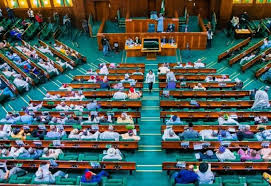
The House of Representatives has amended section 60(3) of the Electoral Act, 2022 to compel the Independent National Electoral Commission (INEC) to approved the electronic transmission of results from the polling unit to its INEC Result Viewing Portal (IREV) in real time concurrently with physical violation.
This is just as the chairman of the House of Representatives committee on Electoral Matters, Hon. Adebayo Balogun has said the Electoral Act, 2022 is one of the most progressive laws in the nations history.
The House at the consideration of the report of the committee at the committee of the whole in Thursday also endorsed stiffer penalties for vote buying and selling.
The lawmakers also amended clause 22(a) and (c) to increase the penalties for vote buying and selling.
From the previous N500,000 the house raise the penalty to N5million and minimum of two years imprisonment for offenders, as well as a ten year ban from contesting elections.
The House, also among other amendments extended the deadline for political parties to submit candidates list to INEC from 180 to 210 days before elections.
Addressing the media after the exercise that lasted the whole day, chairman of the committee, Hon. Balogun said ‘The Electoral Act 2022 remains one of the most progressive electoral laws in our history, and the amendments proposed under the Electoral Bill 2025 are designed to consolidate its strengths, address observed gaps, and improve implementation, without undermining the stability of the existing legal framework”.
He said “I address you today to brief you on the journey and outcome of the consideration of the report of the House of Representatives Committee on Electoral Matters on the Electoral Bill 2025.
“The consideration commenced on Wednesday, December 17, 2025, and was concluded today, Thursday, December 18, 2025.
“The Electoral Bill 2025 was originally introduced as a Bill for an Act to repeal the Electoral Act 2022 and enact a new Electoral Act for Nigeria.
This approach was informed by our collective desire to build on the gains of recent elections and to respond to emerging challenges and opportunities within our electoral system”.
He said “The Committee, guided by stakeholder engagements, public hearings, and expert submissions, initially proposed far-reaching reforms intended to modernize and strengthen our electoral framework.
“Among the reforms canvassed were provisions on early voting, inmate voting, the replacement of the Permanent Voters’ Card with more technology-driven voter accreditation mechanisms, adjustments to electoral timelines, and other innovations that, if adopted, would have significantly altered the structure, philosophy, and core provisions of the Electoral Act 2022.
“However, as the legislative process progressed, particularly during the sittings of the National Assembly Joint Committee on Electoral Matters, it became evident that many of these far-reaching proposals did not command the support of the majority of members across the two Chambers, nor did they enjoy sufficient consensus among key stakeholders.
“In legislative practice, a repeal of an existing law and enactment of a new law is appropriate where the proposed changes fundamentally transform the identity of the principal Act.
“In this instance, because several of the proposed provisions such as Early Voting, Inmate Voting, Removal of the Permanent Voters Card (PVC), Election Timelines amongst others, that would have occasioned such a fundamental transformation were not approved at the committee stage, the House, sitting as a Committee of the Whole during the consideration of the report, wisely resolved that it would be more appropriate to proceed by way of amendment rather than outright repeal of the Electoral Act 2022.
“This decision is not a setback to the electoral reform. Rather, it reflects the maturity of our democracy and the responsibility of Parliament to legislate in a manner that is inclusive, balanced, and anchored on broad agreement.
“Courts, including Nigerian courts following common law principles, consistently hold that what matters is the effect of the legislation, not its label.
“You will notice that despite the rigorous work done by the Electoral Committee, there were also very meaningful amendments introduced by Members of the House during the consideration of the report in the Committee of the Whole, indicating a robust debate and reflection of the immense importance attached to the Electoral Bill 2025 by the House of Representatives.
“I want to assure Nigerians that the House Committee on Electoral Matters has conducted this process with utmost transparency and diligence. We engaged widely with the Independent National Electoral Commission, security agencies, civil society organizations, political parties, professional bodies, development partners, and citizens across the country.
“The outcome before the House today is a product of those engagements and reflects the realities of consensus-building in a democratic legislature.
“While some innovative proposals could not be accommodated at this stage, they remain part of our national discourse on electoral reform. As our democracy evolves and wider consensus is achieved, such ideas can be revisited in the future through further legislative intervention.
“As we have concluded consideration of this report, I reaffirm the commitment of the House of Representatives, and indeed the National Assembly, to credible elections, democratic stability, and the continuous improvement of our electoral laws.
“Our goal remains clear: to ensure that every election in Nigeria is transparent, inclusive, secure, and truly reflective of the will of the Nigerian people.”