The Senate has accused the National Bureau of Statistics (NBS) of consistently working with inaccurate figures due to weak and fragmented data capture systems.
The Chairman of the Senate Committee on National Identity Card and National Population, Senator Victor Umeh, who frowned at the inaccurate population figures being reported by the agency over the years, said that the country could no longer rely on population estimates of about 250 million people.
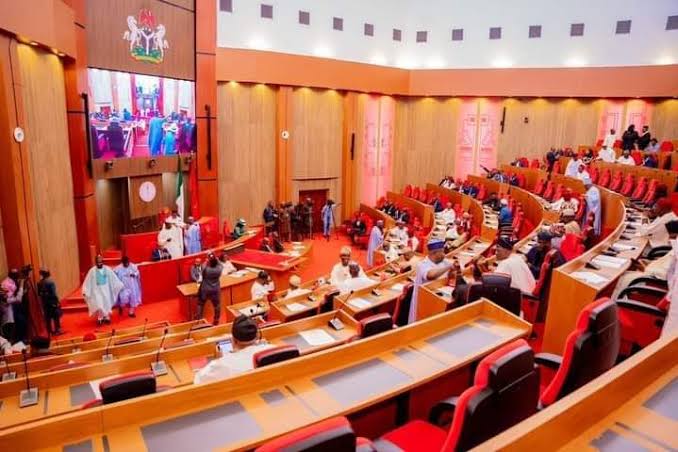
Umeh stated this in Abuja at a public hearing on a bill seeking to repeal the Births, Deaths, etc. (Compulsory Registration) Act, Cap. B9, Laws of the Federation of Nigeria, 2004, and enact the Compulsory Civil Registration Act, 2025, which proposes a fully electronic civil registration system.
He observe that poor civil registration has continued to undermine national planning and governance, stressing that it was time the country stopped working with estimates, saying that Nigeria should do proper census so as to have proper registration.
“Nigeria cannot continue to work with estimates. We need a proper census and accurate civil registration. Both births and deaths must be registered to enable effective national planning,” he said.
Umeh cautioned that failure to register births and deaths would result in exclusion from government planning and interventions, stressing that future allocations to families would depend on national registers.
The politician lamented that poor death registration has allowed deceased persons to remain on government payrolls for years, distorting wage bills and social benefits.
“When somebody dies, a death certificate is required to calculate benefits and remove the person from salary registers. Because we are not doing this diligently, people who are dead still receive salaries in Nigeria,” he said.
He pointed out that children who were not registered at birth were often excluded from early planning for education, healthcare, and social protection, saying: “When a child is registered, he or she is clothed with all the rights and privileges of a Nigerian citizen. When they are not registered, nobody even knows they are Nigerians”.
Umeh described the bill as a critical national reform aimed at ending Nigeria’s dependence on fragmented identity systems and unreliable population projections.
He said that the proposed law would guarantee registration of every birth and death; establish an electronic civil registration and vital statistics system; strengthen data synergy among NIMC, NPC, Immigration, FRSC, and health institutions; improve accuracy in planning for education, health, security, elections, and resource allocation; Enhance national security through a verified demographic database; and protect children’s rights through proper documentation.
The Anambra Central Senator stressed that the world had moved towards digital civil registration systems, urging Nigeria to align with global best practices.
In a speech delivered on his behalf by Senator Onyekachi Nwabonyi, the President of the Senate, Senator Godswill Akabio, said that accurate registration of births and deaths formed “the DNA of a sovereign nation.”
He expressed optimism that the proposed law would enable government to plan effectively for present and future needs, allocate resources efficiently, and provide a legal identity for every Nigerian child, saying: “The work we are doing today is not merely bureaucratic. It is central to our national duty and future development,” the Senate President said.