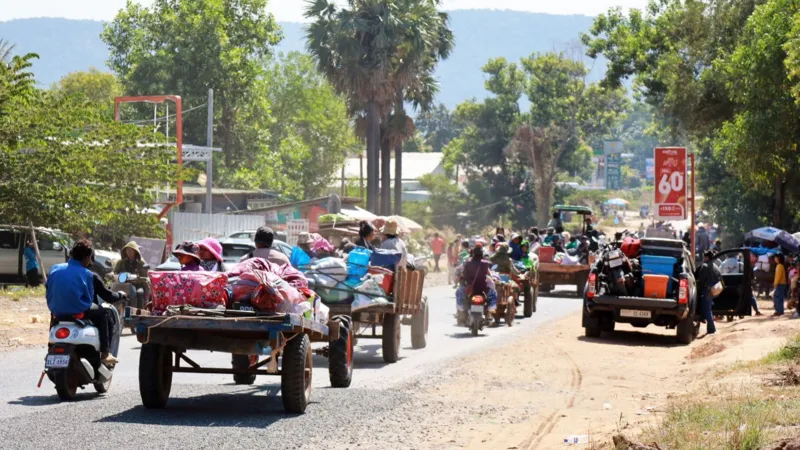
Fresh clashes along the Thailand-Cambodia border have forced thousands of residents on both sides to flee their homes, leaving at least five dead and several others wounded. The confrontation marks the most serious outbreak of violence since the two nations agreed to a ceasefire in July.
Both countries have accused each other of instigating the violence. Thailand’s Prime Minister Anutin Charnvirakul stated that his country “never wanted violence” but will use necessary measures to protect its sovereignty. Meanwhile, Cambodia’s former leader Hun Sen blamed Thai “invaders” for provoking retaliation.
Since May, escalating tensions have claimed more than 40 lives and triggered import bans and travel restrictions. On Monday, Thai troops reportedly responded to Cambodian fire in Thailand’s Ubon Ratchathani Province, including air strikes, while Cambodia insisted Thai forces attacked first in Preah Vihear province.
At least one Thai soldier and four Cambodian civilians were killed, with a dozen more injured. Schools near the border are heavily affected, with nearly 650 in Thailand temporarily closed and Cambodian parents rushing to take children home. Many students have already faced repeated disruptions to their education due to previous fighting, with some forced to switch to online classes they cannot fully access.
Locals like Thai teacher Siksaka Pongsuwan described the difficult decisions families face: whether to evacuate despite uncertainty about safety or remain at home as gunfire continues. Videos and images circulating on social media show children taking shelter in bunkers and trying to continue daily routines amid chaos.
The conflict stems from a century-old territorial dispute along the 800km border, originally drawn after French occupation of Cambodia. Earlier ceasefire agreements, including those mediated by Malaysian and international leaders, have repeatedly broken down.
The ongoing clashes highlight the human cost of territorial disputes, particularly on children and communities living near the border, while regional authorities struggle to enforce peace.