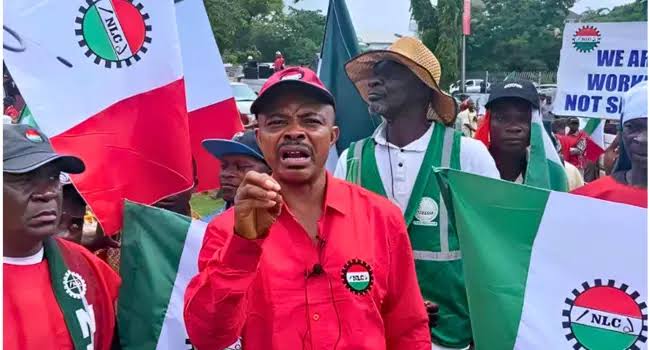
As Nigeria sustains its battle against insecurity across the country, the Nigeria Labour Congress (NLC) has promised to declare a day of mourning in respect of workers that have been victims of the menace.
Speaking in Lagos yesterday during the 2025 National Executive Council (NEC) meeting, the NLC President, Comrade Joe Ajaero, specifically lamented the recent attacks and abductions affecting schoolchildren and workers.
This came as human rights lawyer, Femi Falana (SAN), kicked against threat of foreign invasion while calling on the Federal Government to protect Nigerians.
According to Ajaero, “We cannot sit and watch bandits take over the country—never again.
“The worker that was killed is a teacher. The children kidnapped are children of workers. We can no longer bear this.”
He said the NEC would take a strong position and demand answers on whether security equipment or leadership had been compromised, stressing that it would protest nationwide to compel the government to account for operational lapses that have enabled repeated attacks on schools and communities.
The NLC President announced that the Congress would soon declare a day of mourning to honour workers, students and other Nigerians who have been victims of kidnappings and violence, while drawing urgent attention to the government’s responsibility to secure lives and property.
Ajaero also urged political actors not to overheat the polity, stressing that Nigeria’s history has shown that political instability often leads to national upheaval.
“If you lose today, you can win tomorrow. They should obey the rules of the game,” he advised.
On his part, Falana cautioned against foreign interference in Nigeria’s security affairs, warning that calls for external military intervention pose serious risks to the country’s sovereignty.
He expressed concern over the rising wave of kidnappings across the country, stating that criminal gangs continue to abduct citizens despite the presence of a functioning government.
He noted that desperation had pushed some Nigerians to support the idea of foreign military intervention, particularly by the United States — a move he strongly condemned.
Falana recalled that Nigerians had historically rejected attempts by foreign powers to establish military bases in the country, citing the 1962 resistance to the Anglo-Nigerian Defence Pact shortly after independence. Since then, he said, both the United States and Britain had repeatedly sought similar arrangements, which Nigerians consistently opposed.
The human rights lawyer warned that the experiences of countries such as Libya, where foreign intervention destabilized national structures and left the nation fragmented, should serve as a cautionary tale.
He also referenced ongoing US involvement in global conflicts, including support for Israel’s military operations in Gaza and alleged plans to intervene in Venezuela.
He criticized the US political rhetoric about protecting Christians globally, arguing that such claims were inconsistent with America’s actions in conflict zones. He questioned why foreign actors claiming to defend Christians abroad had not intervened in Nigerian states affected by religious violence if their intentions were genuine.
Falana stressed that Nigeria must avoid becoming entangled in prolonged foreign military engagements, pointing to America’s 20-year war in Afghanistan as an example of long-term instability that external intervention can create.
He urged the NLC and civil society to intensify pressure on the Federal Government to fulfill its constitutional duty to protect lives and property across all states. According to him, the administration must demonstrate clearly that Nigeria “is not a conquered people.”
Falana also reiterated the legal right of workers to unionize and defend their interests, insisting that no government or private entity — including major corporations — should undermine those rights.
He concluded by reaffirming the support of progressive civil society groups for any NLC decision aimed at safeguarding Nigerians and defending the country’s sovereignty.