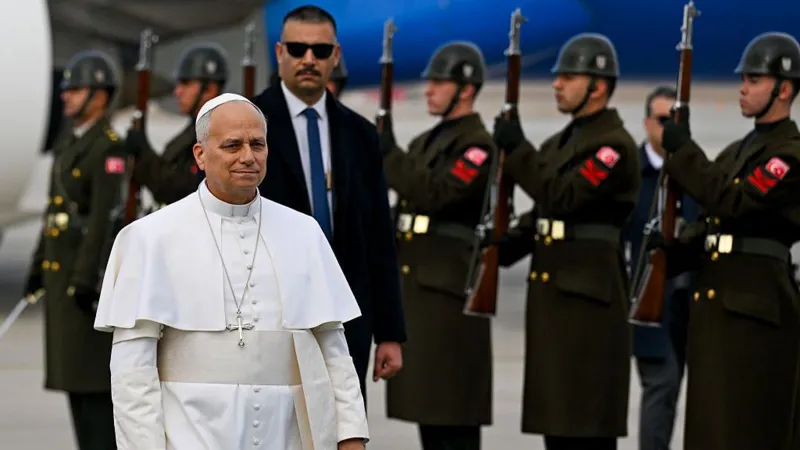
Pope Leo XIV entered Turkey with a message centered on unity, describing humanity as capable of true kinship regardless of religion or ideology. His words came as he stepped onto Turkish soil for the first international journey of his papacy—a trip carrying both historical and diplomatic weight.
The Vatican revealed that his schedule includes a major interfaith stop at Istanbul’s Blue Mosque, continuing a path once taken by former popes. The moment is expected to highlight his insistence on dialogue among different faith traditions, an approach he has maintained since appearing on the balcony of St Peter’s Basilica after his election six months earlier.
A highlight of the journey will unfold in Iznik, the place where the ancient city of Nicaea once stood. Christian leaders from various denominations will join the Pope to commemorate the 1,700th year since the landmark council that eventually shaped what is now known as the Nicene Creed. That gathering of bishops in 325 AD marked a defining point in Christian doctrine, and the Pope sees the anniversary as an opportunity to echo themes of healing and reconciliation.
Even before the trip began, observers noted how carefully he has navigated the balance between progressives and traditionalists within the Church. Both sides strangely see reflections of their own views in his actions, a dynamic that helped secure his support during the conclave. Unlike Pope Francis—admired but often divisive—Pope Leo has maintained a cautious, measured tone, sometimes leaving his political views deliberately understated.
Despite his reserved style, tensions in the Middle East place his leadership under fresh scrutiny. The Vatican confirmed that the second leg of his journey, a visit to Lebanon, would proceed as planned despite Israeli airstrikes on Beirut only days earlier. Christian communities in the country, representing about a third of the population, view the visit as a significant gesture of solidarity.
Earlier plans for visits to both Turkey and Lebanon were originally set in motion by the late Pope Francis, though Pope Leo has infused the trip with his own emphasis on bridge-building. His meetings with Turkish President Recep Tayyip Erdogan and later with Lebanese leaders may draw him into delicate conversations about regional conflict, an area where every public statement carries immense diplomatic weight.
The itinerary includes a final emotional moment at Beirut’s waterfront, where he will celebrate Mass at the site of the devastating 2020 port explosion. The ceremony will honor more than 200 people who lost their lives and thousands who were wounded, serving as a reminder of the country’s ongoing struggle to rebuild.
One detail distinguishing this visit is the language he plans to use. After months of speaking primarily in Italian, he is set to address Turkish audiences in English, reflecting his Chicago roots, with French scheduled for his meetings in Lebanon. Vatican officials say this choice is aimed at bringing him closer to the people he will encounter.
Throughout the trip, he is expected to maintain his consistent plea for peace—expressed differently from Pope Francis, who once made daily calls to Gaza’s Holy Family Church. Pope Leo instead relies on diplomatic nuance, speaking firmly but without the overt activism that defined his predecessor.
Reporters travelling with him will likely hear a more candid reflection when he holds his customary in-flight press conference on the way back to Rome, a moment that often reveals how a pope interprets the events of a demanding journey.
#PopeLeoXIV #TurkeyVisit #LebanonVisit #VaticanNews #ChristianUnity #InterfaithDialogue #IznikAnniversary #MiddleEastTrip #GlobalCatholicCommunity #PeaceMission