
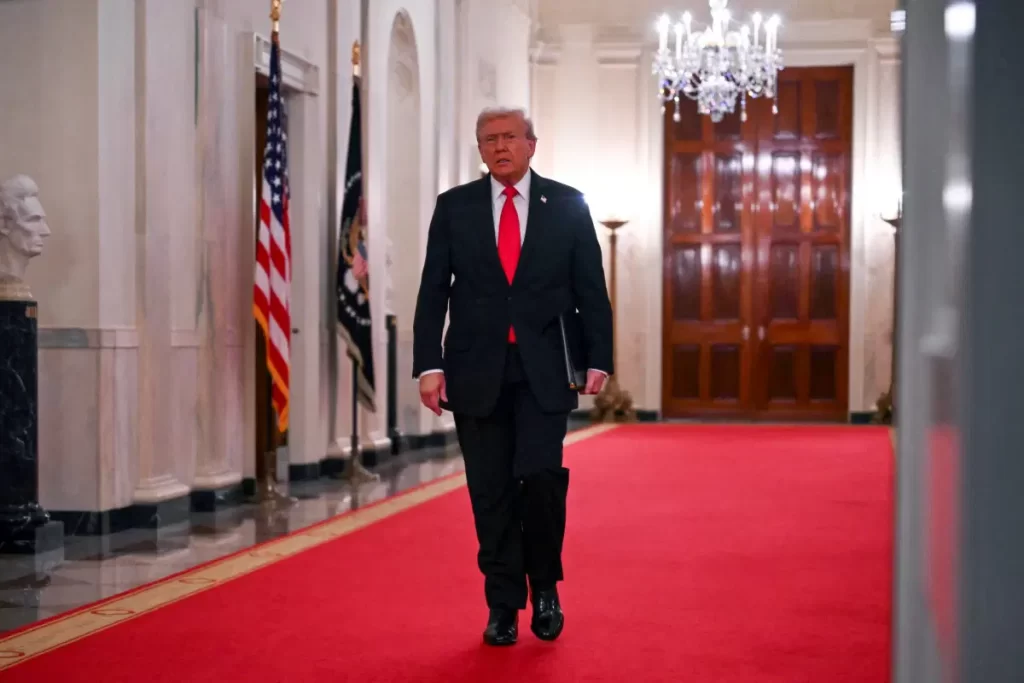
Concerns over President Donald Trump’s stamina resurfaced this week after a New York Times publication raised doubts about his physical condition, prompting a fiery rebuttal from the White House’s most powerful occupant. Instead of downplaying the controversy, Trump launched a sweeping counterattack on his Truth Social page, dismissing the report as politically motivated.
While the article scrutinized his reduced public schedule and what analysts described as visible exhaustion, the president insisted that his workload had never been heavier. He argued that the claims ignored what he described as major achievements, including foreign policy gains, a solid performance by the US stock market, and his victory in last year’s election.
Even so, medical questions have lingered around the 79-year-old leader, especially after reports emerged that he underwent an MRI in October. Images circulating online showing swollen ankles and a bruised hand only deepened speculation about what the test might have revealed.
During a lengthy written response filled with emphatic language, Trump insisted he had passed what he called a flawless physical exam and a cognitive test he said he “aced.” He went on to attack the journalist behind the Times story, using harsh personal insults that drew renewed criticism from media rights groups.
Observers have noted a shift in the president’s public routine, pointing out that his appearances are now shorter and clustered within limited hours of the day. One incident earlier this month, when cameras caught him appearing to nod off during an Oval Office event, intensified the debate about his endurance.
Despite the White House’s efforts to project vigor — including a wave of AI-generated images portraying Trump as a muscular action figure — questions about his health continue to grow louder. Political analysts say the contrast with former President Joe Biden, who left office at 81, has added another layer to the conversation about aging and leadership in Washington.
The New York Times stood firmly by its report, maintaining that its story was built on firsthand information. According to the publication, no level of name-calling or intimidation will deter its journalists from scrutinizing the administration.
Meanwhile, Trump’s latest outburst adds to a string of recent confrontations with female reporters, including derogatory remarks he made toward two others earlier this month. Critics say the pattern underscores his long-running disdain for unfavorable press coverage.
As the debate continues, the president remains a central figure in the media landscape, frequently holding long Q&A sessions despite calls for greater transparency about his medical evaluations. Whether the renewed controversy will affect his political momentum moving into 2026 remains a question analysts are watching closely.