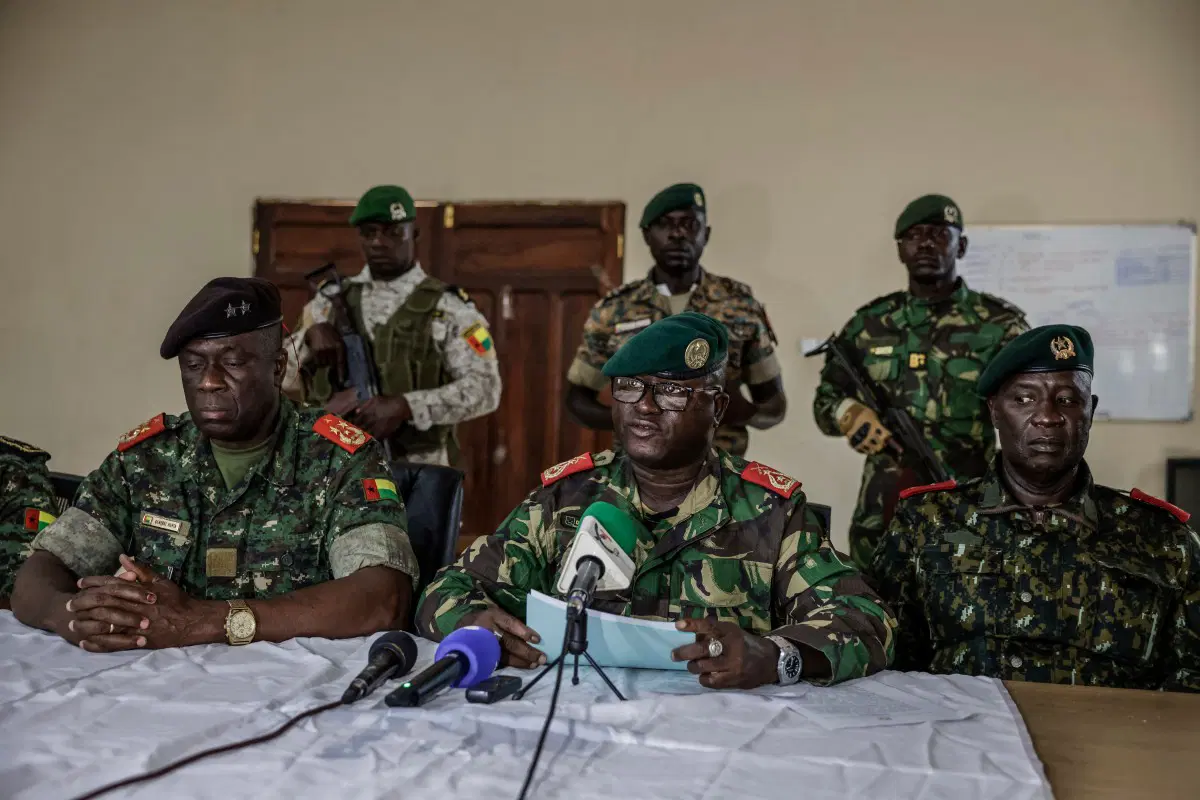
Amid the fragile political climate of Guinea-Bissau, military officials announced Wednesday that they had assumed full control over the nation, effectively halting the ongoing electoral process. The abrupt declaration came as both presidential and legislative contenders had recently claimed victory, plunging the country into uncertainty.
Reports from Bissau indicated that uniformed personnel were seen securing key roads leading to the presidential palace, while sporadic gunfire was heard, causing panic among residents who gathered outside the compound. AFP journalists on the scene noted chaotic crowds attempting to flee as the situation escalated.
Observers highlight that Guinea-Bissau, historically prone to coups, has faced recurring disruptions to democratic governance, and this latest seizure adds another layer of complexity to its already volatile political landscape. Borders were immediately closed following the announcement, with the military citing the need to preserve order and prevent external interference.
At army headquarters, Brigadier General Denis N’Canha addressed the press, outlining that the military intended to establish “total control” over state institutions and would oversee security measures until stability is restored. The announcement emphasized that the electoral timetable was suspended indefinitely while security operations continued.
Residents expressed mixed reactions to the development. Some welcomed the intervention, hoping it might prevent further clashes between rival political factions, while others feared that the move could escalate tensions or spark retaliatory violence. Local analysts warn that the power vacuum created by suspended elections could heighten social unrest if not managed carefully.
Meanwhile, international observers have begun monitoring the situation closely, with calls from global partners urging restraint and a swift return to democratic norms. Diplomats emphasized that ensuring civilian safety and safeguarding constitutional processes must remain priorities amid the sudden military takeover.
AFP and other international news agencies continue to report from the ground as authorities work to consolidate control, with security personnel patrolling major urban centers to deter any potential outbreaks of violence. Citizens are being advised to stay indoors and avoid public gatherings until the situation stabilizes.
The unfolding events in Guinea-Bissau underscore the persistent fragility of governance structures in parts of West Africa, where political rivalries often intersect with security challenges, leaving ordinary citizens caught in the balance. Analysts predict that the coming days will be crucial in determining whether a path toward reconciliation or further instability will dominate the national discourse.