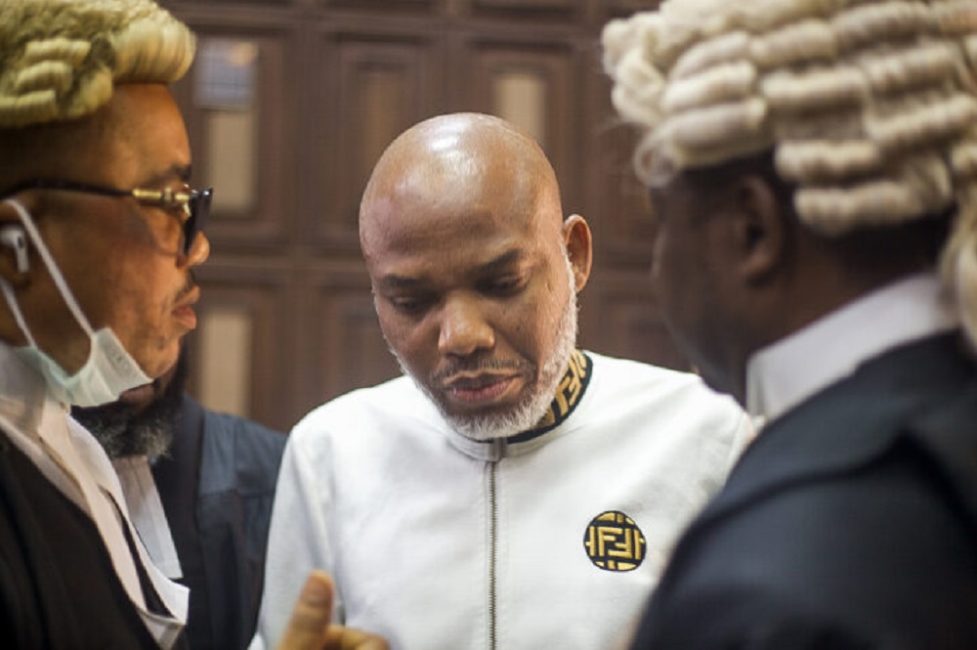
The Federal Government has transferred the leader of the Indigenous People of Biafra (IPOB), Nnamdi Kanu, from the custody of the Department of State Services (DSS) in Abuja to a correctional facility in Sokoto State, following his conviction for terrorism.
His lawyer, Aloy Ejimakor, confirmed the development on Friday, saying the move has taken Kanu far away from his family, legal team and close associates. Ejimakor wrote on X (formerly Twitter):
“Mazi Nnamdi Kanu has just been moved from DSS Abuja to the correctional facility in Sokoto; so far away from his lawyers, family, loved ones and well-wishers.”
Kanu was sentenced to life imprisonment on Thursday by Justice James Omotosho of the Federal High Court, Abuja. The judge found him guilty on four out of seven terrorism-related charges brought against him by the Federal Government.
In addition to life imprisonment on counts one, four, five and six, Kanu was handed 20 years for count three and five years for count seven.
Justice Omotosho said the prosecution had successfully proved its case, noting that Kanu failed to present any credible defence to counter the allegations. He described the IPOB leader as an “international terrorist” and “a person who cannot be allowed to remain in the company of sane minds.”
The judge ruled that Kanu could not be kept at the Kuje Correctional Centre, citing what he called the convict’s “violent tendencies” and behaviour during trial. He ordered that Kanu be placed in a facility considered more secure and suitable.
Justice Omotosho also directed that Kanu must not have access to any electronic devices, including phones, unless strictly supervised by the Office of the National Security Adviser (ONSA).
He further ruled that items recovered from Kanu—including a transmitter said to have been smuggled into Nigeria—be forfeited to the Federal Government.
Kanu’s relocation to Sokoto comes amid renewed debate around his long-running legal battle and the broader implications for security and justice administration in Nigeria.