The United States Congress will today, Thursday, hold a crucial hearing on allegations of widespread attacks and killings of Christians in Nigeria—an issue that has generated intense public attention and renewed diplomatic friction between Abuja and Washington. The development follows former President Donald Trump’s recent redesignation of Nigeria as a Country of Particular Concern (CPC) under U.S. religious-freedom laws.
As American lawmakers prepare to deliberate on the matter, the United States chapter of Nigeria’s ruling All Progressives Congress (APC USA) has formally requested an opportunity to appear before the House Subcommittee on Africa. The group says it is ready to present what it calls firsthand intelligence and verifiable data on the nation’s complex security situation.
APC USA Appeals to Congress for a Balanced Narrative
In a letter addressed to the Subcommittee Chairman, Representative Chris Smith, APC USA Chairman, Professor Tai Balofin, stated that the organisation is prepared to lead a high-level delegation to provide context that is often missing in international discussions about insecurity in Nigeria.
Balofin noted that although the party fully supports religious liberty for all Nigerians, the global conversation tends to reduce Nigeria’s multifaceted crisis to a simple religious conflict.
“The narrative that is sometimes presented abroad risks oversimplifying a complex security crisis driven by banditry, resource conflicts, climate stress, and transnational crime, not solely by religious persecution,” he said.
“We owe it to the American people and to millions of Nigerians to ensure Congress hears the complete picture before conclusions are drawn.”
Balofin further stated that their planned testimony will outline what APC USA believes are significant security gains under President Bola Tinubu, including improvements in intelligence gathering, early warning systems, and interfaith peace-building. He added that both Nigerian authorities and independent international monitors have documented reductions in attacks across several hotspots.
Nigeria Condemns Exclusion from UN Event on Alleged Attacks
The congressional hearing comes as Nigeria voices strong dissatisfaction over its exclusion from a United Nations event in New York, hosted by American rapper Nicki Minaj, which focused on alleged killings of Christians in Nigeria. Nigeria’s chargé d’affaires to the UN, Syndoph Endoni, criticised the move, saying it amounted to “shaving our head in our absence.”
Endoni said it was inappropriate for discussions on alleged genocide in Nigeria to take place without officials of the Nigerian government present. According to him, U.S. officials later claimed the event was “private”, and organisers insisted that Nigerian government representatives should not be invited due to concerns about possible reprisals.
He cautioned that such unilateral approaches could raise tensions and emphasised that collaborative engagement between both countries is essential for effectively addressing security challenges.
Inside Today’s Congressional Hearing
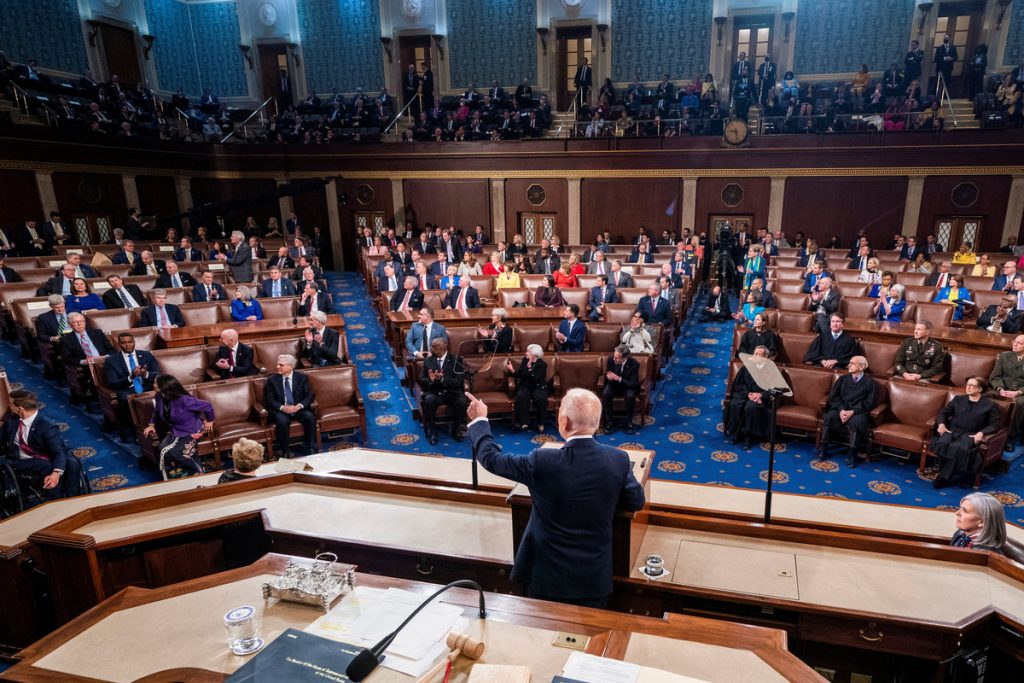
The House Subcommittee on Africa will convene at 11:00 a.m. in the Rayburn House Office Building in Washington, D.C. The hearing will be streamed live and will feature two separate panels.
The first panel will include senior U.S. officials. Jonathan Pratt, the Senior Bureau Official for the Bureau of African Affairs, will testify alongside Jacob McGee, the Deputy Assistant Secretary in the Bureau of Democracy, Human Rights, and Labor.
The second panel will feature outside experts and leaders. Testifying will be Nina Shea, Director of the Center for Religious Freedom; Bishop Wilfred Anagbe of the Catholic Diocese of Makurdi; and Oge Onubogu from the Center for Strategic and International Studies.
Lawmakers are expected to examine the extent of alleged Christian persecution, consider potential policy actions including targeted sanctions, and explore avenues for cooperation with Nigerian authorities.
Trump’s Warnings and Renewed Tensions
On 31 October 2025, Trump designated Nigeria a Country of Particular Concern, alleging severe violations of religious freedom. He claimed Christianity faces an existential threat in the country and suggested that Nigeria’s government has failed to stop extremist violence.
In a statement issued on 1 November 2025, Trump warned that the U.S. would halt all aid to Nigeria if attacks on Christians continued and even signalled the possibility of military intervention.
“If the Nigerian government continues to allow the killing of Christians, the USA will immediately stop all aid and assistance to Nigeria, and may very well go into that now-disgraced country, ‘guns-a-blazing,’ to completely wipe out the Islamic terrorists,” he said.
Tinubu Rejects Allegations, Defends Nigeria’s Religious Climate
President Bola Tinubu responded firmly to Trump’s claims, insisting that Nigeria remains committed to religious freedom as guaranteed by the constitution.
“Nigeria stands firmly as a democracy governed by constitutional guarantees of religious liberty. The characterisation of Nigeria as religiously intolerant does not reflect our national reality,” Tinubu posted on his official X handle.
“Religious freedom and tolerance have been a core tenet of our collective identity and shall always remain so.”
The President reiterated that the Nigerian government does not support religious persecution and continues to collaborate with partners to curb extremist violence across the country.
A Pivotal Moment or U.S.–Nigeria Relations
Today’s congressional deliberations carry far-reaching implications. If the CPC designation is upheld, it could lead to sanctions on Nigerian officials accused of complicity in religious persecution and limit certain forms of bilateral engagement.
Beyond policy consequences, the hearing is expected to influence global perceptions of Nigeria’s religious-freedom landscape and test the diplomatic strength of the Tinubu administration.
As Congress convenes, Nigeria and the United States find themselves navigating a sensitive moment—one that will shape their security cooperation, humanitarian engagement, and broader bilateral relations in the months ahead.