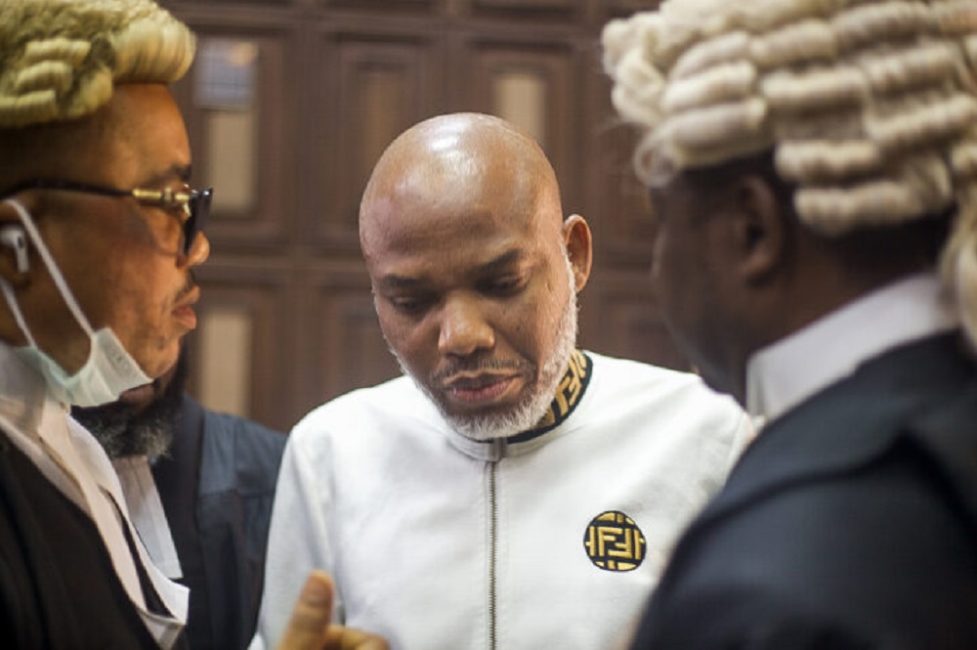
Nigeria’s Federal Capital Territory (FCT) is on edge today as protesters under the banner of the #FreeNnamdiKanuNow movement prepare to march on the Presidential Villa in defiance of a court order and heightened security warnings.
The demonstration, organised to demand the immediate release of the detained leader of the Indigenous People of Biafra (IPOB), Nnamdi Kanu, has drawn nationwide attention and strong political backing from key opposition figures.
Despite a Federal High Court order in Abuja restraining the protesters from converging near the Presidential Villa, National Assembly, and other sensitive government sites, the organisers have vowed to proceed with what they insist will be a peaceful march in the FCT and across South-East states.
The Federal Government accuses Kanu of terrorism, treason, and incitement through his agitation for Biafra’s independence. The IPOB leader, who fled the country in 2017 while on bail, was re-arrested in Kenya in 2021 under circumstances that remain legally contentious. While his supporters insist his detention amounts to political persecution, the government maintains it is a matter of national security and the rule of law.
The timing of today’s protest—coinciding with the fifth anniversary of the #EndSARS demonstrations—has further raised security concerns within the government.
Organisers Vow to March on Aso Rock
The Director of Mobilisation for the Take It Back Movement, Damilare Adenola, said nothing would deter them from exercising their constitutional right to peaceful protest.
“Marching peacefully anywhere in the country is our constitutionally guaranteed right,” he said, stressing that the rally seeks to “challenge the erosion of citizens’ rights and demand justice for Kanu.”
The order restraining the protest was issued on Friday by Justice Mohammed Umar, following an ex parte application filed by the Nigeria Police Force on behalf of the Federal Government. The ruling bars the protesters, led by rights activist and former presidential candidate Omoyele Sowore, from demonstrating near the Villa, the National Assembly, the Force Headquarters, and other key locations in Abuja.
However, counsel to the organisers, Maxwell Opara, insisted that his clients had not been served the court order and would proceed with the protest. He argued that the police were duty-bound to provide security for the demonstrators rather than obstruct them.
“We have notified them, and they will come and provide security — that’s what they are expected to do,” Opara said, adding that the organisers had mobilised lawyers to assist anyone arrested.
Massive Mobilisation Nationwide
Sowore confirmed that more than 115 lawyers, medical personnel, and journalists have been deployed nationwide to support the demonstration.
He said mobilisation had been strong across states, markets, and religious centres, with “local convergences already organised in multiple locations and even at Nigerian embassies abroad.”
The protest has received notable backing from opposition leaders, including former Vice President Atiku Abubakar and Labour Party’s 2023 presidential candidate, Peter Obi, both of whom have urged the Federal Government to release Kanu and embrace dialogue.
Obi reiterated his long-held position that negotiation remains the most effective approach to addressing separatist agitations. “There was no need for Kanu’s arrest in the first place,” he said, stressing that discussions, not force, will sustain peace.
The New Nigeria People’s Party (NNPP) and the Labour Party (LP) also condemned what they described as government double standards—negotiating with armed groups in the North while prosecuting a separatist leader in the South-East.
Kanu’s Legal Team Split on Protest
Within Kanu’s camp, his legal team is divided over the protest. Senior lawyer Onyechi Ikpeazu (SAN) said his focus remains on the court proceedings, not street demonstrations.
“As a lawyer in the matter, we are focused on the court process. My inclination at this stage is to concentrate on that,” he said.
However, another of Kanu’s lawyers, Aloy Ejimakor, publicly declared support for the movement, describing it as a “civic and constitutional right.” Ejimakor confirmed that he would personally join the protesters.
Security on High Alert
Security agencies have intensified surveillance in Abuja and other major cities to prevent the protests from turning violent.
The Nigeria Security and Civil Defence Corps (NSCDC), through its FCT Commandant Olusola Odumosu, warned that any attempt to vandalise or loot property in the guise of protest would be met with firm resistance.
“The corps will not condone any form of destruction, vandalism or theft of public and private facilities,” Odumosu said, while also directing personnel to exercise restraint and adopt non-violent crowd control methods.
Similarly, the Nigerian Correctional Service (NCoS) has declared all prisons nationwide as “red zones,” warning the public to stay away from correctional centres during the protest.
NCoS spokesman Umar Abubakar stated that any unauthorised attempt to access such facilities would be treated as a serious security threat.
As tension builds, many Nigerians are anxiously watching how today’s events will unfold — whether the protest will remain peaceful as promised or spiral into confrontation between citizens and the state.