
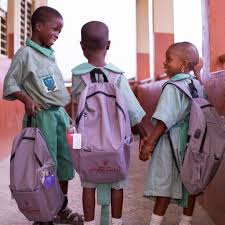
As schools across Nigeria resume for the 2025/2026 academic session, what should be a time of excitement has become a season of stress and financial strain for many families.
Across cities and communities, the back-to-school rush has brought a familiar but now intensified struggle: skyrocketing school fees, inflated textbook prices, new uniform costs, and transportation expenses—all set against the backdrop of a relentless cost-of-living crisis.
With inflation hitting 21.88% in July 2025 (according to the National Bureau of Statistics), many households are barely affording food, let alone private school fees that have surged by 20–50% in some cases.
For parents like Ngozi Okoro, a single mother in Abuja, the dream of private school education is slipping away. Once proud to send her two children to a well-rated private school, she now finds herself unable to keep up with the rising costs.
“I’ve taken loans, borrowed from friends, even skipped meals. But when the school increased fees by 30% last term, I knew I couldn’t keep up,” she said. She’s now looking to move her children to a more affordable option.
Her story is echoed by many others. Abuh Ameh, a father of four, dreads every new school term. “The reminders from the school come like clockwork. And when I can’t pay, my kids are sent home. It’s heartbreaking.”
A visit to several public schools in Abuja and surrounding areas revealed overcrowded classrooms, crumbling infrastructure, and demotivated teachers. Still, for some parents, these under-resourced public schools are now the only option left.
But even then, education isn’t cheap. Many parents are turning to desperate measures—crowdfunding on social media, selling valuables, or taking out emergency loans—to keep their children in school.
One widowed father, Nuhu Ahmed, said he had to part with prized possessions to fund the new term. “I sold my laptop and some electronics just to cover school fees and buy their books. There was no other way.”
Education experts are ringing alarm bells. Michael Akor, an education policy analyst, warns that unless these challenges are addressed, Nigeria’s already alarming number of out-of-school children—currently over 17 million—will keep rising.
“Education should be a pathway out of poverty,” Akor said. “But right now, it’s becoming a privilege, not a right. Families are being pushed further into hardship just trying to keep their kids in school.”
Public commentator, Mazi Christian Idoko, urged parents to adjust their expectations to match their financial realities. “Some parents still hold onto the image of premium schools even when it’s clear they can’t afford them,” he said. “There’s no shame in choosing a more modest school that fits your budget.”
What’s unfolding is more than just individual family struggles—it’s a systemic issue. The widening gap between public and private education, combined with worsening economic conditions, is threatening the future of millions of Nigerian children.
Until there’s meaningful government intervention, many parents will continue to make impossible choices between survival and schooling—choices no family should have to face.