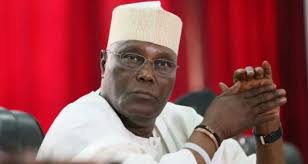
As Nigeria edges toward the 2027 general elections, the People’s Democratic Party (PDP) is already battling internal friction over who should emerge as its next presidential flagbearer. The party is being pulled in multiple directions, with competing factions backing different high-profile figures: former President Goodluck Jonathan, former Anambra State Governor Peter Obi, and Oyo State Governor Seyi Makinde.
Factional Loyalties Fuel Unrest
According to sources within the PDP, internal alignments are becoming clearer. Allies of the Minister of the Federal Capital Territory, Nyesom Wike, are reportedly lobbying for Peter Obi, while a separate bloc believes Jonathan is the party’s most formidable candidate against the incumbent, President Bola Ahmed Tinubu. Meanwhile, a third faction is floating Makinde’s candidacy, aiming to present a younger, progressive option from within the PDP’s current ranks.
These maneuverings reflect deeper power dynamics and have already sparked concerns about unity within the party.
Convention Preparations Underway
Amid the brewing tensions, the PDP has moved forward with plans for its 2025 elective national convention, scheduled for November 15 and 16 in Ibadan, Oyo State. The outcome of this convention is expected to set the tone for the 2027 presidential election.
To manage the buildup, the party unveiled a 110-member Organizing Committee on Monday. Governor Ahmadu Fintiri of Adamawa will chair the committee, with Osun State Governor Ademola Adeleke and former minister Kabir Turaki (SAN) serving as deputies. Enugu State Governor Peter Mbah will act as secretary, while Senator Adolphus Wabara, Chairman of the PDP Board of Trustees (BoT), will represent the BoT.
Party insiders suggest the committee’s makeup is a calculated effort to distribute influence across regional and factional lines.
Strategic Thinking Behind Candidacies
Despite denials from the PDP’s leadership, conversations around Jonathan and Obi’s possible candidacies are intensifying, largely driven by a shared political calculation: both men are perceived as likely to serve only a single term in office.
Jonathan, due to constitutional limits, can serve only four more years if re-elected. Obi, on his part, has frequently promised a one-term presidency focused on rapid reform. This notion of a transitional presidency has piqued interest, especially in Northern political circles seeking an eventual return of power to the region in 2031.
A senior PDP source, speaking anonymously, said, “Jonathan’s name carries weight. He’s familiar, nationally accepted, and his one-term scenario is attractive. But his re-entry is facing resistance, particularly from those aligned with Wike, who would rather back Obi to keep Jonathan out of the picture.”
Infighting Reflects Deeper Control Battle
The leadership crisis within the PDP isn’t just about candidacies—it’s also about who holds sway over the party’s direction. A zonal leader described current developments as part of a broader struggle for dominance.
“There’s talk of disciplining anti-party actors, and that’s not a coincidence. The leadership is trying to assert control while dealing with the mixed signals of courting both Jonathan and Obi. That contradiction is undermining their credibility,” the source noted.
Jonathan’s Endorsements and Obi’s Unfinished Business
Former Jigawa State Governor Sule Lamido has publicly called for Jonathan’s return to the PDP fold, asserting that no southern PDP politician matches his political weight and experience. “Jonathan remains the party’s most viable candidate. He’s respected and proven,” Lamido said during an interview with Channels TV.
PDP Deputy National Publicity Secretary Ibrahim Abdullahi echoed similar sentiments, noting that Jonathan retains strong northern support. “He’s a statesman with global respect. Many in the North view him as the bridge back to power,” Abdullahi stated.
On Obi, Abdullahi said the former Labour Party candidate remains a political force and would bring valuable momentum if he returned. “He was part of the PDP before 2023. Coming back would be a homecoming, not a defection,” he said.
Calls for Democratic Process
Not all voices in the PDP are in favor of rallying behind any one figure without due process. PDP stalwart Segun Showunmi emphasized that any aspirant—regardless of stature—must go through party primaries.
“Yes, Jonathan has never left the PDP, unlike Obi. That gives him an edge. But nobody should expect a coronation. The party must follow its democratic procedures,” Showunmi argued.
He acknowledged Jonathan’s experience and the strategic appeal of a one-term candidacy but cautioned that every candidate comes with baggage. “Every leader has a history. The question is whether the party wants to relive that history or chart a new path.”
Analysts Warn of Deeper Issues
Political commentator Dr. Jide Ojo believes that the PDP’s leadership is placing the cart before the horse by focusing on high-profile candidates while unresolved internal conflicts fester.
“Before chasing Jonathan or Obi, the PDP must first put its house in order. Without reconciliation, it doesn’t matter who carries the ticket—they will lose,” he warned.
Ojo also raised doubts about Jonathan’s viability, noting his prolonged absence from active party politics. “He hasn’t been visible within PDP structures. No real political base, no grassroots mobilization. You can’t win elections that way in Nigeria.”
On Obi, Ojo argued that his 2023 electoral wave has largely dissipated. “The North remains a challenge for him, and APC is now dominant in many of his former strongholds. Labour Party is in crisis, and returning to the PDP won’t automatically fix his structural weaknesses,” he said.
Ojo concluded by pointing to the advantage of incumbency, predicting that the federal government would likely ramp up populist programs in 2026 to sway voters. “They’ll throw everything at this. Conditional cash transfers, subsidies—it’s going to be tough for any opposition party to dislodge them,” he said.