The economy has become resilient and attractive to investors following painstaking reforms which birthed investment-friendly environment.
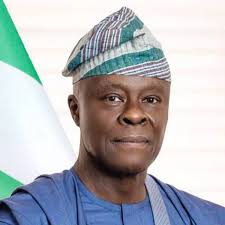
Minister of Finance and Coordinating Minister of the Economy, Mr. Wale Edun said on Thursday in Abuja during a press briefing on the state of the economy.
He stated that recent data on the country’s external sector, fiscal discipline, and subnational funding all point to a more resilient economic foundation.
“When we look at the external sector, in the first quarter of 2025, trade surplus of over $4 billion and exports increased by nearly 10%, 9.8% and of course, we know that the exchange rate has been relatively stable and reserves up to almost $40 billion, $39 billion in July,” Edun said. “I think these metrics which speak to stability send a clear message.”
Reflecting on the policy direction under President Bola Ahmed Tinubu Edun said the administration has created a “stable macroeconomic conditions on which people can plan and invest.”
He referenced key changes introduced by the administration- fuel subsidy removal, halting uncontrolled use of Ways and Means advances from the Central Bank and said they were necessary to reset the economy.
“As we all know, under the leadership of President Bola Ahmed Tinubu, steps have been taken to restore fiscal discipline and balance and we have ended the unauthorised and above-limits funding by Ways and Means,” he explained.
“There have been no debits to Ways and Means since early in this administration. Gross revenues are 37.4% of government revenues in the first half of 2025 compared to 2024 and likewise, following GDP rebasing, we do have a ratio now of debt to GDP of less than 40%, 38.8% down from 52.1%.”
He added that this fiscal space had allowed the government to settle significant outstanding obligations. “In the last quarter, we did pay two contractors over two trillion to settle outstanding capital budget obligations from last year,” he said.
Going forward, the minister explained, “We, as a government, have no pending obligations that are not being processed and financed through the platform. The focus will now shift to 2025 capital releases… despite appropriation, it is when funds are made available and authorised for spending that government entities… should enter into binding commitments of government.”
The minister said the administration has also been increasing resources available to state governments for education, health, and infrastructure by repaying past deductions from the Federation Account.
“Since the first half of 2023, the combined fiscal balance of the states has grown from 1.8% of GDP to 3.1%. That’s from ₦2.8 trillion to over ₦7 trillion, 7.1 trillion Naira exactly, which is a surplus,” Edun said. “This has given them greater capacity to invest, and from an economic classification standpoint, the increase in spending of the states has mainly gone to capital expenditure.”
He linked the improved state finances to reforms, including the removal of subsidies that previously cost about 5% of GDP, with the savings now flowing into the Federation Account. “Not just that, but adhering to the rule of law and the sanctity of contracts, previously owed funds were now being systematically made available,” he added.
On domestic resource mobilisation, Edun announced that Nigeria is implementing its most comprehensive tax reform to date, consolidating all tax laws into a single transparent framework, removing over 50 overlapping taxes, and reducing the complexity of tax compliance.
“This is improving the ease of doing business and making the investment climate that much more attractive,” he said. Implementation will commence in January 2026.
To support this, he said the government is introducing a revenue optimisation and assurance platform, applying technology, digitisation, and artificial intelligence to government revenue collection. “We are centralising and digitising the revenue collections from the ministries, departments and agencies… using technology to prevent leakages… and enhancing financial intelligence for decision making and very strong monitoring,” he explained.
Edun restated the government’s medium-term goal of achieving 7% annual GDP growth, driven by public and private investment, job creation, and higher incomes. Priority sectors include agriculture, education, health, manufacturing, technology, and infrastructure.
He cited recent efforts to attract private investment in Lagos bridges — including the Third Mainland and Carter bridges — as examples of the government’s push for public-private partnerships. “When you look at the population of Lagos and the size of the economy there, clearly it is a veritable ground for attracting PPP investments,” he said.
The government, he added, is complementing private capital with public savings, while programmes like the Renewed Hope Award Development Programme are being rolled out to drive inclusive development.
In agriculture, the minister admitted that performance needs improvement beyond the 0.7% annual growth recorded in the first quarter of 2025. On energy, he said, “We do have a target of increasing to 6,000 megawatts by the end of this year… we are looking to complete the Ajaokuta-Kaduna-Kano AKK pipeline to provide reliable and affordable energy for industrial growth.”
Direct Support to Vulnerable Nigerians, Edun revealed that the government’s direct distribution of funds to vulnerable Nigerians is ongoing, with about half of the targeted 15 million people already reached. “About 8 million have been reached… and it’s not just once, it’s three payments, and that continues,” he said.
The government, he added, is ensuring the process is transparent and accountable, with each beneficiary biometrically identified and paid digitally. Other support initiatives include NELFUND, the Consumer Credit scheme, the upcoming Youth Investment Bank, and targeted funding for the digital and creative economy, including a €600 million facility with a special allocation for young women.
“Our commitment is to build an economy that works for everyone with transparency, resilience, and purpose,” Edun concluded.