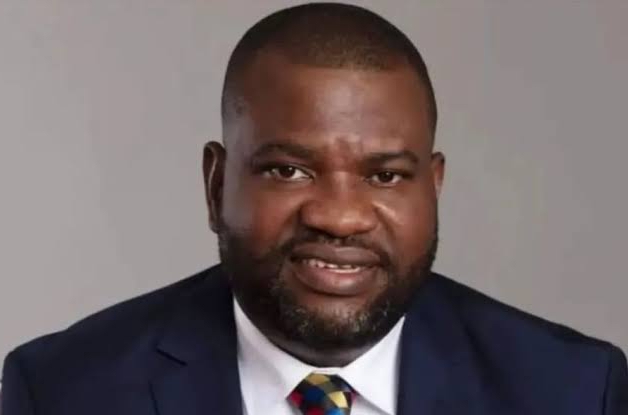
The President and the Executive Producer of All-Africa Music Awards, AFRIMA, Mr Mike Dada, has advised the Nigerian creative industry to remain resilient in developing the sector.
Speaking as a panellist at the inaugural QEDNG Creative Powerhouse Summit in Lagos on the ‘Funding Creativity – Bridging the Gap between Ideas and Capital’, Dada said creative entrepreneurs in Nigeria must collaborate, which of course is what AFRIMA has been doing in the last 20 years.
He said: “For instance, the music and the film industry, the biggest two exports actually, they don’t formally work together. What they do is they engage each other. More importantly, when you look at the landscape of funding, investment and capital, it’s a difficult terrain and it’s also not difficult, depending on how you look at it.
“One thing I would just mention is that it seems the music industry and the film industry in Nigeria are forgetting where they are coming from, their identity. The film and music industry was built out of nothing, by the people themselves, without government.
“I think in the last five, seven years, they’ve been looking more towards the government. While I understand that the government needs to come, more importantly, that entrepreneurial energy and power must not do it alone.”
Speaking on the recent data released by the Nigeria Bureau of Statistics, NBS, on the contribution of the sector to the GDP, Dada said the data is not a true reflection of the reality on the ground. “The truth of the matter is that data are scarce in Nigeria. I remembered in 2013-2014 when Ngozi Okonjo-Iweala was the Minister of Finance, they rebased Nigeria’s economy and Nigeria became the biggest economy in Africa.
“She said that it was because the creative industry had 3.5 per cent growth. So the question now is that what has happened in Nigeria that has reduced the percentage? And don’t forget, the median age in Nigeria is 19. So 70% of our population is very young people and they’re interested mainly in culture, tech and sports.
“This is where they thrive. So that sector is productive. That’s the implication of that. So that’s the implication of even the GDP itself. So I don’t have the contract data, but the reality of land suggests that it should be more than that.”
On bridging the financial gap in the industry, Dada said the sector must educate investors, government and financial institutions on the potential of the industry and why they should invest in it.
He said: “Simply, I, from the point of view of marketing and communication, I’m an artist. I can’t sing to save my life. So I went into this because I’m looking for a platform to communicate Africa to the rest of the world for global competitiveness. But we saw music as a purview of value to do this. That’s why we went into what we do 20 years ago and have been consistent about that.
On attracting investment, Dada said the industry must take the lead in educating banks, government, and financial institutions about its value. “People don’t invest in what they don’t understand,” he explained. “If you want funding, you have to show investors how they will get returns. It’s not about them liking your face, it’s about them seeing a clear opportunity.”
“And from policy, you have to take action from action to impact. But if the policy and the design of the policy are wrong from day one, there won’t be an action and there will never be an impact. So it is the duty of this industry, even by way of workshops or any other means to ensure that they understand.
“You communicate to them to understand the size of the potential of this industry to reduce poverty and to take young people out of the streets, it is our duty to let them understand.”