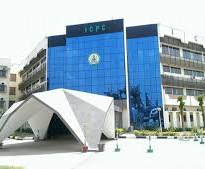
The Independent Corrupt Practices and Other Related Offences Commission (ICPC) says only 84 out of almost 500 ministries, departments and agencies (MDAs) of the federal government have functional Anti-Corruption and Transparency Units (ACTUs).
This is contained in a report presented by the commission at an investigative hearing of the House of Representatives Committee on Anti-Corruption on Tuesday.
Chairman of ICPC, Dr. Musa Ali, who disclosed this at the investigative hearing, said 127 MDAs have weak or ineffective ACTUs, with five others having the units only in name, rendering government anti-corruption efforts in the institutions ineffective.
Represented by Mr. Olusegun Adigun, the chairman disclosed that the ACTUs of MDAs are not working properly due to lack of funds, direct reporting to Chief Executive Officers of agencies, interferences, lack of political will and support, and resistance to change, among others.
He called for regular training of ACTU members, deepening interactions, and public engagement on the role of ACTU to reposition the units.
While declaring open the hearing, Speaker Tajudeen Abbas, represented by Hon. Umar Ajilo, said the session was not a witch-hunt, but a proactive effort to assess the performance of ACTUs and strengthen institutional integrity.
“We gather not merely as legislators but as custodians of democracy and champions of integrity,” Abbas said. “Corruption continues to erode our institutions, diminish public trust, and stall our national progress. This hearing is an opportunity to reaffirm our resolve and take decisive action.”
According to him, the ACTUs were originally established to monitor, report, and prevent corrupt practices, while also promoting a culture of transparency and ethical conduct in public service. However, the speaker noted, their effectiveness hinges on political will and institutional support.
“This hearing allows us to assess the functionality of ACTUs, hear from stakeholders, and explore legislative solutions to strengthen their operations. We must dismantle the structures that allow corruption to thrive and institutionalise transparency and accountability,” he said.
In his welcome address, the Chairman of the House Committee on Anti-Corruption, Hon. Kayode Akiolu, stressed that the hearing addressed a critical issue central to Nigeria’s democratic development.
He recalled that the federal government, through the Head of Civil Service, mandated the establishment of ACTUs in MDAs in 2001 and 2003, a strategy deployed by ICPC to decentralize anti-corruption efforts by enlisting civil servants themselves.
“These units were based on the sound idea that those within MDAs are best positioned to identify corruption risks in their environments,” Akiolu said. “Through ACTUs, ICPC has extended its presence across over 400 MDAs without the need for a bloated workforce. That’s brilliant public sector innovation.”
He emphasised, however, that it is now time to interrogate how far these units have fulfilled their mandates.
“Over time, we have received reports of both commendable efforts and serious lapses in the work of ACTUs. Some have failed to uphold their core duties, while others may have become entangled in the very practices they were created to stop,” Akiolu said.
He emphasised the importance of accountability and open dialogue, urging CSOs, anti-corruption advocates, and MDAs to contribute to the conversation.
“Our task is not only to assess performance but to ensure that our institutions are truly committed to integrity, not just in word but in deed,” he added. “We must make it clear that corruption has no place in our governance system, whether from within or without.”
Also speaking at the event, the Head of Service of the Federation, Mrs. Esther Dido-Jack, who was represented by the Director of Finance and Accounts, Mr. Emeka Aziwe, pointed out that despite their challenges, ACTU recorded some achievements.
He recommended that ACTU should be made to report directly to permanent Secretaries and the institutionalisation of ACTU into MDAs.